




















About a third of UK adults are not doing enough physical activity, causing 5.3 million deaths a year, according to estimates in a Lancet study into exercise and public health.
The findings will be of little surprise to health professionals. Nonetheless, they are worth reinforcing - particularly while obesity levels are continuing to rise. But timed as it was to coincide with the 2012 Olympics, the report could perhaps have asked more pressing questions such as what are healthcare providers, the government, local authorities and those involved in sport delivery actually doing to seize this once-in-a-lifetime chance to get people off their sofas and into their sports gear? How can we ensure that levels don’t just spike but that we actually see a sustained change in behaviour?
It’s almost a given that with billions poured into an Olympic fortnight, and the mesmerising marketing activity from sponsors beginning months before the event, that more people will be inspired to get active.
Following the 2004 Athens Olympics, an average of 16 per cent of respondents across three separate surveys exercised regularly, up from 10 per cent in 2003. But by 2009 that level had dropped to just 3 per cent, way lower than the period before the Games.
Similar studies focusing on Manchester after it hosted the 2002 Commonwealth Games found sports participation fell after the event, and that the gap in participation between rich and poor areas of the city increased.
The idea of making physical activity a public health priority is nothing new but we’re not seeing results. The House of Lords Health Select Committee was recently critical of a Department of Health initiative unveiling the National Centre for Sport and Exercise Medicine, cited as a key part of the Olympic legacy.
While welcoming the centre, the committee voiced concerns that ministers were ticking a box, and that one-off investment does not mean long-term, sustainable change. At the moment, policy isn’t delivering participation at the scale or pace required. So what needs to happen?
It’s time for a new way of thinking to make real Olympic legacy happen. Experience of working on behaviour change campaigns across the public and private sectors on issues ranging from health and sport to finance and utilities, tells us that achieving the shared goal of making the nation fitter might just be the following hop, step and jump away:
Find the target
Too often, the health sector (and the sport sector for that matter) has been guilty of using a one-size-fits-all approach aimed at increasing participation in sport and physical activity. But it’s vital to know exactly who to target and why. Changing people’s behaviour is a systematic process that needs to ask and answer four key questions:
- What behaviour are we trying to change? Motivating people who already play sport infrequently to play more, or encouraging those who are currently inactive to start.
- Who is the audience? We need to be brave enough to be specific. Campaigns aimed at behaviour change are often all-inclusive and fail to achieve real change among anyone.
- What is the motivation of the target audience? It sounds obvious but a programme aimed at young people would have different messages to persuade them to act than communications aimed at older people.
- What interventions will people respond to? Understanding which groups will respond to what type of intervention, message and communication format is vital. We need to have completed all the previous stages before designing and delivering solutions.
Change tactics
One of the biggest challenges in delivering interventions is knowing which products and offers will engage the target audience and what channels and routes to market to use. If we’re struggling to engage new participants in physical activity, we need new ways to reach them. This could mean adapting the format of the sport to make it easier to play in new environments, or targeting audiences via new messengers.
Team up
Different bodies such as local authorities and sports organisations regularly have the same objectives in the same locations, but are often guilty of working in isolation to achieve them. A blinkered approach can mean missing out on the benefits collaboration with partners can provide. Every organisation that has a stake should be involved - be that the health or local authority, local sports body or charity. Health bodies can learn a lot from sports organisations in areas such as marketing and facilities management, ultimately persuading more people to get active and showing them how to take part.
It’s easy for health commissioners and providers, and all the other organisations involved in delivering physical activity and increasing participation, to leap straight to a solution; this is the exciting bit of delivery, after all. But understanding the audience first is crucial if those tasked with promoting the nation’s health and wellbeing are to switch tactics and really move from delivering sport for sport’s sake towards changing citizens’ behaviour for the long run. That really would be an Olympic legacy for us to be proud of.
Hazel Wilkinson is client services director for Corporate Culture.
Find out more
- Lee I-M et al (2012) Effect of physical inactivity on major non-communicable diseases worldwide: an analysis of burden of disease and life expectancy. The Lancet, 380: 9838, pp.219-229. Published online 18 July 2012.
Topics
Olympic legacy of a better life
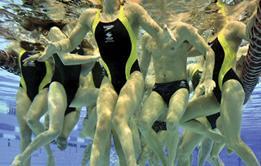
NHS London is hopeful the Games will leave a lasting legacy after the athletes depart
- 1
 Currently
reading
Currently
reading
Making legacy a reality







2 Readers' comments