















People experiencing homelessness are one of the most neglected population groups in terms of healthcare provision, and with almost 382,000 people in England without a fixed address, pressure on national and local healthcare systems can reach unsustainable levels.
Sponsored and written by
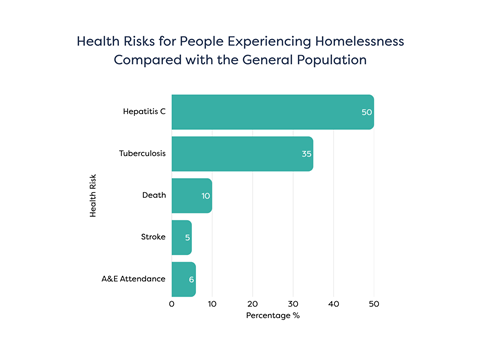
In the North West, homelessness is on the rise and has increased by 15 per cent since 2024 (Shelter, 2025). This highly excluded and largely invisible group of people are routinely locked out of primary care, while also having significantly higher health risks than the general population.
According to the 2025 Homeless and Health Report, 81 per cent of homeless respondents stated they had at least one physical health condition before they were homeless, with 77 per cent having a mental health condition.
Often unregistered with GPs and left without consistent support, this cohort largely depends on emergency departments to receive healthcare. The few who are registered with a GP report challenges to ring at 8am for an appointment, due to lifestyle patterns and unreliable phone access.
The fragmented care they do receive is reactive and can be impersonal, allowing people to slip through the cracks and adding strain to our stretched healthcare system.
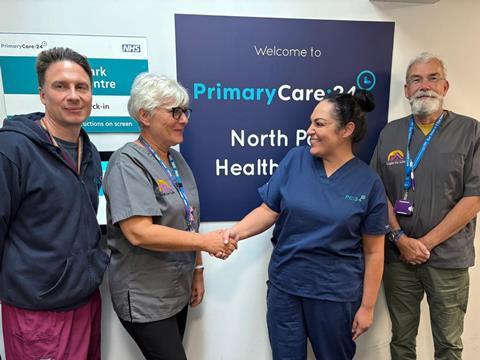
At Primary Care 24 (PC24), the clinical team at one of our GP practices based in Sefton, Merseyside, noticed the sobering health inequalities of those nearby, and partnered with Light For Life, a commissioned service that hosts a range of services to combat homelessness, including a rough sleeper service which actively secures accommodation for people sleeping on the streets.
Combining their insight with local hostels, the teams partnered together to create a new, nurse-led model that sought to change outcomes while remaining informed of the trauma these individuals had faced. Recognising the very real logistical barriers, anxiety, and deep-rooted clinical mistrust, the model set out clear aims to provide earlier clinical oversight and relationship-based support with a named GP.
Instead of waiting for individuals to present in crisis, our team took a proactive stance to find, connect with, and support those most likely to be missed.
Dave Fenney, health inclusion manager at Light For Life, said: “Homelessness is an acknowledged national health crisis, and this is reflected with the complex homelessness clients we see in emergency and temporary accommodation in Sefton. Our ‘shared’ clients are at best ambivalent to their health needs and often leave it until there is a crisis before they seek any form of treatment.
“However, through this partnership, we have established a degree of trust and continuity of care to facilitate and consolidate a pathway into primary care, which is, based on previous experience, nothing short of a miracle.”
Over just six months, a huge difference was recorded in the cohort. All (100 per cent) of patients received a nurse-led medication review within seven days of registration. This created a consistent safety net by providing an opportunity to identify untreated health issues and review prescriptions, helping to reduce medicine-related harm.
At the same time, accident and emergency department attendances fell by approximately 80 per cent, as individuals were supported to access primary care through planned interventions rather than presenting in crisis. The introduction of flexible appointment scheduling also led to fewer missed appointments and improved patient engagement in managing long‑term conditions.
The personal impact of the model for both patients and staff cannot be underestimated. One patient said the clinicians “were more approachable and spoke to me like a human”, and others described feeling “respected, understood and safe”. This feedback, along with quantitative measures, demonstrates that embedding an unseen cohort into mainstream primary services can have a lasting impact on health condition management, as well as an improved perception of health services.
Hannah Rahmani, our head of nursing in primary care and project lead, said: “We do this simply because it is the right thing to do: breaking down inequalities so vulnerable people have equal access to the healthcare they need.”
Having recently been awarded Patient Safety Collaboration of the Year at the 2026 HSJ Partnership Awards, this transferable model continues to receive recognition and is currently being expanded across locally commissioned accommodation services. Due to its simple design and ability to operate within existing NHS resources, the nurse-led model has significant potential for wider impact and could be adapted to support other high-risk groups, including asylum seekers or people leaving prison.
Continued commissioning and cross‑system collaboration will be critical to expanding the project’s reach and ensuring that vulnerable individuals benefit from person-centred, preventative healthcare.