
- Evidence emerging of ‘massively reduced’ length of stay at new Royal Liverpool Hospital
- New building has been heavily criticised for being too small, but CEO James Sumner says benefits of new care model now being seen
- Adds: “If all we do is keep increasing the bed numbers in hospitals for the next decade, that’s sort of what we’ve done for the last decade”
The CEO of a troubled trust has said evidence is emerging of ‘massively reduced’ length of stay in a new hospital criticised for being too small.
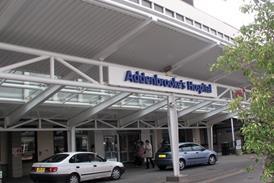
Emergency staff have raised concerns about a lack of space and bed capacity at the new Royal Liverpool Hospital, which opened in October, as services have come under severe pressure this winter. The new building, on a next-door site to the old hospital, has fewer beds, although more have opened elsewhere in the city.
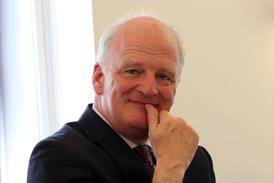
In an interview with HSJ, Liverpool University Hospitals Foundation Trust chief executive officer James Sumner acknowledged aspects of the new building have created difficulties, including in relation to accident and emergency configuration and capacity, but added the move’s benefits are beginning to be seen.
He said a new care model and single rooms throughout the whole hospital are helping to reduce length of stay (see charts below), as well as eliminating bed closures due to infection outbreaks.
He said: “We’ve got really good evidence of massively reduced length of stay in this new building, [with] about 70 fewer people every day waiting over seven, 14 and 21 days in hospital.

“We think that’s down to much improved assessment facilities, but also single rooms are playing a part in that… The reports are that our patients are getting so much more sleep, that they’re recovering quicker.
“At the same time we opened, we [also] put in a fantastic new system with Broadgreen [a nearby planned care site] where patients who needed to get home could be quickly taken from the Royal into rehabilitation and then go home. In the first few weeks of that about 30 per cent of them ended up going home without the need for social care that they’d been prescribed.
“And then generally speaking, [in the old hospital] you’d have about 60 or 70 beds closed due to infections every month, but that’s now zero since we moved in here.”
Mr Sumner, who joined LUH in May 2022, said these improvements are more than offsetting the reduction in bed numbers, but the hospital move came just as unprecedented accident and emergency pressures hit services across the country.
He admitted the new A&E is less easy to manage in periods of extreme pressure, and can feel more unsafe, as patients end up being sited down long narrow corridors, away from the central staffing hub.
But he said the trust has now put mitigations in place for this, including opening more space, and the benefits of the new hospital will help reduce those pressures.
The care model includes 85 assessment beds, compared to 30 in the old hospital. This means more patients are being discharged quickly, as opposed to being admitted to a ward and then remaining in hospital for longer periods.
However, trust figures from the start of January suggested around 25 per cent of beds were still occupied with patients not meeting the criteria to reside, a figure significantly higher than the national average of around 15 per cent.
Mr Sumner said: “This [shows the] whole thing about capacity isn’t really the issue. We’ve really got to get a grip of the issues in social care…
“But it’s not easy sometimes to try and explain that to A&E staff on the corridor when there’s a queue down there, because it just feels like the hospital’s too small.
“If all we do is keep increasing the bed numbers in hospitals for the next decade, that’s sort of what we’ve done for the last decade…
“Clinicians will tell us, and I would absolutely believe it, that the acuity of people coming in might be different. But there’s not more ambulances or more people coming to the front door.
“[The pressures] are purely about our inability to get people out of hospital… I think we’ve lost about 130 care home beds in the last few months in the city, which is enormous.
“And every time one of those homes fails, those people can’t go back to their usual place of residence, they get stuck in hospital… that’s a real problem.”
New staff bank to support care homes
To try and improve this, the trust has been in talks with 65 care homes in the city about recruiting a new bank of staff, who would be employed by LUH on NHS terms and conditions, but would be dedicated to filling staffing gaps in the care sector.
Care homes would reimburse the trust for the staffing they use, which is expected to cost significantly less than what they spend on agency staff.

Mr Sumner said there is “real appetite” for this within the care sector, as at any given time there are around 80 care beds closed due to staffing problems.
He believes this can be a way of bolstering social care without poaching potential staff. He added recruitment for the new Royal, which required hundreds of new healthcare assistants to staff the single rooms, showed the NHS can attract large numbers of people from other sectors, such as retail, or who might be unemployed.
He said: “People might take a slightly more long-term view of getting into the NHS and getting the best terms and conditions in the long term… So we’ll see where that goes, and who knows, if that’s attractive, there may be something about actually bringing that together with our acute bank and starting to think about people who might want to rotate through the system…
“We’ve been working closely with the council and it’s early days, you know, I wouldn’t want to claim any sort of success yet. But we’ve got real interest.”
Disappointed by chair departure
LUH currently sits within NHS England’s recovery support programme – the successor regime to special measures – after multiple concerns were raised about leadership, quality and performance in 2021.
Chair Sue Musson has subsequently been forced out by national leaders. Mr Sumner said he was disappointed by her departure.

Asked whether the intervention felt unfair and whether it created further difficulties around instability of leadership, he said: “It’s very difficult for me to know what was fair and unfair, because I’m not really sure how that decision was formulated. Would I have liked Sue to carry on? Yeah, I would.
“Unfortunately, that wasn’t within our control. We’ve got what we’ve got, which means I’ll be starting afresh with somebody new.
“I take your point about the stability issue. It did feel a challenge at a busy time. But those decisions aren’t my decisions.”
Source
Interview and trust data
Source date
January 2023


20 Readers' comments