
The vast majority of NHS funding would be handed to councils under radical proposals being developed by the shadow health secretary.

Statistics graphic

Burnham explores NHS handover to councils

The vast majority of NHS funding would be handed to councils under radical proposals being developed by the shadow health secretary.

Andy Burnham has drawn up outline proposals for reforms under which councils would hold an integrated budget for most health and social care − likely to amount to about £90bn.

Mr Burnham is due to set out some of the proposals in a speech at the King’s Fund today. They will be tested with the health service and local authorities over the next six months in a review led by shadow care and older people’s minister Liz Kendall.

HSJ understands Mr Burnham’s proposals include:

  • Channelling general hospital, community and mental health funding, worth around £63bn, through local authorities.
  • NHS money would not be “ringfenced”. Local authorities would be free to spend it as they wish as long as they meet a set of national standards and entitlements set out by the Department of Health and possibly be included in the NHS constitution.
  • Health and wellbeing boards would become the “pre-eminent” decision making bodies for health and social care.
  • CCGs would become advisory bodies to health and wellbeing boards.
  • Specialised services, and some primary care, would be commissioned nationally, probably by the DH.
  • In each area the NHS provider trust would be a “preferred provider” for hospital, community and social care services. They would be expected to move care from hospital settings to the community.
  • The providers would not normally be subject to competition, but commissioners would have to satisfy the government they could call on “alternative” providers in the event of sustained poor performance.
  • There would be a regulator of health and social care providers, but Monitor could lose its economic regulator role and possibly be merged with the Care Quality Commission.

The shadow health secretary will also set out potential options for the future of funding of long-term social care, including a care service completely free at the point of delivery, probably paid for by a new levy.

He will stress that merging health and social care budgets does not rely on a change to the funding system for the latter.

Mr Burnham, who was a junior health minister from 2006 to 2007 and health secretary for a year before the Labour government’s 2010 election defeat, wants to present more developed proposals to the Labour conference in September.

He will today present them as a necessity to provide high quality integrated care for older people and those with long-term conditions in an efficient way.

Mr Burnham is expected to say the ageing population means it is not possible to “disaggregate” a person’s physical, mental and social needs. He will say: “The 21st century is demanding the full integration of health and social care. One budget, one service providing for all of one person’s needs; whole-person care.”

He will also say the current system is not “financially sustainable”. Mr Burnham will say: “Right now, the incentives are working in the wrong direction. We are paying for failure, allowing people to fail at home and drift into expensive hospital beds and from there into expensive care homes.

“Councils are facing different pressures and priorities than the NHS. All have an incentive to keep council tax low. So home care has been slowly whittled away, in the knowledge that the NHS will always provide a safety net for people who can’t cope.

“Hospital chief executives tell me that, on any given day, around a quarter to a third of the beds are occupied by older people who really shouldn’t have had to be there. But it gets worse because once they are there they go downhill for lack of whole-person support and end up on a fast track to care homes − costing them and us even more.”

Burnham plans £60bn NHS cash handover to councils

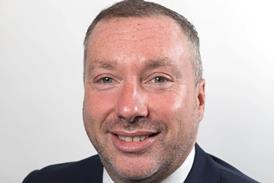
Health secretary Andy Burnham

The vast majority of NHS funding would be handed to councils under radical proposals being developed by the shadow health secretary.