

















That the NHS has an abundance of information but a lack of insight is a truth frequently repeated. At some trusts, hardcopy notes continue to occupy valuable space while the intelligence they record remains difficult to access or analyse. Even where electronic patient records systems are being installed, there remains the open question of how best to use previous information – and, indeed, how to adapt as software systems advance and the structure of the NHS evolves.
In association with
There are additional complications: concerns about information governance, patient trust; about keeping information safe; a need to develop an understanding of how to use information across all constituent organisations within newly statutory integrated care systems.
To consider some of these issues, HSJ recently held a roundtable event. Run in association with Iron Mountain, it brought together panellists from a range of backgrounds to consider one central question – how can healthcare best use past, present and future health information?
The core theme to emerge: the need to establish clarity of purpose around data – a shared understanding of what information is being collected, why, in what contexts it can best be used, and in which standard format it should be recorded. In building this understanding it should also be possible to understand what data no longer needs to be collected, and to form a basis on which to establish effective governance and to build public trust.
Panellists
- Nicola Byrne, national data guardian for health and adult social care
- Paul Curtis, head of healthcare, Iron Mountain
- Nicola Hamilton, head, Understanding Patient Data
- Jessica Morley, incoming postdoctoral researcher, Yale University Digital Ethics Center
- Rakhi Rajani, chief digital and strategy officer, Genomics England
- Claire Read, contributor, HSJ (roundtable chair)
- Charles Tallack, director of data analytics, The Health Foundation
- Anthony Tracey, digital director, Hywel Dda University Health Board






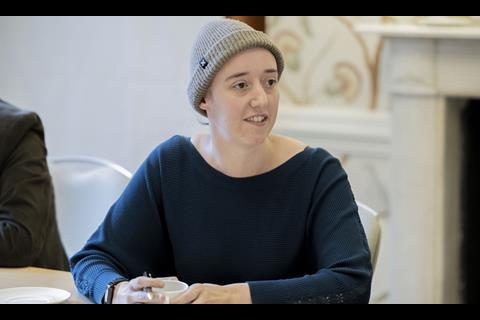


A continuing lack of clarity over which data is needed, why, and in which format it should be collected is hampering the NHS’s efforts to make the best use of information
As the panel gathered for an HSJ roundtable exploring how the NHS could best use information to support transformation, Nicola Byrne suggested a question that needed addressing first: just what transformation is it that we’re expecting said information to help achieve?
“With digital and data we often become entranced by the world of possibilities,” suggested Dr Byrne, who is the national data guardian for health and adult social care in England and also a practising consultant psychiatrist at South London and Maudsley Foundation Trust.
“You often come across things that feel like solutions looking for a problem. So it’s really important to be clear about what it is we’re trying to achieve when we talk about data and digital.”
It immediately put the spotlight on what would emerge as the central point of the roundtable discussion: that clarity of purpose is key to making the best use of healthcare information.
The discussion was run in association with information management company Iron Mountain. Its head of healthcare, Paul Curtis, neatly summed up that point by arguing any information – and any digitisation of information – must be “patient outcome-driven”. “Otherwise why is it being collected?”
“The NHS tends to have conversations around information wants rather than information needs,” suggested Jessica Morley, who at the time of the roundtable was a PhD researcher at the University of Oxford. (From January 2024, she will be a postdoctoral researcher at Yale University Digital Ethics Center.)
She continued: “There’s a lot of hypothesising about all of the potential whizzy things we could do with data. But actually an information need is quite a specific thing: it’s why do I need the information that I’m asking for, and do I have evidence that the information I’m asking for can help me achieve the outcome I’m trying to achieve?”
Consistently posing such questions would make it easier to understand what information is most useful to collect and/or preserve and where, she argued. It would also make it easier to understand which data no longer needs collecting, what should be recorded which currently isn’t, and what is being recorded in an inconsistent or unhelpful fashion. All would help the service make better use of information.
Ditching the duplication
“We need to put richer data in fewer places with better access mechanisms,” she said. “At the moment data is flowing in 1,000 different places and it’s incredibly duplicative. And because it’s duplicative, we don’t know where the gaps are. We have so many people collecting the same information hundreds of times and there then are big gaps of information there’s never collected once.”
“We need to put richer data in fewer places with better access mechanisms”
It was a point with which Charles Tallack, director of data of analytics at the Health Foundation, was in firm agreement. “Obviously there is a huge amount of information and data that’s collected, but I do wonder whether we actually are missing some key bits of information,” he said.
“For example, I think it’s quite astonishing that we actually have so little information on the effect of care. We’ve got PROMs [patient reported outcome measures] for hips and knees, but we don’t have them for lots of other things. For virtual wards, which is a very hot topic at the moment, it turns out there isn’t actually a dataset for patients who are admitted to them. And I’ve got lots of other examples [of data gaps].”
Anthony Tracey is well versed in both the gaps and potential redundancies of NHS information. He has spent 27 years in the NHS, always in data-related roles, and is currently digital director at Hywel Dda University Health Board in West Wales.
“I don’t think the NHS reviews why we’re collecting data,” he said. “A policy lead will come up with a great idea to define and collect a metric, and then we’ve got to go and collect it, and then the policy focus will drop off but we’ll continue collecting it.
“Constant review – a kind of quality improvement process of why we’re collecting something, what the business requirement is – doesn’t tend to be done very well,” he suggested.
Data driven, or data informed?
“I think there’s sometimes a bit of a preoccupation with gathering as much data as we can and a lot of it doesn’t end up being useful or used, and doesn’t translate into insights and just sits somewhere,” said Nicola Hamilton, head of Understanding Patient Data, an independent NHS Confederation-hosted initiative aiming to make the use of patient data more transparent, visible and trustworthy.
For Rakhi Rajani, chief digital and strategy officer at Genomics England, that distinction between having data and having insight is a crucial one. “There’s a difference between being data driven and data informed,” she argued. She fears that too often in healthcare there is a tendency to focus on the former rather than the latter, and at potentially significant cost.
“There is the potential for the right data held in the right way and used in the right way to make a really substantial difference to how we diagnose and treat patients. And we shouldn’t forget that.”

Resolving issues about how data is preserved could significantly improve the service’s ability to make the best use of data from the past to inform better delivery of care in the future
Charles Tallack is a strong advocate of the healthcare sector learning from the past but, he says, “that doesn’t necessarily require the total richness of an individual’s record.” The Health Foundation’s director of data analysis, who was speaking at a recent HSJ roundtable, added: “It doesn’t mean keeping every single bit of data.”
Part of the NHS making the best use of information will involve deciding what needs preserving, for how long, and in what capacity. While this may feel like a daunting prospect, Jessica Morley – who served on the 2022 Goldacre review into safe and efficient use of health data for research and is now a postdoctoral researcher – argued it once more came down to considering data needs.
“We have to differentiate between [what we need for] direct care versus when we’re using data for population health and programme management,” she said. “For direct care purposes, we don’t necessarily need to be able to know whether somebody had an ingrown toenail and now has covid. But for population health management, we actually might, because we might want to know different types of causalities.”
In a world of what she called “big data-fication”, her concern is that there will be a growing tendency to collect and save “absolutely everything we could possibly want”. Paradoxically, at the same time, an unclear legal picture means a confused setup on how long data is kept.
“We need to sort out what happens to people’s data when they die,” she contended. “It’s covered by different types of regulations – you’re jumping between common law and the General Data Protection Regulation, or whatever the UK comes up with instead. But [how long data is kept] depends entirely on the type of data. GP data is stored for different lengths of time to hospital data, and different again to what might happen to data that’s collected in a registry or to what’s happened if you are part of a clinical trial.
“We spend a lot of time talking about how wonderful it is that the NHS has got these hugely longitudinal records, but we don’t if we delete them – and if we randomly delete them in a very ad hoc way.” Resolving that could significantly improve the service’s ability to make the best use of data from the past to inform better delivery of care in the future.

If information is to be used to maximum benefit, trust will need to be established with both individual patients and the wider communities of which they form part
In the historical failures of Care.data and General Practice Data for Planning and Research, and current controversies over the planned federated data platform, is an important lesson about how to get data usage right: gain public trust.
Panellists at a recent HSJ roundtable stressed the importance of transparency and integrity in all matters relating to health data. But they also emphasised some individuals may have good reason to be dubious about whether their information will necessarily be used to their benefit.
Nicola Hamilton, head of Understanding Patient Data, argued it’s a point which isn’t always considered or well understood. Nor is it always appreciated that these concerns might go right to the very heart of the idea of linking data held by different organisations – frequently cited as important in making the best use of information.
“Experiences haven’t always been positive. Some people would have experienced situations where their health data has been used for immigration purposes or for law enforcement or benefit decisions that don’t support them,” pointed out Ms Hamilton.
“For lots of people, experiences of the use of data might be negative. And therefore you’ve got to be careful about assuming that members of the public always think positive things will be done with their data.”
What also needs to be borne in mind, said national data guardian Nicola Byrne, is that health data is not quite like any other information.
“Whoever we are, whatever our history, it contains the most personal and confidential stuff about us,” said Dr Byrne. “Trust between a person and their clinician is insufficient if people don’t trust how organisations downstream – and perhaps our government – might be able to access this information.”
Building that trust with an individual may well also involve considering the broader contexts of which he or she is a part. “Trust is individual, it’s familial, it’s community-based, it’s cultural, it’s public, it spans those relationships beyond a personal relationship,” stressed Rakhi Rajani, chief digital and strategy officer at Genomics England.
“I think that’s why engagement beyond the individual is really important,” she concluded.

Appropriate governance will be vital to making the most of information, not least by helping to build public trust
In Wales, integrated health bodies feel like older news than in England – planning and delivery functions of primary, secondary and tertiary care were united into local health boards as far back as 2009. Uniting data across different settings and sectors still feels like a pretty contemporary challenge for many, however.
“The one fundamental thing we’ve struggled with is having one identifier of an individual,” Anthony Tracey, digital director at Hywel Dda University Health Board, told a recent HSJ roundtable run in association with Iron Mountain.
“The NHS has the NHS number, but local authorities have no concept of that, nor do the police, nor has anyone else. We’ve been on this journey now for probably five or six years, working to get a 360-view of a patient.”
There has been separate but related work to ensure access to information is appropriate. “We’ve spent time getting to role-based access, so you can only look at information that is pertinent to the care that you are giving for said patient or said citizen,” explained Mr Tracey.
Where there is an exceptional and urgent need for a member of staff to gain access to information beyond that they could normally access, the board has a “break glass” mechanism – “but it’s all recorded and auditable”.
After all, as head of healthcare Iron Mountain Paul Curtis put it: “Governance and compliance is absolutely critical across this whole piece” of using information effectively.
But getting it right goes beyond simply having governance processes in place.
“It’s very important for organisations to demonstrate their integrity in a meaningful way,” argued Nicola Byrne, England’s national data guardian for health and adult social care.
“Transparency isn’t about meeting transparency as a legal obligation. It’s about demonstrating the integrity of your decision-making processes, being straight with people and clear with people and explaining how [different datasets from different organisations] fit together.”
Photos by Wilde Fry
Source
Source Date