











How a vendor-neutral managed equipment service is helping Oxford University Hospitals Foundation Trust plan for the future of diagnostic imaging
Advertorial by
For NHS trusts, modernising diagnostic imaging is about more than replacing ageing equipment. It is about making investment decisions that support clinical priorities today while giving services the flexibility to respond to changing demand, emerging technologies and new models of care.
With imaging infrastructure representing a significant and long-term capital commitment, the decisions made now can shape clinical capability, operational performance and patient experience for years to come.
That makes flexibility increasingly important. Rather than being tied to a single manufacturer or predetermined replacement pathway, trusts need to be able to assess the technology that best meets the requirements of each clinical service, when the investment is needed.
Through a long-term strategic managed equipment service (MES) partnership, Oxford University Hospitals Foundation Trust (OUH) and Ergéa are taking a vendor-neutral approach to imaging investment, bringing together equipment, infrastructure and lifecycle planning within a single framework.
Aligning imaging investment with clinical priorities
A vendor-neutral MES enables different technologies to be evaluated on their individual merits, based on the specific requirements of each clinical application.
For clinicians and imaging teams, this means considering factors such as diagnostic capability, service capacity, workflow and the needs of patients and staff when determining where investment will have the greatest impact.
At OUH, this approach is informing investment across multiple imaging modalities, with technology choices tailored to the requirements of different clinical services.
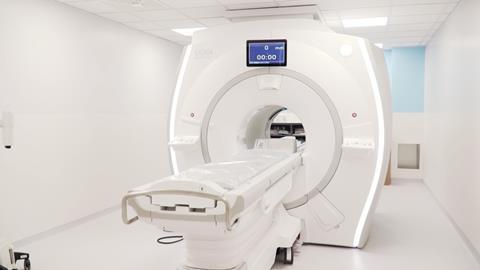
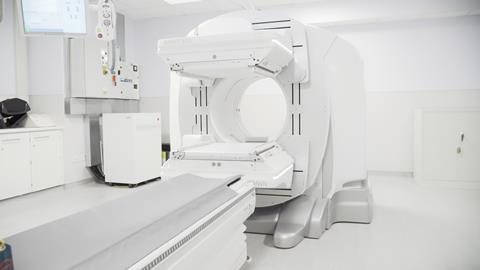
In 2025, a major diagnostic imaging upgrade at John Radcliffe Hospital included the installation of a GE MRI scanner and GE SPECT/CT gamma camera, alongside a comprehensive refurbishment of the nuclear medicine department.
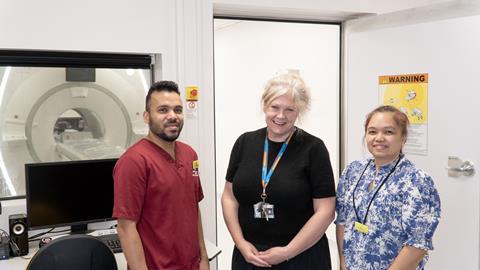
The benefits are already being felt by patients and clinical teams. Cyrene Saga, advanced clinical specialist MRI radiographer at OUH, said:
“Having this new MRI scanner significantly enhances patient comfort and advanced imaging techniques, which helps to reduce anxiety. It also increases scanning capacity and supports faster, more accurate diagnoses, enabling us to better manage waiting lists and deliver targeted treatments.”
The new SPECT/CT is also strengthening the nuclear medicine service, with its CT capabilities supporting improved diagnostic accuracy, particularly for oncology and paediatric patients, where timely and detailed imaging is essential. The accompanying department refurbishment further demonstrates the importance of considering the patient environment alongside equipment investment.
The programme’s next phase is under way, with three further imaging systems being installed across the trust: Siemens BiPlane and fluoroscopy system, and the GE PET/CT scanner.
Felicity Taylor-Drewe, chief operating officer at OUH, said:
“These new imaging facilities are a fantastic step forward for our patients and staff. They not only improve the quality and speed of diagnosis but also help us create a more comfortable and efficient experience for everyone who uses our services. This ongoing project reflects our ongoing commitment to modern, high-quality care across our hospitals, and we are pleased to be working alongside Ergéa UK to help us deliver this.”
The involvement of multiple manufacturers reflects the differing needs of each clinical application, rather than a one-size-fits-all approach. Ergéa’s vendor-neutral model supports these choices while ensuring investment and lifecycle management remain aligned with OUH’s wider imaging strategy.
Building flexibility into long-term investment
The needs of an imaging service rarely remain static over the lifetime of its equipment. Patient demand changes, clinical pathways evolve, and new technologies create opportunities to improve diagnosis and service delivery. Long-term investment planning must therefore do more than schedule equipment replacement; it must allow trusts to respond as their priorities change.
Through a vendor-neutral MES partnership, trusts can select the most appropriate technology as clinical needs evolve, rather than being tied to a single manufacturer or a like-for-like replacement.
This creates greater scope to direct investment towards changing clinical priorities, whether that means expanding capacity, introducing new diagnostic capabilities or improving the efficiency of existing services. It also allows equipment decisions to be considered alongside wider infrastructure and lifecycle requirements, supporting a more coordinated approach to developing the imaging estate.
For OUH, this flexibility is central to a long-term approach that can accommodate different technologies, clinical applications and investment priorities over time. The objective is not simply to replace equipment as it ages, but to ensure that each investment continues to serve the needs of the service, both today and in the years ahead.
A strategic approach to diagnostic equipment management
A MES extends beyond the procurement and maintenance of imaging equipment. It can provide a long-term framework for managing assets, coordinating investment and supporting the wider infrastructure needed to modernise imaging services.
This can include building works, room design, infrastructure requirements and installation planning, helping ensure that equipment investment is considered alongside the environment in which it will be used.
The strategic partnership between OUH and Ergéa demonstrates how this approach can support the ongoing development of a complex imaging estate. By combining strategic planning with the flexibility to select technology from different manufacturers, the trust can continue to modernise its services while keeping clinical priorities and patient needs at the centre of investment decisions.
Ultimately, the value of a vendor-neutral MES lies not simply in the equipment it delivers, but in the flexibility it gives trusts to make investment decisions around evolving clinical needs.
Watch the imaging upgrades at John Radcliffe Hospital: OUH and Ergéa Celebrate Major Diagnostic Imaging Upgrade at John Radcliffe Hospital | Videos & Movies on Vimeo
References: New imaging equipment enhancing patient care - Oxford University Hospitals