














An HSJ roundtable, in association with DXC Technology, explored how the NHS can better share innovations and good practices across organisations
It is often said that somewhere in the NHS there is an answer to every problem – it is just not spread across the service.
In fact, there’s no shortage of innovative solutions to the NHS’s current challenges or, often, of people willing to implement them. Getting change at scale can be hard but is a prize worth pursuing.
How can the NHS get better at disseminating good practice and innovative ideas across organisations, particularly at a time when the service is struggling for money and staff are firefighting on every front?
An HSJ roundtable, in association with DXC Technology, sought to find out.
Panel
- Ailsa Brotherton, director of improvement, research and innovation, Lancashire Teaching Hospitals Foundation Trust and improvement director, NHS IMPACT
- Lesley Dwyer, chief executive, Norfolk and Norwich University Hospitals Foundation Trust
- Deborah El-Sayed, chief transformation and digital information officer, Bristol, North Somerset and South Gloucestershire Integrated Care Board
- Tim Gold, chief transformation officer, University Hospitals of Liverpool Group
- Tom Hardie, senior fellow, The Health Foundation
- Stephen Madden, associate director for strategy and transformation, Hertfordshire and West Essex Integrated Care Board
- Pooven Maduramuthu, industry lead healthcare, DXC Technology
- Nick Sands, director of transformation and digital, Royal Surrey Foundation Trust
- Alastair McLellan, chair, HSJ editor

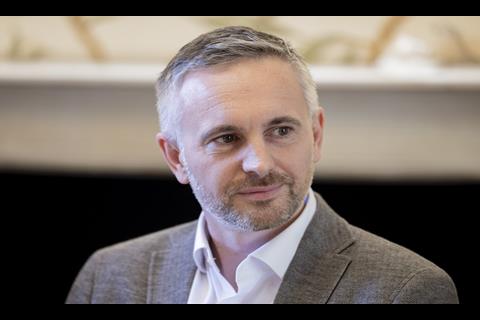
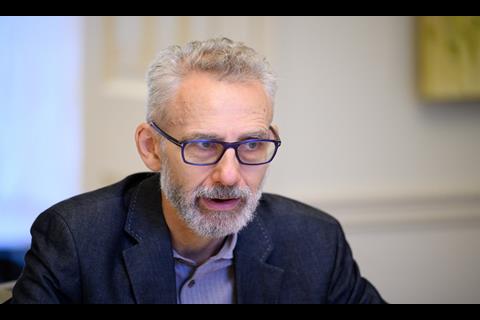
The reality for scaling up innovation at present is that organisations are working from a starting point of a cash-strapped system facing immense pressure. Tom Hardie, senior fellow at The Health Foundation, said there were pockets of improvement “but we are not seeing as much as we need to meet the challenges the NHS faces”.
Among the first issues for many NHS organisations will be choosing what to concentrate on. There are many areas where the NHS could benefit from spreading innovation, but few trusts will have the capacity to tackle them all at once. Lesley Dwyer, Norfolk and Norwich University Hospitals Foundation Trust chief executive, said they had had to prioritise what to work on. “There are times when we say we can’t do that in that way now… but let’s look for opportunities.”
Benchmarking against other similar hospitals is one way to identify key areas for innovation. Ms Dwyer highlighted the volume of comparative information that trusts have access to.
However, Tim Gold, chief transformation officer of University Hospitals of Liverpool Group, said this sort of information as well as resources like the model hospital, while useful, were only the start of the process. “We all need to get better at diagnosing our own problems,” he said. “Benchmarks probably do more good than harm, but they are not an improvement in their own right.”
Stephen Madden, associate director for strategy and transformation, Hertfordshire and West Essex Integrated Care Board, suggested comparative information could prompt useful conversations about where organisations were and start the improvement process.
The NHS’s capability to spread innovation has fluctuated over time. Chair Alastair McLellan recalled the days of the NHS Modernisation Board, which had significant resources and teams of trained people who could work with trusts. In today’s tighter financial climate, trusts may have to rely more on their internal resources.
Ms Dwyer said she had once been told she needed 17 per cent of frontline staff trained in improvement methodology to have sustained change – although she stressed the exact methodology did not matter, just that one was chosen.
Curiosity is important in identifying improvement opportunities, added Deborah El-Sayed, chief transformation and digital information officer, Bristol, North Somerset and South Gloucestershire ICB: “Whatever your model is, or even if you don’t have a model, if you have curiosity then you can get a spark.”

Ailsa Brotherton, director of improvement, research and innovation, Lancashire Teaching Hospitals FT and improvement director, NHS IMPACT, said the national improvement board had 14 networks. It aimed to let people see what best practice was and share with each other as well as reducing unwarranted variation.
Her trust had been keen to learn from others. “We have taken learning from Liverpool University [Hospitals] Foundation Trust about how to create a single improvement board,” she said. “But it is the people who make the difference.”
She pointed out that many organisations now had many people trained in improvement, to drive the capacity for change, but this may not be uniform – for example, community and mental health services may not have much capacity. ICBs could play a role here in connecting the improvement community across the system, she added.
“How do we create the space and capacity for frontline teams to be able to do the improvement whilst [they are] still delivering the frontline care under pressure?” she said.
Mr Hardie added: “Adopting innovations [is] really hard work and it requires time, effort and resources which is really hard to find in the current climate.” He said this particularly applied to adapting innovations to context: “Without additional support, it can be really difficult to embed that and get the benefits from it.”
He suggested several things that could help – an organisation-wide improvement strategy, improvement capability within the organisation, the psychological safety to make innovations, and a team dedicated to dealing with improvement who could help with coordination, building business cases and contracting.
Whatever areas trusts decide to tackle, bringing staff along with them was seen as crucial – but not always easy. Mr Madden said there was a need to engage with people who might resist change and get them talking.
However, fear of failing can often be a factor in reluctance to push for changes and take risks. Ms Dwyer said: “I often ask people when was it better? Not always but many times they go back to covid when they felt action was producing things and they were working together.”
Mr Gold said his organisation was taking a structured approach, developing a case for change, ensuring clinicians were on board, and pinning down the fragmented pathways and areas for change.
He added this had come alongside a big push on culture. “One of the benefits of coming out of special measures is that you really focus on the things that are mission critical,” he said. “When you talk about scaling improvement it is about bringing solutions to the areas where you most need them.”
Many organisations will be looking to do what was described as “adopt and adapt” – taking innovations which have worked elsewhere and introducing them into their organisation. This can run into difficulties – from the “not invented here” attitude which can stymie change to trying to adopt while removing the elements of a project which have made it successful elsewhere, said panellists.
Nick Sands, director of transformation and digital, Royal Surrey FT, stressed the importance of collaboration and relationships, together with understanding why things were successful in some areas and not others. “It’s giving people that ability to form relationships, to get under the skin of that… how do we celebrate not just those who come up with the innovation but also those who adapt and adopt in their own place?” he said.
Many NHS leaders will have worked through a period where competition was more important than collaboration. “We all talk about collaboration, but we have a generation of leaders across the NHS who are really competitive by nature… it is difficult for them to switch that mindset to be collaborative,” said Pooven Maduramuthu, industry lead healthcare, DXC Technology.
There were exceptions – London was a very competitive environment, but the OneLondon shared care record programme had involved collaboration, he said.
“We would like to work with those leaders, not to introduce more innovation, to help the NHS scale. This is the best route for the next 18 months when we have no funding,” he added. “We don’t necessarily need new money and more capital. We need to work in a different way.”

Where do ICBs fit into this, especially with their changed role to focus on strategic commissioning and building integrated neighbourhood teams?
Ms El-Sayed suggested their role was that of a convenor through working with all parties. This included spending money in the right place – for example, with mental health patients who also needed social care. ICBs could “provide the glue” that linked things together but leave the acutes to do what they did best.
It was also vital to define the problem they wanted to address – otherwise, their efforts could be diluted across a variety of things, she said. They also needed to share, including examples of where they had failed or gone down a cul-de-sac.
ICBs have had to prioritise as they try to reduce their running costs by 30 per cent, said Mr Madden. But he cautioned: “There has almost been an overload of innovation. Everyone is trying to do so many different things that we are not doing it well… you might have done 30 or 40 things but no one is really clear which ones have done better than others.”
He added what ultimately mattered was delivery and his ICB had set targets which success could be judged against.
There may even be some solutions which could be adopted nationally. While Mr Sands pointed out context was important when considering adoption, areas such as outpatient appointments would be one where there could be a national model. That might encourage investment from technology companies because they could see the prospect of use at scale.
Mr Gold added: “We need to be a bit bolder and say we can have some common solutions whether it is around outpatients or digitalising transfer of care hubs.”
Setting targets
The panellists all felt that setting targets and timeframes for the outcomes of innovative projects was difficult. Too ambitious and projects could appear not to have delivered the benefits they should. Not ambitious enough and projects could appear to have little effect and risked people moving onto the next challenge.
Ms Dwyer, who has led organisations both in the UK and Australia, said “early wins” were important, alongside some longer-term ambitions. But if things do go off plan, this needed to be corrected quickly, she said. “Most of us have a thousand flowers blooming and my biggest worry is… will the system give you enough time because things did take a bit of time.”
Mr Maduramuthu said target setting must be relative to where the organisation was at the moment: “Set realistic targets that recognise where you are starting from.”
Setting a scope for what you wanted to solve was also important, added Ms Brotherton – setting one too big and broad meant it could not be solved within the time and resources available.
And it was important to allow enough time for the results to be visible, added Mr Hardie, saying sometimes it felt innovations were seen as inconclusive because not enough time had passed before they were evaluated. Incremental progress was a way of combating the “perfect being the enemy of the good” he added.
Technology and AI may eventually help with this, suggested Ms El-Sayed, as it could identify what innovations had been successful and at what cost.
Innovations in frailty from the hospital with the oldest population in the UK
Cromer in north Norfolk has the oldest population in the UK and has a small hospital but is more than 25 miles from the acute hospital in Norwich. Inevitably, many older patients who fall ill end up being taken to Norwich for assessment and treatment – which puts a strain on health services, including ambulances, and is less than ideal for the patients.
The trust decided to make this a priority for an innovative solution and held a forum with all those involved in providing care around frailty and how hospital admissions could be avoided. This pinpointed four things which could be done, including a hub offering assessment without elderly people having to travel to Norwich coupled with greater use of technology. “The vision is no elderly person comes to Norwich for assessment without already having had this quick assessment,” Ms Dwyer said.
None of this involved people asking for extra money, she said, but those involved in the forum had been concerned about needing permission to make changes. “We had lots of different projects but none of them were joined up,” she added. “Nobody asked for more money. Everyone asked to be able to stop the replication and work in a different way.”
Photos by Wilde Fry and videos by Daniel Kutcher