

















An HSJ roundtable, in association with DXC Technology, asked, with finances squeezed, what opportunities does technology offer the NHS to save money
The NHS is facing what many see as its toughest financial challenge yet as it battles to save money while maintaining clinical services’ quality and accessibility.
In association with
For many trusts, adopting digital technologies will be key to how they find savings. But digital technology’s return on investment can be slow, and many providers will be looking for savings in the year rather than in several years.
An HSJ roundtable, in association with DXC Technology, asked managers from operational, finance and digital backgrounds what could be done to release savings in the short term.
Many focused on getting the best out of existing technologies rather than investing in new technologies – possibly reflecting the difficulties in accessing funding, even when there are opportunities to save money in the long term.
Panellists
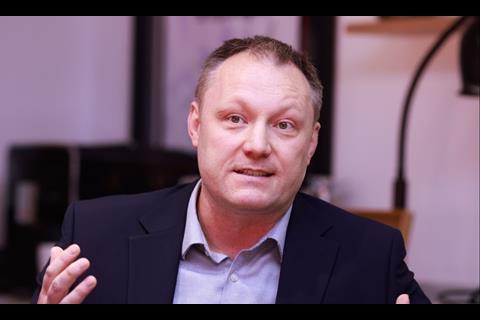
- Tayo Fowowe, divisional operations director, Homerton Healthcare Foundation Trust
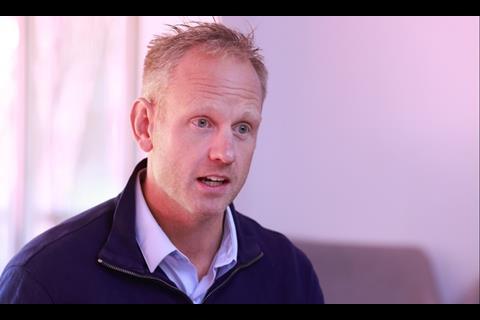
- Tim Horton, assistant director, The Health Foundation
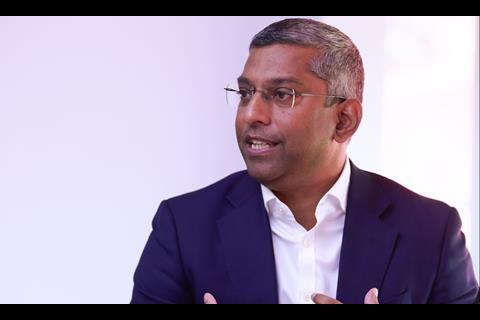
- Pooven Maduramuthu, industry lead healthcare, UK&I, DXC Technology
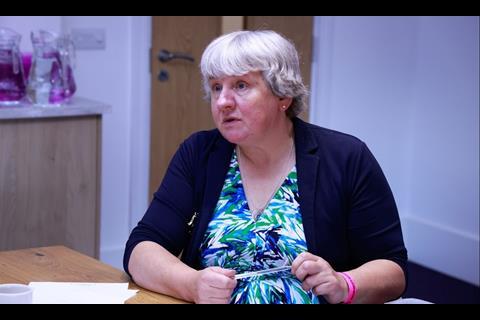
- Jordan Mckie, chief finance officer, Harrogate and District Foundation Trust
- Mark Singleton, chief digital and information officer, Blackpool Teaching Hospitals Foundation Trust
- Alison Moore, HSJ chair
Shifting the focus from procurement to adoption
Trusts have a challenging few months ahead as they struggle to deliver cost improvement plans while the service slides into winter.
The government has highlighted greater technology use – including the NHS App and AI – as part of the longer-term vision of how the NHS will cope with increased demand while keeping costs down. But what technologies offer the prospect of shorter-term savings?
Panellists at HSJ’s roundtable agreed that more needed to be done, both in accessing more digital technology and embedding its use. Tayo Fowowe, Homerton Healthcare Foundation Trust’s divisional operations director, said digital adoption was “still at the very basics” with a need for investment to save.
Tim Horton, assistant director at The Health Foundation, pointed out that public policy historically has focused on procurement but not adoption and realising the benefits. “Electronic patient records would be the perfect example,” he said. “There’s been a huge focus on can we get up to 100 per cent of trusts with an EPR. Just because a trust has an EPR doesn’t mean it’s getting the goodness out of it.
“When we talk to staff in trusts, we hear some of them doing very well with their EPRs, but others are still in the foothills. Staff still need training on how to use them.
“I guess our focus in the NHS needs to evolve beyond just procuring tech to actively thinking how we’re going to get effective use of that and optimise it and drive the benefits out of it.”
This was not unique to the UK, he said. In the US, which was probably a decade ahead in using EPRs, there had been a government programme to encourage providers to use them more meaningfully.
Pooven Maduramuthu, DXC Technology industry lead healthcare, UK&I, added: “There’s a race to have more technology and more innovation as opposed to leveraging what you currently have. I think if there is a priority for the NHS from enabling digital technology to drive efficiency, drive productivity and drive cost savings, I think it’s better focused on existing technology.”
Trusts often said they had no money to invest, but the investment had already been made in many technologies, he said, and now organisations needed to get the savings out.
But NHS organisations often lacked capability and capacity. Trusts working collaboratively could make a difference, he suggested. He cited the East Midlands, where several trusts had worked together to introduce EPRs with learning as each trust rolled them out: “You have got very highly skilled, scarce resources that you are sharing as opposed to just working with the deals.”
While much of the media interest has been in technologies used on the front line by clinicians, panellists noted that some new technology in back-office functions was releasing time for both clinical and non-clinical staff.
Mr Horton said: “Politically, admin and operational tech isn’t sexy. You never get the secretary of state launching a big initiative for technology to help with letter work in the NHS. But it’s stuff like that that can often make a huge difference.”
Mark Singleton, Blackpool Teaching Hospitals FT’s chief digital and information officer, added: “We’ve just been doing a pilot of Co-pilot, Microsoft’s version of AI. We have had 350 staff fill in the survey, which is about 80 per cent of the cohort that’s been piloting it – 61 per cent are using it on a daily basis, and 52 per cent believe it saves them three hours or more a week, so that’s about a 10 per cent increase in productivity.
“We have got doctors talking about how it is helping them manage their inbox [with] less administration and more time with patients. It is supporting people all the way up to executive level.”
Mr Maduramuthu added: “If you focus on the non-clinical side… you’ll start to uncover just how much of an administrative burden there is sitting in the NHS just to get a patient in front of a consultant or a clinician. And I think the focus should be on that.
“You need to make these tools fairly easy for the users, and I think that drives adoption. That drives scaling. And when you’re driving that, you’re going to get your cost savings whether you like it or not.”
If you focus on the non-clinical side… you’ll start to uncover just how much of an administrative burden there is sitting in the NHS just to get a patient in front of a consultant or a clinician. And I think the focus should be on that”
Implementation is key: Jordan Mckie, Harrogate and District FT chief finance officer, said planning for Harrogate’s EPR had included focusing on improvement methodology and ensuring preparations were “joined up” and used the same language rather than people “doing their own little bit in terms of project management”.
But how can technologies be scaled up and spread across an NHS consisting of individual organisations, doing their own thing?
Currently, said Mr Fowowe, it felt like decisions were being pushed downwards – to integrated care boards, and then to individual trusts – whereas the conversation needed to be national. Mr Singleton suggested the changes around NHS England, the Department of Health and Social Care, and ICBs could provide opportunities.
There are good examples of successful innovations being shared, although these are not always national. Mr Mckie mentioned an innovation around follow-up with outpatients, which his trust had introduced and was sharing with others locally.
With 2026-27 looming, trusts are thinking about the savings they will need to make – and that needs data. Mr Singleton said his trust was looking at how existing systems were used and what the benefits were.
Rostering information is crucial for tackling bank and agency spend and can be used to justify over-recruitment of permanent staff when it is known that vacancies will arise in a few months and would otherwise have to be filled by more expensive temporary staff, said Mr Fowowe.
However, some investments will only pay off in the long term. Mr Horton mentioned a study of robot surgery that showed productivity benefits arising four or five years after it was introduced. Mr Mckie said some of the conversations around five-year financial planning and the 10-Year Health Plan “helped to look up and out a little bit” at a time when short-termism could dominate.
In the short term, savings may need to come from existing technologies. “The reality is near-term productivity savings will come from technologies that have been recently introduced but we’re not using anywhere near well enough yet – so things like virtual wards, image analysis software, video consultations and digital consultations, and above all EPRs,” said Mr Horton.
And Mr Maduramuthu urged trusts to capture the benefits that digital technologies offered to help build the case for wider adoption. He added that suppliers had the freedom to structure deals in a way which would help the NHS afford these technologies, regardless of whether they needed them to be funded from capital or revenue: “There are mechanisms out there that allow you to afford this from a commercial model. That way, you can pass some of that risk to suppliers like us.”

Some staff may be hesitant about using new technologies or even expanding the use of existing ones, fearing it will make their jobs harder or even replace them altogether.
The panel agreed this needed to be handled carefully, while also recognising that the way the NHS works can be frustrating for admin staff.
Mr Maduramuthu said: “I think if you ask the individuals, they will still say I would prefer to have the right tools to do my job because I know the patient impact [is] going to be positive.” Telling people they would be given the tools to do their jobs rather than focusing on cost savings helped acceptance of new technologies, he added.
Mr Fowowe said he had changed his use of words around transformation. “Cost improvement plan” could be off-putting, making people think they were being asked to do more. “When you come with that paradigm, you have already lost those people,” he said.
Frontline teams were motivated by quality and by improving their working lives, added Mr Horton: “It is really important that you are speaking to their intrinsic motivations. There’s totally understandably a lot of focus in the 10-Year Health Plan on the potential of tech to drive savings. I would have liked to have seen a bit more narrative about the potential of tech to really improve jobs and ways of working for the people who work in the NHS.”
Ambient voice technology could save many clinicians’ time, potentially an hour a day in writing up notes. But they may not want to spend this released time seeing extra patients – Mr Singleton cited one clinician saying it meant she no longer had to write up notes at the weekend, for example.
Mr Mckie mentioned a tool that allowed a surgeon to do almost all his follow-up work digitally while providing patients with personalised video information. This had freed up the doctor to carry out more operations – which is a key motivation for surgeons – and reduce waiting lists, he said.
Business cases needed to capture the staff experience in using technologies, as well as elements like the financial and operational case, Mr Maduramuthu added.

The 10-Year Health Plan positioned the NHS App as a way to achieve a step change in how patients engage with their care.
Mr Horton said: “I think it’s one of the most exciting aspects of the potential of technology in the NHS. Twenty years ago, Derek Wanless did a review about the future of the NHS, and he said the only way it’s going to remain sustainable is in a scenario where patients are fully engaged in their own care. And we’re still a long way from that.
“I think we’re potentially on the verge of a really exciting moment where patients can have information and help build their confidence to become more engaged in their own care. And if we can combine that [not just with tech but] with self-management support, the right kind of coaching and conversations, there’s really a chance to achieve a lot there, not just in terms of quality of care and patients’ experience, but hopefully savings as well.”
Mr Fowowe mentioned his family’s experience in visiting multiple hospitals and having to repeat details of their conditions and treatment at each. A single point of access for healthcare staff would help doctors make informed decisions without repeating tests, he said.
Many panellists saw AVT as a win-win, with patients feeling doctors were paying more attention to them rather than writing down what was said in a consultation and doctors saving time.
It’s been used for more than 5,000 consultations in Lancashire, said Mr Singleton, with great patient feedback. “We’ve been very clear with clinicians that the clinical responsibility still sits with them. So they’re still responsible for checking any outputs or any correspondence that goes off,” he said.
Photos by Neil O’Connor and videos by Daniel Kutcher