• Central workforce costs up 10 per cent, equivalent to £200m annually
  • Number of substantive staff up by 2 per cent, and temporary staff also up
  • DHSC says it has ordered arms-length bodies to cut headcount

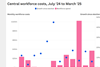
Spending on staff at the Department of Health and Social Care and seven other central agencies has increased by more than 10 per cent since Labour came to power, analysis shows.


Monthly workforce costs have risen by more than £20m – the equivalent of £240m annually – as overall headcount has swelled by 1,000 since the July general election.

Bodies with the largest increases include the Medicines and Healthcare products Regulatory Agency, where spend has grown by almost half, the NHS Business Services Authority, which has seen its workforce bill go up by nearly 20 per cent, and NHS Resolution, on 16 per cent.

A government spokesman said a voluntary exit scheme had now been launched at the Department of Health and Social Care, and arms-length bodies had been ordered to cut staff numbers.

Since winning office, Labour has announced deep cuts to integrated care boards, which need to slash running costs by 50 per cent, and a similar proportion at NHS England, which is to be formally abolished and merged into the DHSC.

Earlier this year, Keir Starmer said he wanted to “cut bureaucracy” in the public sector.

However, workforce costs at the DHSC and its 11 associated agencies have increased since July 2024 to March this year, which is the most recent data. This is before the impact of the hike to employers’ national insurance contributions, which took effect from April, but does include the impact of pay awards settled in August last year.

Spend has gone up by 10 per cent across the board, even though the number of staff employed has grown more slowly, at 2 per cent.

The biggest increase, at the MHRA, has been driven by the usage of temporary staff more than doubling.

Spending on contingent labour at the medicines watchdog has increased from less than £2m to more than £5m in the last eight months. The MHRA said the figures included both staffing and outsourced services, and the spend varied month to month.

A total of 45,000 people are employed in the DHSC, central agencies and arms-length bodies. NHSE currently has 16,000 staff, followed by the Blood and Transplant Authority with nearly 7,000, and the UK Health Security Agency with 6,000.

In 2022, former Conservative health and social care secretary Steve Barclay outlined plans to substantially reduce departmental headcount and ordered arms-length bodies to implement complete recruitment freezes. NHSE has reduced its substantive staffing by about 20 per cent in recent years.

A DHSC spokesman said: “The secretary of state has been clear about the need to reduce the size of the centre to put more resources into frontline delivery. We are abolishing NHSE to that end”.

An NHS Resolution spokesman said: “The planned growth reflects the extension of our role into general practice and an increase in the work handled in-house, reducing money spent on external legal costs”.

The BSA said its staffing growth had been driven by changes in pensions, and said it kept operating costs as low as possible.

A spokeswoman said: “We deliver national, at-scale services done once and well, which in turn delivers significant savings for the frontline NHS. Our five-year strategy has a target of delivering £1bn savings for the NHS, and we remain on track to deliver this”.

Rose Braithwaite, MHRA chief finance officer, said: “In exceptional circumstances, contingent labour can help to bring in specialist expertise quickly while retaining flexibility as long-term needs are assessed. It is always done on a temporary basis in line with strict Cabinet Office spending controls”.