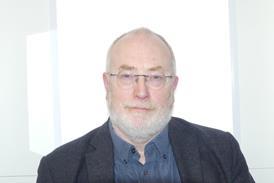
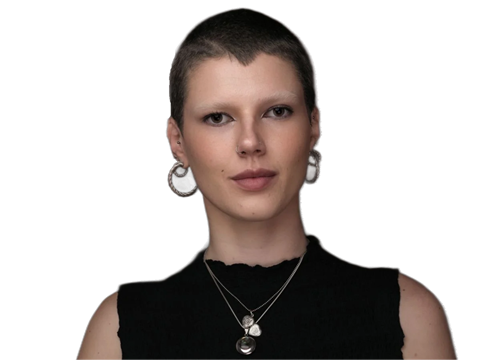
Royal Society president and Nobel laureate Sir Paul Nurse tells HSJ that through more open data sharing and by driving clinical trials the NHS can again be the ‘envy of the world’

Sir Paul Nurse

Sir Paul Nurse

Most of us imagine that the NHS is there to treat us when we get ill. Sir Paul Nurse, Nobel laureate and president of the Royal Society, would not disagree - particularly after recent heart surgery.

But he also thinks the NHS is missing a trick and wants it to become part of a “national research engine”, one that drives innovation in medicine, improves the nation’s health and also creates jobs and wealth for the country. If we as a nation could pull this off, he believes, we would be the “envy of the world”.

‘Where we may have missed a bit of a trick is turning goodwill to use and asking people who are treated by the NHS to improve it’

He has made this vision central to his five-year tenure at the Royal Society, a fellowship of many of the world’s leading scientists who are dedicated to excellence in science and using science to benefit humanity.

“We have an opportunity in the UK for three reasons,” he says. “The NHS itself, the strong scientific research base we have here in the UK and our pharmaceutical and biotechnological base, still strong despite recent developments.”

Sir Paul Nurse, geneticist

  • Born in 1949 and brought up in Wembley as by far the youngest of the family, he discovered at the age of 58 that he was, in fact, the illegitimate child of his oldest “sister” and had been raised by his grandparents.
  • Left school at 18 to work in industry as, although he had the grades to go on to university, he did not have the required language O level. He was eventually accepted at Birmingham University to study biology.
  • An international research career culminated in the 2001 Nobel Prize for Medicine for his work (with others) on uncovering how cells divide, an insight that is central to understanding cancer.
  • In 1993 he became director of research and later director general of the Imperial Cancer Research Fund, a post in which he oversaw a merger with the Cancer Research Campaign to create Cancer Research UK, now the world’s largest independent cancer research organisation.
  • In 2010 he was appointed chief executive and director of what is now the Francis Crick Institute and president of the Royal Society.
  • He is married with two children.

Sir Paul’s international career has included spells in the US and Europe and from this vantage point he says the NHS has some unique strengths. For a start, where many health systems are fragmented, the NHS is still (and he does qualify the term) universal and national.

“It’s also rather popular and I think this is something we underestimate,” he adds. “It’s seen as providing care not because of a commercial outcome but as something that is there for people. So where we may have missed a bit of a trick is turning that goodwill to use and asking people who are treated by the NHS to improve it and of course that gets us to asking them to take part in clinical trials.”

Giving something back

He speaks from personal experience, having recently undergone major heart surgery in the NHS. “You realise that you get fantastic care that is enormously expensive and at no immediate cost to yourself and you feel you want to give something back. What people can give back is themselves by participating in trials.”

He argues that tapping into this goodwill is vital. The old model used by pharma and biotech is one in which commercial companies spend vast sums of money and time developing new drugs. These medications are then sold in enough quantity to not only recoup the development costs but to invest in the next development and turn a profit for shareholders.

‘I have the ear of people who are in the middle of all this’

But it is a broken model. The demand for “blockbuster” drugs is being replaced by demand for drugs to treat niche conditions. Meanwhile, the science of genetics - Sir Paul’s discipline - is revealing how different, genetically influenced disease processes lie behind common sets of symptoms. Breast cancer, for example, can no longer be considered one disease but a collection of diseases, each responding to a different treatment regime.

This - combined with emerging technology that may make it possible to sequence our individual genetic codes - is raising the prospect of “personalised medicine” in which the drugs we take and the doses in which we take them are tailored to our genetic profiles.

Long-term investment

Niche drugs and personalised medicine will require a long-term investment in research and trials but for smaller returns.

“Increasingly pharma and biotech do not have the resources or the stomach for long-term investment,” says Sir Paul. “We have seriously to think about a much more committed public/private partnership where the private industry provides what it can and its strengths where it can and where the public provides the people for trials and the longer-term perspective.”

He further argues that the involvement of large numbers of NHS patients in clinical trials could lead to “research carried out by people”.

“Take astronomy,” he says. “There is a real engagement of interested lay people in research in identifying the shape of galaxies. I think we should be thinking about how we translate that into the clinical arena.”

So he wonders whether the NHS could do a better job of capturing the anecdotal experiences of patients experiencing side effects. “To be flippant, Viagra was designed for a completely different purpose; if the side effects were not so obvious it would not have been picked up.”

Capturing experience

He speaks with the instincts and passion of a research scientist. This is the man who, as a boy walking to primary school in north London in the 1950s, wondered why plants growing in the shade had bigger leaves than those growing in the light. In the biography he wrote on accepting his Nobel Prize for Medicine in 2001, he admitted that at least one of his most important scientific discoveries was made by accident.

But his is not a lone voice. There are a number of moves nationally and internationally to capture such anecdotal experience through formal data sharing. Cerner, the US computer giant whose electronic health records systems are used across North America, Europe and in the UK, is linking millions of health records for just such research purposes.

And in Canada, researchers now have access to pseudonymised health records from 600,000 people with diabetes, allowing them to study in much more detail and with much more rigour how effective drugs are in different subgroups of patients, and identify which groups are most at risk of side effects. Health Canada has invested $30m in what is now known as “active pharmacovigilance”.

In England, the National Institute for Health Research and the Medicines and Healthcare products Regulatory Agency are jointly funding the clinical practice research data Link to maximise the research use of NHS data. This has already led to nearly 900 publications.

Meanwhile, this summer the Royal Society published a report encouraging scientists - including those in medicine - to be more open to data sharing. It argued, in essence, that the small potential for harm caused by data sharing needs to be weighed against the greater potential for good.

Singing from the same hymn sheet

Sir Paul is also singing from the same hymn sheet as prime minister David Cameron and NHS chief executive Sir David Nicholson - this is an agenda closely aligned with the former’s Strategy for UK Life Sciences and the latter’s Innovation, Health and Wealth policy.

Both set out a vision of closer public/private partnerships to support the UK in becoming a global leader for research, to create jobs and wealth and improve the nation’s health.

It is a theme that also runs into Sir Paul’s next venture - setting up the Francis Crick Institute, due to open next to St Pancras Station in London in 2015. A new building funded by merging the Medical Research Council and Cancer Research UK will house 1,400 scientists and 120 research groups. He articulated the case for making use of the NHS as a research tool to the House of Commons Science and Technology hearing on this new institute.

‘Remember, I am a yeast geneticist so I am not sure how much people listen to me’

“It’s a fantastic opportunity to do things rather differently,” he says of the new venture. “It will see its mission as discovery research to understand the biology that underpins public health and a focus on how that understanding can contribute to better treatments and to the economy.”

He is keen, for example, that the Institute - of which he is chief executive - will be multidisciplinary and will develop research scientists not just for London but for medical schools across the country. It is likely to have links with the London academic health sciences centres through formal connections with University College London, King’s College and Imperial College London.

“Like the Crick Institute, they are aimed at getting a critical mass and achieving excellence so it is the same agenda. But where Crick is more research focused, the AHSCs cover a wider range.”

Articulating his vision

Sir Paul comes across as a modest man who, when asked what leadership he can provide, says: “Remember, I am a yeast geneticist so I am not sure how much people listen to me.”

But for all that, he does agree that he is articulating a vision that is at the heart not just of government policy but also evident in many recent developments, from the AHSCs to data sharing projects and work by the National Institute for Health Research to ingrain health research into the NHS.

And he does agree that, yes, as a leading scientist and president of the Royal Society, people do listen to him. As he says: “I have the ear of people who are in the middle of all this.”

So he is calling for the NHS and government to do more to make the NHS a research engine, for senior NHS leaders to work more creatively with the research councils and develop partnerships with pharma and biotech industries.

He would also like to see NHS trust chief executives think more about research. “They need to be thinking not just about effective care delivery but about research opportunities that will help the whole community and not just their hospital,” he says.

“We have to have an integrated approach and we have to start thinking bigger.”

Star question

News of Sir Paul’s interview with HSJ sparked a lot of interest but by far the most common question was this: how can the NHS get better at turning research into practice?

“I think the first thing we have to accept is that this is something the whole world has trouble in doing. We often think of it as a British phenomenon and in my view it isn’t. And that’s because it is difficult,” says Sir Paul.

So first he would like researchers, healthcare professionals and managers to acknowledge that it is challenging to translate discovery research into clinical practice. “I do not like the rather trivial things that some people say about this area because is it is an area that we need to look at very carefully,” he adds.

He emphasises two aspects that encompass not so much research but human behaviour and the structures in which individuals work. The first is culture; the second is permeability.

“I do not think we pay nearly enough attention to this,” he says. “As a scientist, I am trained to be very sceptical, not to respect authority very much and to sit on the fence until I have enough data and never to make a decision. We are not good at talking to people because we spend too much time talking to laboratory benches and we are misanthropes.

“On the other side, clinicians deal with human beings and have much more charm. They work in a hierarchy and have to respect authority because in a hospital you do not want to be experimented on, you want best practice.”

He wants to see more understanding of the different cultures, and more permeability between them so that scientists gain an insight into the messy business of clinical care and clinicians get a better understanding of the rigour of research.

“But it is not enough to say ‘if you get individuals together and mix them together it will naturally work well’. You have to facilitate it.”

A research engine could drive the NHS to lead the world

Sir Paul Nurse

Through more open data sharing and by driving clinical trials the NHS can again be the ‘envy of the world’