
The NHS vision is in favour of a more nuanced national-local partnership approach and we welcome such an approach, as long as it remains focused on patient centred care and doesn’t turn into a tick box exercise
There is much to welcome in the NHS Five Year Forward View.
It is a vision of higher quality, more personalised, more coordinated health and care.
It heralds:
- greater power and control for patients, families and communities;
- better models of care;
- a bigger emphasis on preventing illness; and
- a stronger, better supported role for the voluntary sector.
It shuns command and control, and one size fits all in favour of a more nuanced national-local partnership approach.
It is consistent with much that has been called for over the years by patients and voluntary organisations.
‘The forward view shuns command and control, and one size fits all’
Consider this quote: “The health and social care system must be shaped around the needs of the patient.
“The NHS will develop partnerships and cooperation at all levels of care - between patients, their carers and families and NHS staff; between the health and social care sector;… between the public sector, voluntary organisations and private providers in the provision of NHS services - to ensure a patient centred service”.
Cautiously hopeful
These words, which Simon Stevens had a hand in drafting, do not appear in the forward view, but are an extract from the Labour government’s NHS plan of 2000.
Fine words about patient centred healthcare are nothing new.
The vision set out 14 years ago was only partially realised. We are nowhere near the “fully engaged scenario” painted by the late Sir Derek Wanless in 2002.
What confidence can we have that this vision will fare any better in circumstances much less favourable than those of the early noughties?
‘It expresses Simon Stevens’ genuine enthusiasm for a more inclusive, holistic and democratic health system’
I offer two reasons to be hopeful, and one to be more cautious.
First, this is probably a better vision than the one offered 14 years ago. It reflects an emerging consensus about the shape of 21st century health and care, with echoes of the recent joint 2015 challenge manifesto led by the NHS Confederation, and of National Voices’ position statement on person centred care.
It expresses what appears to be Mr Stevens’ genuine enthusiasm for a more inclusive, holistic and democratic health system.
You can trace some of the text back to his earlier public remarks about harnessing the “renewable energy” of patients and communities, and seeing the NHS as a social movement. The style, tone and approach are refreshing. This does not read like a document that would have emerged from Sir David Nicholson’s office.
National-local partnerships
Second, it is informed by an understanding of the things that get in the way of effective implementation.
It recognises that as a country we have failed on prevention; that governments have been obsessed with structural tinkering; that national bodies burden local organisations with their uncoordinated and inconsistent monitoring and performance requirements.
In its prescriptions, it steers a careful course between false polarities: not a national blueprint, not “let a thousand flowers bloom”, but national-local partnerships to develop new models of care, for example.
Those who do not learn from history are destined to repeat it. In this case, we might hope that the converse will be true.
Limited ingredients
Nevertheless, we have to be cautious about the prospects of realising this five year vision.
It will require the equivalent - as NHS Confederation chief executive Rob Webster puts it - of driving the car at the same time as changing the tyre.
Transformation on this scale requires ingredients that are in limited or uncertain supply: political backing, time, headspace, skill, collaboration, and a willingness to engage and let go.
It demands a very different approach and mindset from NHS England and other national bodies, and a high degree of leadership locally.
‘We welcome the commitments to work with patient and voluntary organisations to get the detail right’
It is likely to need more money than is implied in the document’s financial scenarios. And experience suggests that health decision makers have an unrivalled capacity to turn good ideas into grinding processes that tick the box but miss the point: failing to respond to the priorities of patients and their families themselves.
So we welcome the commitments in the document to work in partnership with patient and voluntary organisations to get the detail right.
We can help keep the focus on people; flesh out the commitments to person centred coordinated care; and fill some of the gaps in the thinking - for example, on nurturing patient and lay leadership - and in ensuring that health and social care systems measure what really matters to people, and are held to account accordingly.
Our energy might not be entirely renewable but we are keen to share it.
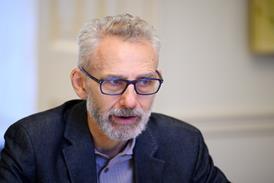
Jeremy Taylor is chief executive of National Voices. Declaration of interest: National Voices and fellow voluntary organisations contributed to the forward view exercise.
Nigel Edwards: Patience is a virtue the forward view needs

Organic, locally tailored approaches are needed
- 1
- 2
- 3
Currently
reading
We can be cautiously hopeful about NHS's forward view


1 Readers' comment