














We all hope to prevent people from slipping into crisis. That starts with supporting individuals and communities to confidently navigate the complex social and health challenges shaping their lives.
Sponsored and written by
For more than 75 years, we have had a proven track record working alongside the NHS to deliver meaningful impact and improved health outcomes. As a regulated care provider with UK‑wide reach, we rapidly design and implement bespoke services that integrate seamlessly across NHS and social care pathways.
At the British Red Cross, we have been on a mission to test what helps people to improve their wellbeing and live at home in safety and dignity. We are delivering measurable prevention and system impact through community-based models, supported by an outcomes framework shaped with partners to track improvements in wellbeing, reductions in system usage and social value contribution.
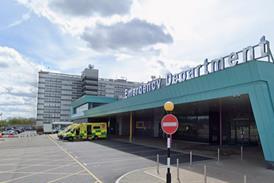
Our neighbourhood work has had astonishing results, working with NHS and social care teams to support people to manage in their homes, without the need for emergency departments or other types of healthcare.
Measurement of impact is critical; here are the indicators we use to determine the success of our interventions:
- We use the Warwick-Edinburgh mental wellbeing scale and patient activation scores to ensure our interventions are supporting individuals
- We measure how we reduce the use of emergency services
- We make sure that our social return on investment demonstrates that we can provide better, less expensive care.
A few weeks ago, NHS England CEO Sir Jim Mackey wrote to every trust/integrated care board CEO in England asking them to submit their neighbourhood health narrative by 15 May, covering proactive care ambitions and whether their system wants changes to payment flows.
The evidence for our neighbourhood services has shown that:
- For people who seek emergency care most frequently, our services reduced accident and emergency attendances and hospital admissions by 64 per cent last year, and ambulance callouts by 57 per cent.
- We work with health teams to change the course of life for people who were heading for residential homes. Emerging data indicates we enabled 75 per cent of people to stay in their homes.
- Our community health worker model in Torridge is working with teams, plotting models around the country to identify concerns and address problems early, making sure that families have the access to the preventive solutions they need.
- Across our work, we have improved wellbeing or quality of life for 86 per cent of people supported, and, in our high intensity use services, activation increased for 71 per cent of people.
- Our work can deliver between 142 per cent and 342 per cent return on investment, depending on the model deployed and the sustainability of outcomes.
Our flexible services have made sure that we do everything we can to keep people safe following discharge – from making sure there is food in the fridge and the heating is working, to ensuring that people have the benefits entitled to them and a home that suits their needs. We have fitted key safes and built beds, going above and beyond to make sure people have everything they need to be safe at home.
As ICBs prepare to summarise by 15 May how they will deliver the benefits of the 10-Year Health Plan, we can help shape a strong, system‑wide narrative. Our support covers the development of strategic commissioning and neighbourhood care models, and we support NHS teams at every stage to provide the care that communities need.
Please contact our director of health and care, Kate Griffiths – KateGriffiths@redcross.org.uk – to discuss our approach and how we can work with you.