

















The fortnightly newsletter that unpacks system leaders’ priorities for digital technology and the impact they are having on delivering health services. This week written by senior correspondent Nicholas Carding. Contact HSJ in confidence here.

The last month has brought two impressive achievements by two respected institutions in Liverpool.

First, the city’s leading football team won the English Football League Cup last week.

Second, and more importantly, of course, the city saw its second hospital (Liverpool Heart and Chest) be accredited by a respected international body as having reached the highest level of digital maturity.

Both feats are causes for celebration for LHCH chief information officer Kate Warriner, who also counts herself as a devout Kopite.

“It’s been a very good few days,” she tells The Download.

LCHC’s accreditation as a level 7 hospital on the Healthcare Information and Management Systems Society rating comes two years after Ms Warriner oversaw the same achievement at neighbouring specialist NHS provider Alder Hey Hospital, where she is also CIO.

This makes Liverpool the first city in England with two HIMSS 7 hospitals, with LHCH also becoming the first hospital in Europe to achieve level 7 after new requirements were added to the global standard.

LHCH’s success means it joins an illustrious club of four other hospitals (Great Ormond Street, Addenbrooke’s, Alder Hey, and Sunderland Royal) in the NHS to achieve HIMSS 7.

The foundation trust, which now shares its chief executive with the Clatterbridge Cancer Centre FT, launched its digital strategy in 2020 which incorporated – but did not focus exclusively on – the requirements needed to achieve HIMSS 7.

The digital strategy was backed by the trust’s board, with nearly £15m invested – of which £6m was obtained through the now closed national Digital Aspirant programme.

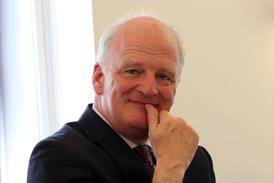
Kate Warriner, CIO of Liverpool Heart and Chest Hospital Foundation Trust

Kate Warriner, CIO of Liverpool Heart and Chest Hospital Foundation Trust

“What we’ve encouraged in the trust is service improvement and innovation…as well as a set of programmes [aligned to HIMMS 7] within the strategy,” Ms Warriner said.

“It’s having a strategy and also letting the flowers bloom.

“But tech and digital is an integral part of everything we do and the care we provide. It’s almost a utility, like your electricity.”

The trust’s innovations include in remote monitoring, such as giving patients a diagnostic patch that uses AI to scan for atrial fibrillation and irregular rhythms in a bid to diagnose heart disease earlier. This is an improvement on patients having an ECG test, which may only last a few minutes and therefore miss symptoms that occur after the test is completed.

Another important factor was the introduction of closed loop technology in medicine, which significantly improves safety during the use of drugs and medicines.

Ms Warriner said this is one of the hardest requirements of HIMSS level 7 to implement, and one reason why so few NHS trusts have been accredited at this level. NHS England has set all trusts the task of getting their digital maturity to a level equivalent to just HIMSS 5 by 2025-26, illustrating just how far there is to go.

LHCH’s accreditation was achieved after assessors from HIMSS spent two days at the trust, which Ms Warriner described as “very intense”.

But the achievement has given staff a “real sense of pride”, and the focus ahead is to improve the trust’s use of data and analytics, and explore the opportunities offered by Generative AI, to develop more insight into operational performance.