













CKD and cancer illustrate stark health inequalities, with poorer experiences for the most disadvantaged patients. An HSJ roundtable, in association with Boehringer Ingelheim, explored the causes and highlighted real-world examples of what was happening to address them.
This report was produced independently by HSJ. The associated event was commissioned and funded by Boehringer Ingelheim. Boehringer Ingelheim had no involvement in the selection of speakers, development of the agenda, content of the discussions, or the editorial development of this report.
Health inequities remain a persistent and costly challenge across the NHS, particularly in chronic kidney disease (CKD) and cancer. Both conditions demonstrate sharp socioeconomic gradients, with disadvantaged groups more likely to present late, experience fragmented pathways, and face barriers to prevention, screening, and self-management.
In association with
Recent initiatives such as Core20PLUS5 and the National Cancer Plan for England aim to put health inequality at the forefront of clinicians’ practice, but the next step is to translate evidence into practical action. With limited funding and fragmented data nationwide, the challenge ahead is significant.
This HSJ roundtable, in association with Boehringer Ingelheim, examined workable strategies to reduce inequities, improve access, and ensure more equitable outcomes in CKD and cancer.
Panellists
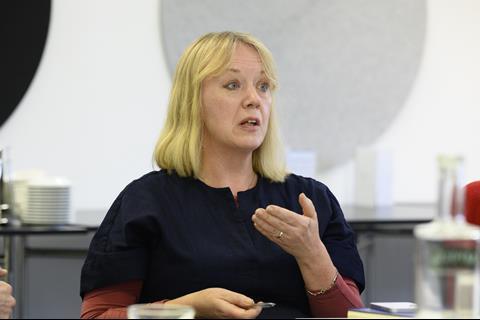
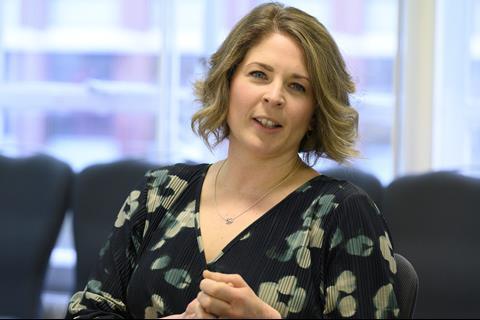
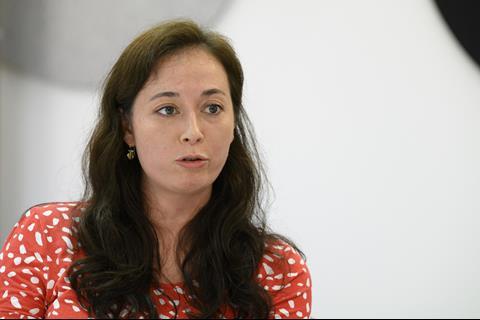
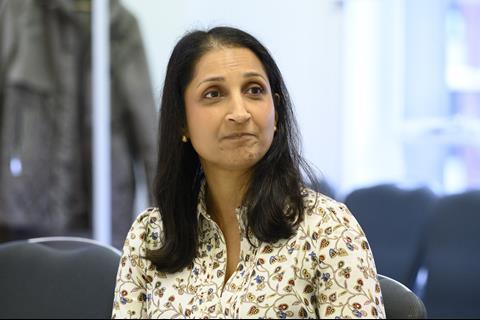
- Ajay Aggarwal, professor of cancer services and systems research, London School of Hygiene and Tropical Medicine (LSHTM)
- William Burlace, clinical pharmacist in CKD, Health Innovation North East and North Cumbria
- Hannah Davies, CEO, Northern Health Science Alliance, and executive director, Health Equity North
- Camille Hirons, NHS GP, clinical lead for integrated neighbourhood teams and lifestyle medicine in Lewisham, and vice president, British Society of Lifestyle Medicine
- Fiona Igwe, health equalities lead, Kidney Research UK
- Emily Scott, clinical oncology registrar, Barts Health Trust
- Smeeta Sinha, consultant nephrologist, Northern Care Alliance Foundation Trust
- Adam Steventon, interim chief data officer, Our Future Health
- Kristin Veighey, National Institute for Health and Care Research academic clinical fellow in general practice, and UK Kidney Association integrated CKD co-lead
- Alastair McLellan, editor, HSJ (chair)
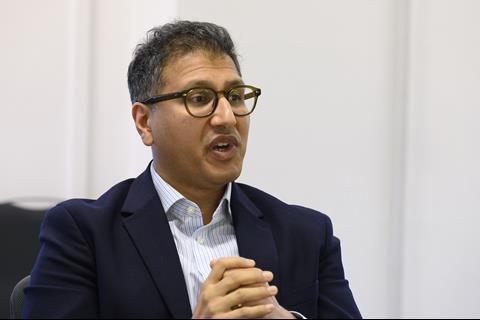


Millions of people in the UK are living with, or at risk of, moderate to severe CKD, and yet it is frequently underdiagnosed and underprioritised. Smeeta Sinha, consultant nephrologist at Northern Care Alliance FT, said historically, renal services have been too focused on dialysis and transplantation, which are at the most visible and expensive end of the pathway. Comparatively, prevention and early detection have been neglected.
“The biggest thing that is going to be on everybody’s books… is what’s going to happen to their dialysis rates if they don’t intervene now; it is going to be critical. We’re going to be heading into the realms of rationing because we didn’t do the prevention work,” she warned.
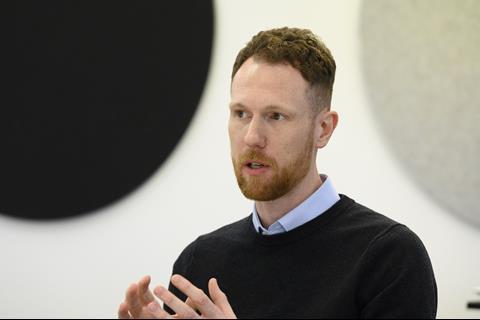
Late presentation is common in both CKD and cancer, said Adam Steventon, Our Future Health’s interim chief data officer, meaning clinicians often lack visibility of the upstream risk factors that contribute to disease progression.
Both conditions share well-established, modifiable risk factors – including diabetes, hypertension, obesity and physical inactivity – yet prevention is rarely funded, incentivised or resourced.
Kristin Veighey, NIHR academic clinical fellow in general practice and UK Kidney Association integrated CKD co-lead, said competing priorities in primary care can push prevention down the agenda.
“There are so many conflicting priorities in primary care,” she said. “If something is not top of the to-do list, it becomes a ‘nice to do’ rather than a ‘must do’.”
Cancer inequalities are similarly entrenched – and arguably more visible – said Ajay Aggarwal, LSHTM professor of cancer services and systems research.
He suggested that national policy often prioritises scientific innovation over systemic change, pointing to the New Cancer Care Plan for England, which places heavy emphasis on discovery science, clinical trials and vaccine development. While important, he argued, such priorities risk overlooking the structural changes required to tackle inequality.
Hannah Davies, Northern Health Science Alliance CEO and Health Equity North executive director, pointed to the disparities in health research infrastructure spend, where investment is significantly lower per head in parts of northern England compared with the London, Oxford and Cambridge “golden triangle”.
At the same time, reductions in community health services and difficulties recruiting GPs have disproportionately affected deprived and rural areas, she added.
Professor Aggarwal also pointed to the limited evidence base on interventions to reduce inequalities. Over two decades, very few studies have examined inequality interventions in cancer care, with most focused on screening and predominantly conducted in the US.
Fiona Igwe, Kidney Research UK health equalities lead, highlighted similar issues in kidney disease research. Ethnic minority populations, women and people from lower socioeconomic backgrounds remain underrepresented in UK kidney clinical trials despite facing higher disease risk and faster progression.
“We need to ask what needs to be altered to improve participation in and adequate representation in research,” she said.

Infrastructure decisions can also reinforce inequity. Emily Scott, clinical oncology registrar at Barts Health Trust, noted that major treatment infrastructure – such as radiotherapy equipment and surgical centres – is often located far from deprived or rural communities.
“Physically where those machines are located makes a huge impact on patients’ choice as to whether or not they are able to have curative treatments,” she said.
Travel barriers also affect kidney care. Dr Veighey noted that transport costs, distance and family responsibilities can significantly affect patients’ ability to access specialist services.
“Access to care can’t be centralised around secondary care centres that some of our population geography cannot access,” she stressed.
Primary care is often identified as the place for early detection and prevention, yet the sector is rife with workforce shortages, competing priorities and a performance management framework that doesn’t incentivise tackling inequality, Camille Hirons, NHS GP, clinical lead for integrated neighbourhood teams and lifestyle medicine in Lewisham, and vice president of the British Society of Lifestyle Medicine, suggested.
She added: “We need to move away from the Quality and Outcomes Framework (QOF) and think of a much more population health management approach – looking at proactive care, rather than reactive care.”
William Burlace, a clinical pharmacist working on the SPOT CKD project in North East and North Cumbria, suggested that practice-level incentives can inadvertently reinforce individual GP practices to focus on their own agenda, rather than collaborating to benefit the local population. “And that’s where you get this disparity in care.”
He also challenged the approach towards patients who do not engage with services. “From my experience working with underserved communities, we’re not even getting the basics right – even identifying people from underserved communities can be difficult,” Mr Burlace said.

Participants agreed that data is both part of the problem and the solution.
Mr Steventon highlighted the scale of public willingness to engage in research, with more than 2.5 million participants contributing data and samples to the Our Future Health programme. Around 12.8 per cent of participants come from the most deprived 20 per cent of the population. Yet within the NHS, important risk data can remain hidden within fragmented systems.
While national datasets are stronger than ever – especially for ethnicity and age at the national level – gaps remain in areas such as disability, cultural background and real-time linkage between services, said Professor Aggarwal.
He described the development of modelling tools that simulate the impact of different service configurations. These models can assess factors such as travel time, clinical outcomes and capacity to estimate the potential inequality impact of service changes before decisions are made.
However, these tools’ effectiveness depends on the underlying data’s quality and completeness.
Professor Sinha pointed to the north east as a good example of integrated data use, linking primary, secondary and social care datasets. She suggested that this mass of data, currently sat anonymised in health records, should be de-anonymised to help identify those at risk of kidney disease earlier.
She also called on clinicians to “make their data count” by segmenting it by the key inequalities. “If you’ve got your data, then you’ll know where your priority is; where you can invest to get the biggest return.”
Dr Scott agreed that data analysis is essential for tackling inequalities, but warned that organisations often lack protected time and analytical capacity.
“Actually having time to do something [with the data] will hopefully transfer to changes or equitable outcomes,” Dr Scott said.

Despite the scale of the challenge, examples of innovation in service design already exist.
Eight renal service networks currently operate across England, working alongside integrated care boards to provide clinical leadership, strategic oversight and service redesign.
Professor Sinha said these clinical networks are providing ICBs the much-needed headspace and subject-matter expertise to support and deliver local services, as well as facilitating relationships with the third sector.
She also cited the LUCID model (Leicester, Leicestershire, and Rutland chronic kidney disease integrated care delivery project) as an example of both “cost- and life-saving”.
Bringing together GPs, kidney consultants, clinical pharmacists, social prescribers and data specialists, the ICB-commissioned initiative has demonstrated that for every £1 invested, £2.76 is returned through avoided costs and improved outcomes.
This integrated service has now expanded to improve outcomes and reduce cardiovascular, renal, and metabolic complications and has been adopted by the health innovation networks to spread elsewhere and to avoid “pilotitis”, Professor Sinha added.
For Dr Hirons, the most effective solutions involve designing services in partnership with the communities they serve.
In North Lewisham, a lifestyle medicine service was co-designed with the local community. Rather than relying solely on one-to-one health coaching consultations, the programme provides group-based support covering the pillars of lifestyle medicine. The approach has delivered measurable improvements across lifestyle indicators, including significant reductions in HbA1c. The service has since been spread and scaled across the borough’s seven primary care networks as part of the integrated neighbourhood team model.
Alongside this, a health equity partnership between North Lewisham Primary Care Network and community organisation Red Ribbon Living Well developed a model of community-based care delivered through community health hubs.
These collaborative hubs bring together cross-organisational prevention, screening and community outreach in accessible local settings. Services include NHS health checks alongside additional assessments such as HIV and hepatitis C testing, liver fibroscanning, and direct links into primary care for follow-up support.
“Co-designed services are not rocket science,” Dr Hirons said. “They are tangible, low-cost and allow us to engage more effectively with people at risk of health inequalities.”
Community-based care may also support more equitable access to complex treatments.
Dr Scott suggested that satellite treatment centres could reduce travel barriers for some cancer services. Hospitals may maintain centralised specialist facilities while providing local treatment options closer to patients’ homes.
“But it also comes down to the workforce and the resources available. Who is going to keep looking after those patients?” she cautioned.
Ms Igwe highlighted the importance of working with trusted community leaders – including faith leaders and local advocates – to raise awareness and build trust. For example, Kidney Research UK has trained local ambassadors to raise awareness of kidney disease and encourage earlier engagement with healthcare services.
“Once you gain trust of community leaders, you gain trust of the community and can increase awareness among those so-called ‘hard-to-reach’ populations,” she said.
Ms Davies added that local political leadership could help tackle health inequalities. Increasingly, metro mayors and regional leaders are prioritising health equity within their agendas. With proposals to involve mayors more directly in ICB governance, she believes there is potential for stronger local accountability.
“These leaders understand their communities and are driven by a desire to improve them,” she said.
Photos of panel by Tom Parkes and videos by Daniel Kutcher