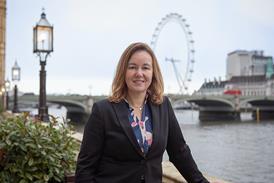
The new chief executive of the NHS in Scotland is a manager's manager. Colin Wright looks at the implications of the appointment

Let's hear it for the men in suits.

The appointment of a new chief executive of the NHS in Scotland seems to have made everyone happy.

For those managing the service, the news brings hope: Trevor Jones, who was until yesterday chief executive of Lothian health board, is one of them. Indeed, Mr Jones' career - 31 years in local government and NHS management in Scotland and England - gives him something approaching veteran status as a manager's manager.

His appointment echoes the selection process in England and Wales, where insider choice Nigel Crisp won the day. It also ends months of speculation following the departure of former chief executive of the NHS in Scotland Geoff Scaife in July, three months before his contract ended.

The last few months have seen considerable changes at the top of the NHS management structure in Scotland. A new performance monitoring position was created for former director of human resources Gerry Marr. Other senior figures such as chief medical officer Sir David Carter and director of strategy and performance management Dr Kevin Woods have departed.

The clearing out of the senior management signals a change of direction within the Scottish department of health.

Mr Jones told HSJ: 'I know the NHS well but don't know the machinations of the civil service and of government. So I am grateful to have such a strong team in place to help with this.'

The team includes the recently-appointed former BMA secretary, Dr Mac Armstrong, to the post of CMO - seen as a sign of radicalism.

Donald McNeill, development manager with the Institute of Healthcare Management in Scotland, describes the choice of Mr Jones as 'wholly consistent with the appointment of Nigel Crisp in England. These are managers who have worked in the NHS all their lives. This is an acknowledgement of the work which managers can do.'He also believes that unifying the operational and strategic roles of head of department and chief executive 'is the most logical and sensible way of producing and delivering the best quality care'.

For Jim Devine, Unison's head of health in Scotland, the appointment is welcome - yet 'something of a surprise'.

'He has worked in the public sector all his life and he knows the service. This is a triumph.

Someone from within the NHS has seen off civil service demands for one of their own to take this position.'

Mr Jones believes 'it is helpful to the process to have someone sitting in England who understands the service, who recognises the need for change and the areas that require change.

In that sense I can understand the comparison with Mr Crisp.'

He believes one of his first tasks will be to 'get the system working locally and move away from some remaining disadvantages of the internal market'.

'There are issues in Scotland that require a Scottish response.

Issues concerning rural and island communities don't really exist in England.

'I do believe that Scotland has a much stronger public sector ethos than in England.We have an opportunity to address health inequalities that must be addressed. It is clearly unfair that someone living in the poorest areas of Glasgow should have a life expectancy seven years shorter than someone living elsewhere.We need to address these issues immediately.'

Mr Jones also wants to see 'clear relationships between trusts and health boards, and better relations with local authorities, voluntary services and patient groups in the future'.

Once the system is working more effectively, issues such as 'the number of health boards and the structure of the NHS in Scotland can be looked at.'

He also sees the proposed national plan, to be announced on 30 November, as an 'opportunity for action rather than just plans of action. It is critical that the Scottish health plan can produce results quickly.

It should be an implementation agenda involving stakeholders in its implementation. You don't change health by preaching to people, you change it by making a difference to their lives.'