

















An HSJ roundtable, in association with Smith+Nephew, focused on the complex area of wound care to reveal what it takes to achieve joined-up, cost-effective care
Panel
- Kate Backshell, senior business unit director of advanced wound management, Smith+Nephew
- Christopher Brown, clinical quality assurance and procurement specialist (wound care), NHS Supply Chain
- Jacqui Fletcher, senior clinical adviser, NHS England
- Sian Fumarola, head of clinical procurement, North Midlands and Black Country Procurement Group
- Crystal Oldman, chief executive, The Queen’s Nursing Institute
- Louise Patten, strategic adviser, NHS Confederation ICS Network
- Claire Read, contributor, HSJ, roundtable chair
- Mike Watson, associate director digital and data, National Wound Care Strategy Programme
- Matthew Winn, chief executive, Cambridgeshire Community Services Trust
Providing high-quality care to people with acute or chronic wounds requires coordination and joined-up care across a multitude of healthcare professions and organisations in different settings. It also involves making safe and effective use of medical devices and products, many of them used in the community by health and social care staff with little or no specialist training in wound care. Into this already complex picture is emerging an increasing belief in the value of supporting self-care by patients where appropriate.
In association with
But the complexities that make wound care challenging are also what makes it a good prism through which to explore how best to create value-based pathways across integrated care systems.
The human and financial consequences of inadequate wound care are severe and the need for improvement, particularly around prevention, is clear. So how can the different stakeholders and organisations work more effectively together? Will ICSs be a game-changer? How can problems in data collection, workforce education and training be addressed? Perhaps above all, how can the “mess” of confusing pathways be made smoother, easier and more patient-centric?
These were among the important issues discussed at HSJ’s recent roundtable discussion, held in association with Smith+Nephew, at The King’s Fund in central London.
The difference between value and cost







Wound care’s costs are “staggering”, but they are also misunderstood, the panel agreed. There is a tendency to view the costs of treatment too narrowly, and to overlook the potential savings of more effective treatment and prevention.
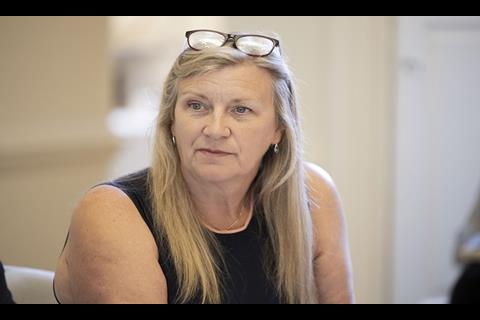
“As commissioners, we have never properly grasped the proper costs of healthcare,” said Louise Patten, strategic adviser at the NHS Confederation’s ICS Network. “We tend to look at the amount spent on staff and devices [in wound care], but we don’t look at the opportunity costs, in other words, the time taken by various people on wound care pathways. We don’t go far enough into the preventive world.”
Crystal Oldman, chief executive of The Queen’s Nursing Institute, added: “The cost to the NHS is huge, but it is so rarely spoken about. The cost is equivalent to obesity but where does it [appear] on the agenda?”
She suggested that wound care is doubly neglected: “This is mostly a community issue and community is often not the focus of attention when it comes to value and cost. It is also a nursing issue primarily – and sometimes the nursing voice doesn’t get attention, compared to our medical colleagues.”
In wound care, the excessive focus on the cost of products and devices can drive inappropriate prescribing, prevent healing, and end up costing services more. Sian Fumarola, head of clinical procurement at North Midlands and Black Country Procurement Group, said the true cost of wound care “is definitely not about the unit cost of the product”.
“I have to remind colleagues in procurement and finance on a daily basis [that] because we spend a pound less on the unit cost of a product doesn’t mean that the outcome will be any different. In fact, it will probably be worse and cost the health providers more money,” said Ms Fumarola.
The failure to consider the value of prevention in healthcare services reflects a lack of understanding in the NHS and beyond
Changing the conversation around cost, however, can be difficult. Ms Fumarola emphasised that the aim should be to implement evidence-based practice across multidisciplinary pathways. “I work across two ICSs and have to think a lot about how we implement those pathways, particularly around innovative devices. I spend a lot of time looking for evidence, looking at outcomes.”
Outcomes data on quality of life, when it is available, can win the argument: “That’s really powerful,” said Ms Fumarola.
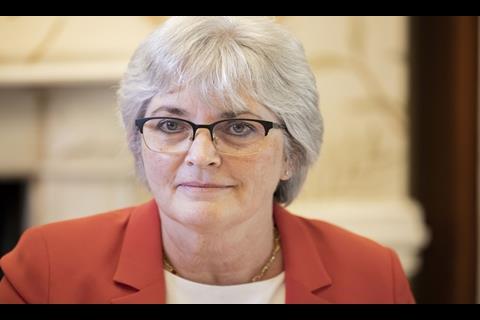
The cost of wound care may be frequently misunderstood, but its value is an even trickier concept to grasp, suggested panellists. “Cost is focused on because it is easier to express, you can enumerate things, whereas value is much harder,” said Jacqui Fletcher, senior clinical adviser at NHS England.
The panellists were unanimous that any consideration of the value of wound care should focus on its impact on patients. “We should start with the person – ‘what does it mean to me to have that wound healed as quickly as possible?’,” said Matthew Winn, CEO of Cambridgeshire Community Services Trust.
Ms Fletcher added: “It’s also important to think about the staff delivering care [and the] impact of poor outcomes on them.” A pressure ulcer occurrence could be devastating for staff, she pointed out. “They take it very personally – and our investigative processes are quick to point blame.”
She argued that the failure to consider the value of prevention in healthcare services reflects a lack of understanding in the NHS and beyond. “It’s about what we as individuals, as organisations and as a country value,” she said. “Do we value prevention? I don’t think we value it enough. Trying to raise the profile of prevention of pressure ulcers and lower limb wounds with the general public is a really difficult task – they don’t value what they don’t understand.”

Perhaps the greatest barrier in the way of creating value-based pathways is the immense pressure on staff. Several panellists cited lack of time, capacity or “headspace” as factors making it difficult for staff to step back from the current models of care and consider how to improve them. But Ms Fletcher suggested something else was missing too: “courage”, at an organisational level, to stop burdening staff with low-value tasks.
“The workforce is battered, but I think as organisations we lack the courage to stand out. Categorising pressure ulcers takes so much clinical time, and it makes no clinical difference. Let’s stop investigating it – all that root cause analysis: hours and hours of senior clinicians in the room. We have been doing it for 10 years and we get the same themes every time.”
Removing some routine requirements from staff would free them up to have “real clinical curiosity about what the problem is” and embark instead on quality improvement. She stressed it was important to “trust your clinicians”, avoid overreacting to one-off incidents, and focus instead on the things staff say really matter.
Several panellists agreed that a risk-averse culture is taking up too much of clinicians’ time with form-filling and box-ticking. The amount of data being collected is hindering rather than helping the cause of improvement.
“I’ve got data coming out of my ears,” said Mr Winn, CEO of Cambridgeshire Community Services Trust. “It might not be the right data, but let’s not kid ourselves that we are data-less. We have too much of it. It needs to be better [data].”
According to Mike Watson, this issue with data is something the National Wound Care Strategy Programme is seeking to address. The programme – instituted by NHSE and delivered by The AHSN Network – is seeking to improve care for people with wounds, not least by developing strategies that reduce variations in care.
There’s a fine balance between autonomy and reinventing the wheel
“What we don’t want to do with our programme is add to the data collection burden on already busy clinicians,” said Mr Watson, the programme’s associate director for digital and data. “We want to improve the data they already capture [and], digitise it and connect it with other data and use it to transform services.”
Better data also needs to be combined with improvements in wound care education and workforce training, panellists suggested. Ms Oldman recalled working in a university, two decades ago: “We used to run a tissue viability master’s programme, preparing specialists to do their role. For those working with patients in the community and in hospital, we had a short course. Hundreds of nurses went through those courses and their knowledge and skills were superb.
“By the time I left the university 10 years ago, we had no short courses and no tissue viability masters. So where is that expert knowledge now? District nurses spend 50 to 60 per cent of their time on wound care. Where are they getting their education and training?”
Chris Brown, clinical quality assurance and procurement specialist (wound care) with NHS Supply Chain, said sometimes efforts at improvement had unhelpfully been “imposed” on overstretched staff.
Ms Fletcher suggested: “There’s a fine balance between autonomy and reinventing the wheel”.
She said NHSE’s attempt to introduce a new pressure ulcer pathway is being met with resistance by organisations who would prefer to stick with their own. “I understand that but if you have agency staff and they go from this place to that place [the pathways] are completely different; and if patients move – and they do, a lot – they get different answers. We need to get better at saying what we should mandate.”

There is a way out of the mess of confusing wound care pathways, insisted Mr Watson: “We can streamline that and make it easier. We can show with our [national strategy programme] implementation sites that it can be done.”
Several panellists praised the National Wound Care Strategy Programme for “underpinning” improvement and agreed the implementation sites are providing a model for change.
“Implementation sites have that little bit more time and space and engagement from across the organisation,” said Ms Fletcher. “They have that commitment to allow [staff] to think differently. They will have wanted to do it [before the national programme] but they didn’t have the support and they didn’t have the networks.”
She said being part of the programme also tends to give data analysts greater permission to respond to requests to provide information on wound care. “If you are part of a big programme and your data team are engaged in that programme, then they understand why it is important, and how it fits in with the rest of the organisational strategy, and what the knock-on impacts are,” said Ms Fletcher.
However, Ms Fumarola said there was still work to be done to raise awareness of the national guidelines, despite the “noise” around them. “The guidelines are brilliant, written in plain English. [But] very few people I talk to are aware of the guidelines. We [still] fail to put them into practice.”
Commercial partners are another, arguably underutilised, source of support for NHS staff wanting to drive improvement. Kate Backshell, senior business unit director of advance wound management, Smith+Nephew, said: “With our NHS customers we are working very hard to provide programmes to look at value-based change management in the community, provide data where we can to support NHS partners to implement change. We are on a journey with it.”
She spoke of a “nervousness” on the NHS side of linking up with industry, but Ms Fletcher said: “I’ve had very positive experiences of working with industry. A lot of the companies are very supportive of specialist nurses in delivery of different kinds of education, quality improvement work, working with data, and developing business skills. We need to recognise the importance of what some of our industry colleagues do incredibly well.”
Panellists reported an increasing trend in wound care for the patient self-care model and were broadly supportive of this development. Ms Fumarola said that product specifications should include whether patients could apply dressings themselves: “How can the patient use this product to support themselves? And [we should] look in detail at how that would support the pathway.”
A value-based approach requires a multi-provider, multi-disciplinary approach
However, she also argued that the bar needs to be raised for self-care: “It’s not enough to say ‘the outcomes are the same [as conventional models of care with more frequent nursing visits]’ – because our outcomes aren’t good. We need to be seeing an improvement.”
The key to improvement, for many of the panellists, is supporting nurses to lead and deliver the care they know their patients need. For Christopher Brown, clinical quality assurance and procurement specialist (wound care) with NHSSC, the overriding message from the roundtable discussion was the importance of “grassroots nurses and their ability to advocate for patients”.
He added: “[It’s about] their ability to know what is of value to the patient and the patient pathway – and empowering them to express that in a meaningful way.”
Mr Winn called for wound care to be included in NHSE’s annual planning programme: “That’s where it should be – to say, ‘this is crucial, let’s do it’.”
But he emphasised that “system leadership is hard” and warned against expecting too much from the leadership of ICSs. He argued that in wound care, as in other areas of care, ICSs are not necessarily the right place from which to drive change.
“We defer too quickly to the view that ‘it’s an ICS issue’. ICSs are coordinators and convenors of local stakeholders. It is not an ICS leadership issue, because they have about 900 things to do. It has to be providers collaborating.”
Where ICSs can perhaps be most valuable is in setting the tone for collaboration. “A value-based approach requires a multi-provider, multi-disciplinary approach,” said Ms Patten, strategic adviser, NHS Confederation ICS Network. “The systems do have a responsibility to have a level of accountability that enables clinicians to do what they need to do.”
Videos by Matt Prior