
• Labour would not “wander into NHSE to look over their shoulder”
  • Focusing on reform and not just investment partly because of “mess” of public finances
  • Would take “a decade to get the NHS back to where it was under the last Labour government” 
  • Dials back on scrapping GP partnership model but Labour is exploring alternatives

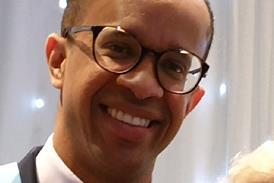
Wes Streeting has said he would ‘not look over NHS England’s shoulder’ if he became health and social care secretary, calling for ‘clarity’ and a ‘healthier relationship’ between the government and NHSE.

Labour’s shadow health and care minister told an event today that an “incoming Labour government would need to… provide a bit of clarity about what the department [of health and social care] is there to do, what NHS England is there to do, what [integrated care systems] are there to do, and what providers are there to do”. This would help “get people pulling together, rather than pulling apart”, he added. 

In particular, speaking at the King’s Fund in London, he indicated he would protect NHSE’s independence. The NHS was given operational autonomy from government, under an independent NHSE board, by Conservative health secretary Andrew Lansley’s Health and Social Care Act 2012.

But last year’s act weakened its status, and the current health and social care secretary, Steve Barclay, has been more hands on in NHS operations and finance than recent predecessors. He has also asked NHSE executives to regularly sit and work closely with his teams in the DHSC rather than, as they have since 2013, separately in NHSE’s own buildings.

Answering a question from HSJ, Mr Streeting said: “I don’t think [the issue of the relationship between the department, NHSE and the system] is one that requires statutory change particularly. I think it requires a different secretary of state actually.

“I want to reassure the chief executive and future chief executives of NHS England that I will not insist that they will come and sit in the department so I can look over the shoulder, and I certainly won’t be wandering into NHS England to look over their shoulder.

“I want there to be a healthier relationship between the Department of Health and NHS England, and between national bodies and local structures and providers.”

Mr Streeting said that while he supports “accountability over taxpayers’ money and patient outcomes”, NHSE and the DHSC must “pull together” and there must be a “more respectful way of working at the heart of government”.

The recent report for the government by former Labour health secretary Patricia Hewitt, who is now an integrated care board chair, said local leaders had told her “it feels as if we have two centres now” because ministers had been getting so hands on in NHS day-to-day operations; while “it is increasingly clear” that the 2012 divide is “not working as intended”. She also sought to clarify reporting arrangements between NHSE, ICSs and providers, but stopped short of saying that current rules on this should change.

He supported ICSs and ICBs role in developing improved out-of hospital services, however, stating that “integrated care systems and boards can provide a framework in which we can do better integration, and more devolved decision making”.

More than ‘just money’

Mr Streeting said in his speech that fixing problems in the NHS “requires more than just investment”.

In response to a question from HSJ on whether this would involve an austerity-style approach to NHS finances, he said: “The reason why we’re going so heavy on reform is in part because public finances are in a mess, so there is just a practical constraint that we need to be honest about.

“There is a perception in the electorate that Labour’s answer to problems is always more money. In this case, I don’t think the answer is just more money.

“I think investment does matter, but we’d be kidding ourselves if we thought that if we just put more money into the system as it is, everything will be fine.”

He estimated that it would take a “decade to get the NHS back to where it was under the last Labour government”, but that Labour aims to “show real progress” within its first term.

Review of GP partner model

In his speech, focused on primary care reform, Mr Streeting dialled back on his comments earlier this year that Labour would “tear up the contract” with GPs. However, he said Labour would explore alternatives because “GP partnerships are in decline”.

He said: “Contrary to reports, I have absolutely no intention of nationalising GPs. But we are exploring how to make the future of general practice sustainable so patients aren’t left without when more and more GPs are choosing to take the salaried route, and partnerships are forced to close because fewer GPs want to take them on.”

Expanding on Labour’s suggestion, also made in January, that patients could bypass general practice and self-refer to specialists, he said – for example – that opticians could be allowed to refer people directly to eye specialists, rather than patients having to rebook with their GP. 

He also reiterated Labour’s pledges to train 7,500 more doctors and 10,000 more nurses every year, including recruiting more medics from within the UK.

Mr Streeting said he would boost the range of health professionals working alongside GPs including more use of pharmacists and wider use of nurses.

In addition, he emphasised patient choice – for example, the ability to book GP appointments online.