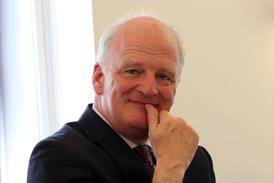

Sir Trevor Longstay has been doing his bit to inspire the next generation of leaders. Julian Patterson reports from Sir Trevor’s alma mater
School leavers could receive on-the-job training to become chairs and chief executives of integrated care boards as part of an NHS apprenticeship scheme.
Sir Trevor Longstay told pupils at his former school that higher education and hard work were no longer the only route to careers in senior management. He was speaking as the NHS announced plans to fill 124,000 vacancies with teenagers.
Sir Trevor said: “Energy, enthusiasm and a keen survival instinct are more important in the long run than education, training or talent. This is even more true for integrated care bosses than it is for doctors and nurses.”
The chair of NHS Blithering ICB is one of the NHS’s most highly respected senior managers. In a distinguished 40-year career, Sir Trevor has occupied more posts than any other NHS executive and shares the record for the highest number of concurrent non-executive directorships with Sir David Nicholson.
Earn as you learn
Sir Trevor urged students at the Jenny Agutter Academy (formerly the East Churlish School for Boys) not to give up hope if they weren’t particularly gifted or bright. His own career was a testament to what could be achieved through sheer determination and having “a face that fits”.
Confessing that he had never been academic, Sir Trevor criticised the emphasis on exam results, crediting “a very ordinary upper middle-class upbringing and aptitude for sports” with his career success.
“My natural ability with a cricket bat helped me not just to form many of my early relationships but to enforce them. It’s not who you know that counts, but how much they respect you at the nets,” he said.
Sir Trevor pointed to the growing number of opportunities to “earn as you learn” in ICBs. Interim chief executives could expect short but lucrative contracts with plenty of time off between assignments and priority access to a revolving door for future career moves.
Job creation scheme
There were also openings for a new generation of financial managers. Dispelling the myth that chief financial officers needed to be numerate, Sir Trevor joked: “The modern NHS CFO doesn’t have to worry about the numbers. NHS England will send you a spreadsheet. You just need to keep cutting until the threatening emails stop.”
He admitted that ICB leadership wouldn’t be for everyone but stressed that there were more than 350 different roles available across the NHS with more being added all the time.
“Thanks to the government, thousands of exciting new vacancies are being created in the NHS every day,” Sir Trevor said.
Many of these were low or unskilled roles.
For example, the NHS employs hundreds of communications professionals to organise park runs and children’s drawing competitions for the NHS’s 75th birthday celebrations.
Sir Trevor said that comms teams could continue to play a role between NHS anniversaries. “It’s important that we find a place in the NHS family for everyone, even arts graduates,” he said.
“As anyone who has read an NHS press release will recognise, there’s no reason why we couldn’t get comms people into work much earlier without going to the trouble and expense of higher education.”
Desirable not essential
While some NHS roles, such as hospital doctor, are expected to remain highly skilled for the foreseeable future, others can now be learned on the job. Care coordinators and social prescribers require little or no medical knowledge and could eventually work their way to the top in primary care, filling the vacancies left by the exodus of traditional “trained” GPs.
Other senior leaders including NHSE chief executive Amanda Pritchard and elective recovery director Sir Jim Mackey also visited schools this week to promote the apprenticeship programme.
The scheme is a key plank of the Department of Health and Social Care’s NHS recovery strategy alongside a renewed focus on primary care telephony, a drive to increase uptake of the NHS App and an engagement exercise by the NHS Assembly.
Acknowledging that there were no easy answers to the workforce crisis, Sir Trevor said: “that doesn’t mean we shouldn’t keep looking for them”.


15 Readers' comments