




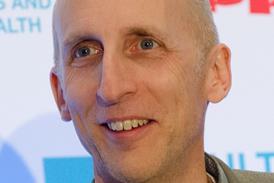










HSJ hosts the Patient Safety Watch newsletter, written by Patient Safety Watch chief executive James Titcombe
Good afternoon, and welcome to the latest edition of the Patient Safety Watch newsletter. Maternity safety dominates once again.
Trusts stuck for years in national maternity improvement scheme
As reported by HSJ, six of the 15 trusts in NHS England’s maternity improvement programme have spent more than four years in it.
They include Shrewsbury and Telford Hospital Trust, which has received support since December 2018 – nearly eight years – and Mid and South Essex Foundation Trust, which has been in the scheme since October 2020.
The programme, now known as MatNeoIST, replaced the Maternity Safety Support Programme in January 2026.
Sands and Tommy’s Joint Policy Unit called for a rethink of the programme when NHSE is abolished next year, adding that “it appears that [it] is not fit for purpose”.
Dr Bill Kirkup told HSJ that while the support scheme was “well intentioned”, it was “not working”.
He added: “Although the trusts differ widely, the problems appear similar everywhere.”
“Seven have been receiving support for more than three years, one for eight. This is not a programme that succeeds in delivering rapid or effective remediation.”
My view
Shrewsbury and Telford is the trust whose failings prompted Donna Ockenden’s first maternity review. That it is still receiving national support nearly eight years after joining the scheme should give everyone pause. While I’m sure the scheme has helped some services improve, Dr Kirkup’s assessment that we still haven’t tackled the deeper, system-wide problems, particularly around teamwork and divergent approaches to care and safety, hits the nail on the head.
Addressing the big, system-wide issues Dr Kirkup describes must be the priority for the government. The national maternity taskforce is now expected to publish only an interim action plan before Christmas, and a new Modern Service Framework, setting national standards for maternity and neonatal care, is now not expected until “in the middle of next year”.
Amos: questions still waiting for answers
The Commons health and social care committee has written to Baroness Amos, inviting her to respond to Dr Kirkup’s concerns about how her investigation handled evidence of “normal birth ideology” and, if necessary, to clarify or expand on the evidence she gave MPs in July. Committee chair Layla Moran has asked for a response by 27 November. HSJ’s coverage here.
Meanwhile, as reported by Cherwell, a campaign group of more than 800 families harmed during maternity care at Oxford has written an open letter to the health secretary calling for an independent investigation. A report containing testimonies from more than 700 patients was submitted for consideration in the Amos investigation last November. However, it appears that expert advisers within the Amos investigation were not aware of it.
Families who relived the worst moments of their lives to give evidence deserve to know it was properly read. Baroness Amos’s reply next week needs to be full and transparent.
Ministers cannot say what it would cost to fix maternity units
As reported by The Guardian, NHS minister Karin Smyth has admitted, in answers to Liberal Democrat health spokesperson Helen Morgan, that the government cannot put a figure on upgrading maternity and neonatal units that NHSE says need significant repair or face “a serious risk of imminent breakdown”. Ms Morgan accused ministers of “gambling with the safety of mothers, babies, and NHS staff”.
NHSE found last year that 43 per cent of maternity and neonatal units did not meet basic safety standards; the Department of Health and Social Care points to £271m invested since April 2025.
Leaking roofs and failing call systems are not cosmetic problems – they delay care. You cannot fix what you have not costed.
Coroner: 20-week scan could have saved baby Jesse
A Surrey coroner has issued a Prevention of Future Deaths report following the death of three-day-old Jesse Parsons in July 2025. Jesse suffered a severe brain injury after fetal bleeding caused by vasa praevia with a velamentous cord insertion, following a low-risk pregnancy.
Dr Karen Henderson raised concern that checking placental cord insertion at the 20-week scan is not mandatory, despite evidence that it is routine in Australia and New Zealand and would have identified the condition. As reported by BBC News, the government says the UK National Screening Committee concluded in 2023 there was insufficient evidence for a screening programme and is “reviewing further evidence”. The Royal College of Obstetricians and Gynaecologists says updated guidance is due in 2027.
Jesse’s parents’ words deserve to be heard: “Jesse did not die because medicine lacked the ability to save him. He died because the opportunity to identify that he needed saving was missed.”
Those words resonated deeply with me, and I’m sure they’ll resonate with other families who have lost loved ones because of failures in maternity care.
In other news this edition…
Burton staff say raising incidents was ‘actively discouraged’
The Care Quality Commission has upgraded maternity services at Royal Derby Hospital to good. However, Queen’s Hospital Burton, run by the same trust, remains “requires improvement” for safe and “well led”. Inspectors found leaders had not fully addressed incident reporting concerns, with staff reporting that raising issues internally “had been actively discouraged”. BBC News reports that a review found incident reporting delays of up to 1,580 days.
A service where staff feel discouraged from reporting incidents cannot learn from them.
Nottingham: child death files deleted
One of the most shocking stories in recent weeks was reported by HSJ. An external review found that records of child, neonatal, and maternal deaths held by Nottingham University Hospitals Trust’s medical examiner service were “methodically and selectively deleted”. The review could not establish who was responsible because of a lack of “auditing functionality”, and police concluded the deletion was most likely done “intentionally/maliciously”.
CEO Anthony May said: “We are deeply sorry for the impact this had and for the additional worry caused at what was already an extremely difficult time.”
Nottingham families must now be at the centre of change.
Newborn readmissions: is infant feeding policy putting babies at risk?
A new report from the charity Feed, Admission of Failure?, finds emergency admissions of babies under 14 days old in England have risen by around 60 per cent in just over a decade. It calls for an urgent independent review of infant feeding policy, including Baby Friendly accreditation; BBC Radio 4’s File on 4 Investigates has also examined the rise.
Breastfeeding support should be far better than it is – but, as with birth, no single approach should be promoted at the expense of safety.
In other patient safety news…
Blackpool tribunal hears cover-up allegations
As reported by HSJ, Hazel Gregory, a former head of safeguarding at Blackpool Teaching Hospitals FT, is claiming unfair dismissal and whistleblowing detriment. The case relates to 14 protected disclosures, including allegations of “concealment by senior people at the trust in relation to deaths, mistreatment of patients, and sexual assaults”, and of the trust “trying to frustrate and prevent information being shared with police” over murder victim Preston Davey.
The trust says many of her allegations were “vague and unsubstantiated”, and a spokesman said it would be “inappropriate to comment further at this time”.
Paterson, six years on
New research from the universities of York, Manchester and Birmingham, Working Together? Quality and safety in NHS and private hospitals, finds most of the Paterson Inquiry’s recommendations have not been implemented, and that safety systems work within organisations but not between them. As Health Services Safety Investigations Body’s Dr Rosie Benneyworth said: “The quality and safety of care should not be dependent on patients staying in one place or pathway.”
ITV News Meridian found 45 doctors continued to work in NHS hospitals in Kent and Sussex between 2020 and 2025 without suspension or conditions while being investigated for sexual misconduct.
MHRA and redress: ‘nothing has happened’
In a Westminster Hall debate on 17 November, Esther McVey said there had been “little – if any – discernible improvement” at the Medicines and Healthcare products Regulatory Agency, and that those harmed by Primodos, sodium valproate, and surgical mesh were “still awaiting redress”.
Meanwhile, as reported by The Independent, health ministers in Scotland, Wales, and Northern Ireland have jointly written to patient safety minister Dame Diana Johnson, warning that the continued absence of a formal response to the Hughes report is “causing significant anxiety and distress”.
Dame Diana told MPs on 29 October that “a decision has not yet been taken to provide financial redress”.
More than two and a half years after Professor Hughes reported, that is simply not good enough.
Sharing some good stuff…
HSSIB: making lithium a safer first choice
HSSIB has found that lithium – the recommended first-line long-term treatment for bipolar disorder – is too often treated as a last resort because of gaps in the systems needed to monitor it safely. It recommends national oversight and a Royal College of Psychiatrists position statement and protocol – which the college has already committed to producing.
As we have come to expect, important and high-quality work from HSSIB.
A practical tool to spot risky medicines
Researchers from Liverpool, Leeds and Bradford have developed the Anticholinergic Medication Index, published in BMJ Medicine. Built on data from nearly 750,000 over-65s, it sits within electronic patient records and flags older people whose medicines may be raising their risk of falls or delirium, so they can be prioritised for a medication review. After a pilot in Bradford GP practices, it is now being tested on hospital wards.
That’s all for this edition. Thanks for reading. Please look out for the next edition of the Patient Safety Watch newsletter from Jeremy in a fortnight.
James






No comments yet