
- Estates minister says ‘best example’ of comparable scheme is prison-building programme
- Lord Markham says new hospital designs could increase productivity by 20 per cent
- Bringing in RAAC hospitals into programme causing delays, chiefs say
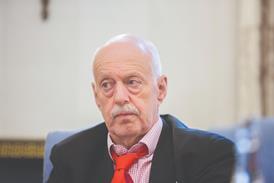
A health minister said the new hospitals programme will achieve economies of scale by using a ‘cookie cutter’ approach that has been successful in building prisons.
Lord Nick Markham also said the new standardised designs being used should lead to a 20 per cent increase in productivity.

The NHS estates minister made the comments at an all-party parliamentary group for health infrastructure event on Tuesday, that gave an update on the government’s pledge to build 40 “new hospitals” by 2030.
The programme has been hit by various delays and concerns around increasing costs.
‘Hospital 2.0’
Lord Markham said the scheme was now spending time specifying hospital design so it could benefit from economics of scale during rollout.
He said: “At this stage of the programme, it’s a bit of one step backwards to go two forwards because you’ve really got to spend the time now doing those plans and that specification so that you know what Hospital 2.0 looks like. But then it’s a cookie cutter approach in terms of rolling those out.”
When asked if there was a comparable scheme for designing and rolling out new hospitals, Lord Markham said: “My understanding is there are some overseas examples, but I think probably the best example we can point to close to hand actually is in prisons space.
“We’ve done quite a few of those and the investment is in the first one. Because once you’ve done the work on the first one, then you’ve done 80 per cent of the work for the subsequent ones. And I think you get quite a bit out of economies of scale.”
Lord Markham said NHP was not only hoping to establish standards for buildings, but also for operating procedures.
“We think we’ll be able to achieve from these new hospital formats about 20 per cent increase in productivity, which is pretty significant, to say the least,” he said.
Standardisation
Natalie Forrest, who leads the NHP, told the event: “All of the schemes have their own personalities, because no one is the same. They’re either providing different services, or they have different constraints: they might be on a greenfield site or in a city centre.
“So although… the desire is to be standardised in every possible way, that’s never going to be delivered in that perfect way. We anticipate being able to get to about 80 per cent of standardised designs.”
RAAC Hospitals
Both Lord Markham and Ms Forrest said announcements on funding, decisions and timings had been held up as the team worked to bring in hospitals with reinforced autoclaved aerated concrete.
Eight more building schemes are yet to be announced from more than 100 bids, with a decision previously anticipated in October. HSJ previously reported up to five RAAC hospitals were expected to be selected.
Ms Forrest said the NHP was engaging with five RAAC hospitals “in order to understand how we would bring them” into the programme. This had caused delays to financial decisions for projects, she said, although “final work” was happening on these allocations.
Asked when the final eight schemes to be incorporated into the NHP would be announced, Ms Forrest said: “I think we need to address these five that have got such estate issues before that decision. So it’ll be these five first.”
The NHP will oversee 48 building schemes in total, after eight previously approved projects were added to their remit.
Source
APPG for Health Infrastructure event
Source Date
10 January 2023


22 Readers' comments