











- CQC told of bullying and harassment and sexualised behaviour
- Leadership criticised for not being visible or aware of challenges staff faced
- Chief executive stepped down last month
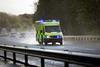
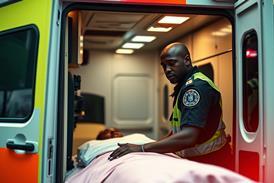
An ambulance trust has been placed in special measures after the Care Quality Commission rated its leadership ‘inadequate’ and said staff felt unable to raise concerns without fear of reprisal
The CQC inspected South East Coast Ambulance Service Foundation Trust after being contacted by staff with concerns about bullying and harassment, inappropriate sexualised behaviour and a leadership team which failed to address concerns.
Many of the concerns echo those raised in 2017 in an independent review into a “culture of fear” at the trust, shortly after it was first placed in regulatory special measures. It was taken out in 2019 but has now been placed back in the equivalent “recovery support programme” on the CQC’s recommendation.
The trust’s previous chief executive, Philip Astle, stepped down in May, following a period of ill health. The trust is currently being run by the medical director, Fionna Moore, with Siobhan Melia, chief executive of Sussex Community Trust, stepping in as interim chief executive from July.
CQC director of integrated care Amanda Williams praised staff who had contacted the regulator. She said: “While staff were doing their very best to provide safe care to patients, leaders often appeared out of touch with what was happening on the front line and weren’t always aware of the challenges staff faced. Staff described feeling unable to raise concerns without fear of reprisal – and when concerns were raised, these were not acted on.
“This meant that some negative aspects of the organisational culture, including bullying and harassment and inappropriate sexualised behaviour, were not addressed and became normalised behaviours.
”It’s clear the trust needs help to ensure significant improvements in leadership are put in place to give hard working staff the support they need and deserve to deliver good care.”
Today’s report sees the trust’s overall rating suspended – pending further full inspections – while its “well led” rating has been reduced to “inadequate”, having been rated “good” in August 2019. The CQC highlighted the pressures on staff from increasing demand which affected response times and warned this pressure was becoming unsustainable.
The trust’s emergency operations centres – in Coxheath, Kent, and Crawley, Sussex – were downgraded from “good” to “requires improvement” overall. This reflected concerns over missed training, lack of 24/7 mental health support and unsafe staffing levels due to high workload. Only a fifth of EOC staff felt they were able to meet the conflicting demands they faced.
EOC staff said they felt morale was extremely low and they were working under intense pressure. They praised local management but said they didn’t feel the executive team listened to operational staff concerns.
NHS 111 services were rated “good” overall, despite dealing with a very high number of calls during the pandemic. Clinical risk was effectively controlled with appropriate prioritisation of resources, the report added. The local leadership for this service was rated “good.”
Parts of the trust’s emergency and urgent care services were also inspected but have not been rated as they were part of a broader urgent and emergency care inspection across Kent and Medway which will report later this week. However the CQC found many staff were working beyond their normal hours and managers did not know what their staffing establishment should be. Patient safety incidents were not always reported or investigated, and the outcomes were not reported back.
The trust said it was taking the concerns around culture and leadership “seriously” and had begun work to implement improvements.
SECAmb interim chief executive Dr Moore said: “It is clear from this report that SECAmb has a long way to go to ensure our staff feel properly supported to perform their roles. The whole leadership team is committed to doing everything we can to make SECAmb a better place to work, so that our staff are best placed to respond to our patients.
“However, I am pleased that, despite the issues highlighted in the report concerning leadership at the trust, the hard work and dedication of our staff and volunteers did not go unnoticed.”
What the inspectors found
When inspectors visited the trust in February, they found leaders who were out of touch with the front line and were not always aware of the challenges the service faced. The trust was still operating a “command and control” style of leadership, adopted in earlier stages of the pandemic, with staff not feeling empowered to make decisions. Relationships in the executive team were “sometimes fraught” and there was insufficient assurance of challenge at committee level.
Staff often said the culture of the trust was “toxic” and inspectors were concerned it was reverting to “normalising” many of the concerns raised. The trust was aware of the risk of inappropriate sexualised behaviour and had launched a sexual safety at work programme – but many staff had not heard about this.
There was also a perception in the trust that the freedom to speak up guardian function only covered patient safety issues, and other matters – including issues of bullying and harassment and inappropriate behaviour, as well as staff well-being — when raised by the FTSUG were not addressed.
The inspectors also highlighted the trust’s financial position – with a draft plan for 2022-23 which would deliver a £39.8m deficit (almost 15 per cent of turnover). Board papers “did not fully reflect the financial sustainability challenge and the trust’s response”, the report says.
The CQC saw “many examples of key concerns being raised that were not dealt with or not given necessary priority”. It raised concerns about the quality of serious incident and harm reviews, highlighting a backlog of 1,500 reported incidents which had not been addressed.
Inspectors also had serious concerns about patients categorised as less urgent (those in categories 3 and 4) where clinical risks were not always appropriately managed due to lack of suitable staff. In some cases patients deteriorated while waiting, staff said.
Updated 11.30 22 June with details of NHS 111 report.
HSJ Patient Safety Congress
The 15th annual HSJ Patient Safety Congress will bring together 1000+ attendees with the shared goal of advancing the national agenda for patient safety across health and social care. After a safe return to Manchester in 2021, this year’s Congress will no doubt continue to raise the bar and support you in your commitment to transform patient safety and standards of care.
Register your interestSource
CQC report
Source Date
June 2022


8 Readers' comments