






- NHS “has not been strong enough” in its communications about 111 First
- Just 3 per cent of A&E attendances are booked through 111
- Healthwatch: “There’s a gap in communications with the public”
Not enough people know about the 111 First A&E booking service as the messaging from the NHS ‘has not been strong enough’, Healthwatch England has said.
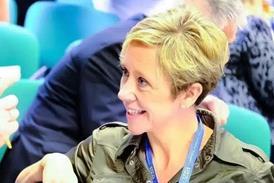
Imelda Redmond, the outgoing national director for Healthwatch England, told HSJ that 111 First — which allows patients not in medical emergencies to call 111 to “book” urgent care — has the potential to be a useful service, but the public “don’t really know what it’s for”.
Just 3 per cent of A&E attendances in June were “booked” in advance via NHS 111, although the use of booked A&E appointments has increased substantially from a very low base when the 111 First service was launched late last year, the latest NHS England data indicates.
It comes amid very high pressure on emergency departments; while ambulance services and 111 call centres also report very high demand. Acute care clinicians have told HSJ that 111 First appeared to be having little impact on the pressure, with lack of capacity in primary care also cited as a problem.
There is also thought to be debate among senior officials about whether 111 First is value for money, and HSJ previously reported that an initial major NHS promotion campaign planned for last winter was scaled back due to the major covid surge and government lockdown measures at the time.
Ms Redmond, speaking to HSJ on the week it was announced she’s stepping down from the Healthwatch leadership role, said the NHS needs to better communicate changes to services with the public, such as in 111 First and primary care. Healthwatch is the statutory champion of public and service users’ concerns, and is part of the Care Quality Commission.
“There’s a real gap in high quality communication to the public,” she said. “They [the NHS leadership] expect the public just to catch up with the changes they have made. 111 First [or] online booking services come along and we’re all supposed just to know how to use it. That’s caused a lot of frustration for people.
“Our evidence shows that when people understand and use [111 First], they like it. But not enough people know about it and the comms have not been strong enough.”
Despite still being low as a share of total attendances, the number of booked A&E appointments has risen from 39,920 in December – when 111 First was first launched nationally – to 76,378 in June.
However, several major acute trusts are recording very few booked appointments in A&Es – in the latest month both Barts Health Trust and Guy’s and St Thomas’ Foundation Trust reported none at all. The biggest proportionate use of booked A&E appointments was at Frimley Health FT and County Durham and Darlington FT, where 11 per cent of total A&E attendances were booked.
Ms Redmond, who was previously chief executive of Carers UK, said: “It’s another one of those examples of a great change, a whole new service is put in and we all talk to each other about it, but we forget to tell the people it’s there for.
“We have to build trust in [111 First]. I think the general public doesn’t really know what it’s for […] There’s not been enough education of the public about what’s it’s there for and how to access it.”
Many people have raised issues with Healthwatch about access to primary care, and some GP surgeries are moving entirely to online-only appointment bookings, despite NHSE stated this is not permitted, Ms Redmond said. She said there is a risk of increasing health inequalities if patients find it difficult to access face-to-face appointments.
“By and large [online appointments] are really great for many people,” she said. “But we have not told people this is a new way of working. We just did it – we have not explained why. For some people in some circumstances face-to-face [appointments] is the only way forward.”
In an interview with HSJ as she prepares to leave the post after four and a half years in November, Ms Redmond also said many people were being advised to seek private care to get timely treatment as access to dentistry was “pretty dire”. She said increasing numbers of people are getting in touch with Healthwatch about their dental care, and three in five of these experiences have been negative.
She said she was leaving Healthwatch in a “great position”, and added: “I can see a marked difference in how our feedback is listened to. The NHS and the Department of Health and Social Care really understand how to use us strategically, and to make us part out their thinking about the future.”
An NHS England spokesman said: “Actually, the NHS ran a national TV campaign last winter promoting 111 First with tens of thousands of people using the service, and as Healthwatch’s research shows, around three quarters of people would call for urgent medical advice before going to A&E.”
Barts Health Trust and Guy’s and St Thomas’ Foundation Trust have been approached for comment.
Source
HSJ interview, NHS England data
Source Date
July 2021




9 Readers' comments