




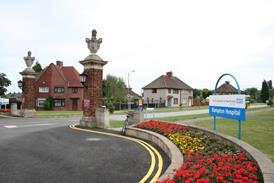













“I can’t be in all 34 hospitals at once.” Jo Dickson, chief clinical governance officer at Ramsay Health Care UK, captures a challenge that will be familiar to many healthcare leaders.
When operational resilience is discussed, the conversation usually focuses on capacity. Do we have enough beds? Enough staff? Enough escalation plans?
Sponsored and written by
These are important questions. Yet the question many senior leaders lose sleep over is slightly different: how do you know standards are holding across every site when you cannot physically be there?
For organisations operating across multiple hospitals, community services, or provider networks, resilience is not simply about managing pressure. It is about maintaining visibility when pressure increases.
The ability to spot issues early, understand emerging risks, and respond quickly depends on having reliable oversight. And during winter, oversight is often put under strain.
Why traditional assurance becomes fragile under pressure
Many organisations still rely on a combination of site visits, meetings, spreadsheets, and manual reporting to maintain oversight.
The problem is that these methods become less reliable precisely when organisations need them most.
Winter pressures, workforce shortages, and rising demand reduce time for face-to-face assurance. Site visits become harder to schedule, and reporting processes are delayed. Governance teams then spend more time collecting information and less time interpreting it.
As a result, organisations can find themselves making decisions based on information that is incomplete, delayed, or inconsistent.
The challenge is not a lack of data. Most healthcare organisations have more information than ever before. The challenge is knowing where to find it and whether it reflects current reality.
That is why many organisations are rethinking how assurance is delivered across large and geographically dispersed services.
Moving from fragmented oversight to a single view
Circle Health Group provides a clear example of this shift.
The organisation consolidated 12 systems into a single platform across its network of 54 hospitals, creating a more consistent approach to quality and safety oversight.
With quality data, incidents, audits, and governance information available in one place, leaders gained a clearer understanding of what was happening across the organisation without relying on multiple disconnected reporting processes.
At North Bristol Trust, quality governance systems manager Jenny Booth highlighted how reducing the need to check, reconcile, and correct information helped frontline teams spend less time dealing with data administration and more time focusing on patient care.
For leaders responsible for multiple locations, the lesson is clear: resilience improves when assurance does not depend on being physically present.
Fragmentation is a resilience risk in itself
Fragmented systems are often treated as an inconvenience. In reality, they can become a risk in their own right. Consider what happens when a safety concern is reported during a particularly busy week in January.
One issue arrives through an incident reporting system. Another sits within an audit platform. A third appears in a spreadsheet managed locally. A complaint is emailed to a separate inbox. The problem is that nobody sees the whole picture.
When information is spread across multiple systems, the likelihood of missed connections increases. Trends become harder to identify. Escalation takes longer. Leaders spend valuable time gathering information instead of responding to it.
What begins as a technology challenge can quickly become an operational resilience challenge. The greater the number of systems involved, the greater the opportunity for a warning sign to be overlooked. But instead, organisations benefit from having “an overarching view of all services without even needing to leave the door”.
That visibility becomes particularly valuable when demand is high, and leadership attention is stretched.
Questions to ask before winter
Before operational pressures increase, leaders should consider:
- How many separate systems are used to manage quality and safety information?
- How quickly can a concern be identified and escalated across all sites?
- Where does information need to be manually copied, checked, or reconciled?
- Could leaders obtain an accurate view of organisational risk today without requesting multiple reports?
- How many different places can a quality signal arrive?
Next step
Count the separate places a quality signal can arrive in your organisation. If it’s more than two, that’s worth mapping before winter.
Radar Healthcare gives organisations oversight of key systems and processes through a single platform. Many of our customers across health and social care are seeing the benefits of an all-in-one solution, helping them improve visibility, efficiency, and control.
Geri Boynova is vice president of UK growth at Radar Healthcare, the quality and governance platform used across organisations, including Circle Health Group’s 54 hospitals and Ramsay Health Care UK’s 34. Want an oversight review or a demo? Head to radarhealthcare.com.