North west London’s acute trusts are exploring whether to set up a new elective orthopaedic centre in the region as they seek to capitalise on the concept of ‘fast-track’ surgical hubs.

Last week, a report to Imperial College Healthcare Trust’s board said a more “strategic, larger-scale” approach was being sought to improve capacity for more high-volume, low-complexity work across the sector.

This covers the four acute trusts in the area, which now share a single chair, and have a total turnover of more than £3bn: Imperial, Chelsea and Westminster, London North West, and Hillingdon.

The board report said leaders were exploring how best to establish the centre for the region while “maximising” planned surgery capacity overall, with the South West London Elective Orthopaedic Centre run by Epsom and St Helier University Hospitals Trust highlighted as a “well-established example”.

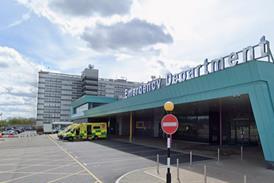
Central Middlesex Hospital, which is operated by London North West University Healthcare Trust, has been identified as a preferred location for the centre, the report said. A project management team is also being set up to explore the options available before proposals are developed for broader consideration.

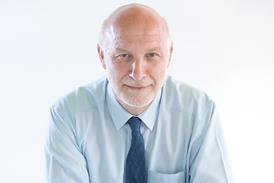
ICHT chief executive Tim Orchard told HSJ it would sit as a capital programme inside LNWUHT, with targeted investment funding also being looked at to help install two additional operating theatres.

A full business case is being prepared for approval by LNWUHT’s board some time later this year, with leaders hoping the centre could be opened before the end of the next calendar year.

Professor Orchard said: “I think one of the key things is to make sure that we all have a very clear understanding of what it is that we are trying to achieve at the outset.

“We’ve spent a lot of time as partners discussing that over the last few months, and I know that Pippa Nightingale, the new chief executive of London North West [University Healthcare Trust], is absolutely bought into the concept [of an elective orthopaedic centre].

“There is always an opportunity, when you’ve got multiple organisations working together, for views to divide. I think that one of the key things for us is good communication.

“We have good communication across the collaborative at the moment. We will make sure that, as we move forward, and again as I’m sure you will appreciate Matthew Swindells, our new chair [of north west London’s four acute trusts], is very keen to make sure that there is good communication.

“If we get that right, we can highlight where we think there are potential issues and work through them in real-time.

“I think that is quite important because our strong view at the moment is that there is a massive job to do at a clinical and operational level here.

“What we don’t want to do is to spend a lot of time getting diverted down a question of: ‘Do we need to have massive governance changes in order to make this run?’

“What we want to do is to have a joined-up view of what it is we’re trying to achieve and then deliver it.”

Professor Orchard added that, while the region has “moved into the space of thinking in a more holistic way” about the needs of its population, approximately 2.4 million people, he wasn’t “naively optimistic” to believe there would not be any problems moving forward.

It comes after 14 “fast-track” hubs were set up across hospitals in north west London to maximise theatre capacity, which predominantly focused on high-volume, low-complexity work surrounding specialties such as gynaecology, urology, orthopaedics and ear, nose and throat.

The report to ICHT’s board warned that, without some “further intervention,” the number of patients awaiting orthopaedic surgery in north west London could increase to just under a fifth by 2030 from a current position of 12,000 people seeking inpatient or outpatient care.

However, it added that a “large amount of work” was still required to explore the case for an elective orthopaedic centre, including establishing the best location and identifying capital and revenue funding and workforce requirements.