

















Stroke services are built around speed. Assessment, imaging, treatment and discharge planning can all happen within a compressed window, yet one critical decision may still depend on information that arrives too late: whether clopidogrel is likely to work for an individual patient.
Sponsored and written by

Clopidogrel remains central to secondary prevention after ischaemic stroke or transient ischaemic attack. However, common CYP2C19 (a liver enzyme that metabolises several drugs, including clopidogrel) variants mean some patients cannot effectively convert clopidogrel into its active form, leaving them at risk of avoidable recurrent events. Genotype-guided prescribing is now recommended in this pathway. The practical challenge for clinicians and commissioners is how to make it part of everyday acute stroke care, not a retrospective laboratory result.
That was the focus of the recent HSJ webinar, sponsored by and produced with genedrive, in which Dwaipayan Sen, consultant in stroke medicine at the Greater Manchester Comprehensive Stroke Centre, and John McDermott, National Institute for Health and Care Research academic clinical lecturer at the Manchester Centre for Genomic Medicine, discussed the Manchester experience of rapid pharmacogenetic testing in stroke.
The case study is important because it shows implementation in a real-world NHS clinical pathway. CYP2C19 point-of-care testing is now in routine use at Salford’s Hyper Acute Stroke Unit, the UK’s largest stroke unit. Genedrive’s near-patient rapid test provides a result in around one hour, enabling clinicians to consider the most appropriate antiplatelet pathway before discharge, while the patient is still available to them.
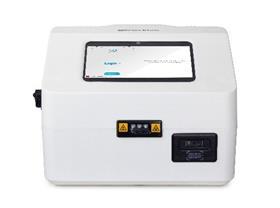
At Salford, implementation was treated as a pathway redesign, not simply a device deployment. Machines were placed in the emergency department and HASU. Stroke specialist nurses, healthcare assistants and HASU nurses were trained through a cascade model, with testing extended across emergency presentations, ward admissions and TIA clinic referrals. Results are recorded in the electronic patient record and escalated to the responsible consultant to support a patient-specific treatment discussion.
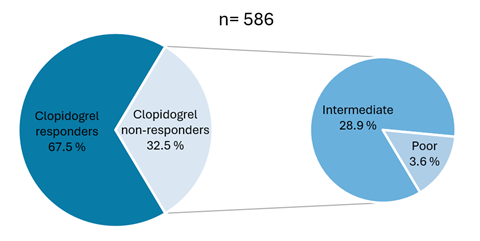
Across an initial seven-month pilot period, 586 patients were tested in Manchester, with around one-third identified as clopidogrel non-responders. Importantly, point-of-care testing delivered results before discharge for patients, demonstrating that pharmacogenetic information can be generated and actioned by the clinician while the patient is present.
Value to health systems
For clinicians, this is about confidence at the point of decision. For integrated care boards, it is also about system value. Rapid pharmacogenetic testing supports prevention, reduces avoidable readmissions, releases bed capacity and improves flow through pressured acute pathways. Modelling estimates that full adoption across Greater Manchester could each year avoid 245 recurrent emergency admissions, release 5,740 bed days and free 21,948 healthcare professional hours, as well as saving more than £1.1m in social care costs.
Nationally, rapid CYP2C19 testing for ischaemic stroke and TIA could deliver £160m of annual value to the NHS, avoiding around 3,000 recurrent emergency admissions, releasing 63,000 bed days and freeing 231,000 healthcare professional hours. These are not marginal gains in a system facing persistent pressures and waiting list recovery demands.
The commissioning challenge is that prevention-led technologies often expose a gap in NHS funding routes. The cost of rapid testing may sit with trusts or hospitals, while savings appear across acute, community, primary and social care, at ICB level or above. Yet the Manchester model shows that the benefits can also be realised locally – fewer recurrent events, smoother discharge and more capacity in the same health economy making the investment.
For systems developing local business cases, the Manchester experience offers practical answers on device placement, staff training, governance, result recording and consultant-led treatment decisions. These are the details that enable pharmacogenetics to safely become part of routine stroke care at scale.
The infrastructure for wider adoption is strengthening. Genedrive’s CYP2C19 test is supported by NHS implementation guidance and available through the NHS Dynamic Procurement System, enabling local procurement. The remaining step is leadership from ICBs and trusts to integrate testing into stroke pathways, quality systems, workforce models and business cases.
Manchester has already shown that rapid pharmacogenetics can be embedded safely and practically in a hyperacute stroke service. Genedrive is seeking to support further ICBs and trusts to adapt that model locally, so more patients receive the right treatment before they leave hospital.
Rapid results. Smarter stroke prevention.
The full conversation is available to watch on demand now.