
















An HSJ roundtable, fully funded and initiated by AbbVie, considered which pathway changes might support best use of capacity
This HSJ roundtable was fully funded and initiated by AbbVie, who worked with HSJ to decide on the topic it covers. HSJ entirely organised the event and retained editorial control over it, and this associated report. AbbVie has reviewed this report in advance of publication for factual accuracy and compliance checks.
Job Number: UK-ONC-230022
Date of Preparation: April 2024
Meeting Reference: 2023-GB-MNP-00072
Waiting times for cancer treatment have been growing for many years, but the additional pressures wrought by the early waves of the pandemic have made the situation more pressurised still. Pre-existing service and workforce challenges have been compounded, leading to pressing questions about how to best use capacity while also delivering a good patient experience.
In association with
These are complicated issues without single or simple solutions, but it may be that some of the answers lie within evolutions to pathways. A recent HSJ roundtable, initiated and fully funded by AbbVie, explored this important area through the specific prism of blood cancers.
Panellists
- Robert Ayto, consultant haematologist, Portsmouth Hospitals University Trust
- Linda Barton, consultant haematologist, University Hospitals of Leicester Trust and chair of haematology expert clinical advisory group, East Midlands Cancer Alliance
- Anthony Cunliffe, national lead medical adviser, Macmillan Cancer Support and joint clinical director, South East London Cancer Alliance
- Derralynn Hughes, clinical co-director, North Central London Cancer Alliance and professor of experimental haematology, University College London
- Kate Jackman, improvement delivery lead, East of England Cancer Alliance
- Anita Parmar, Macmillan cancer programme lead, University Hospitals of Leicester Trust
- Louise Powell, medical lead for haematology, AbbVie UK
- Helen Rowntree, chief executive, Blood Cancer UK
- Helen Winter, consultant medical oncologist, University Hospitals Bristol and Weston Foundation Trust and clinical director, SWAG Cancer Alliance
Right place, right time

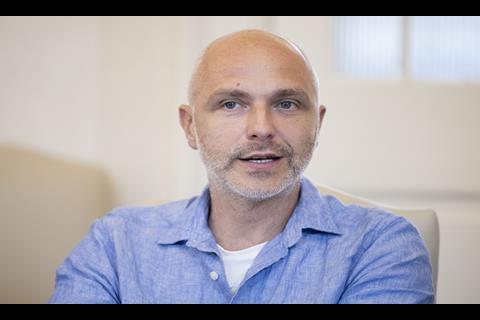
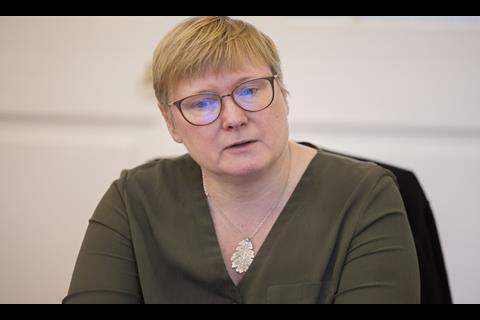
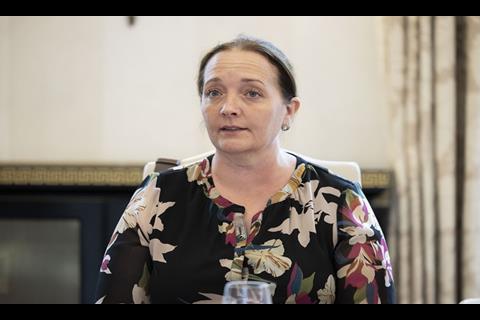
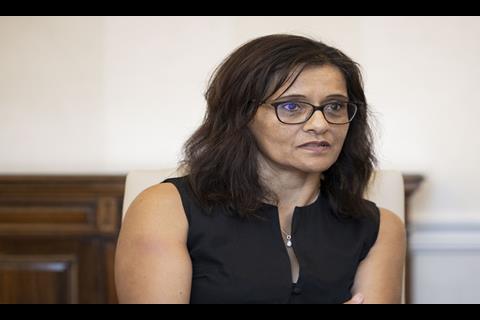
Finding effective and appropriate ways to triage and direct patients is crucial – not least as new treatment and diagnostic approaches emerge
For Anita Parmar and colleagues at University Hospitals of Leicester Trust, work to maximise capacity in cancer pathways starts from one key focus: “getting the right patient onto the right pathway at the right time”.
It is not necessarily as straightforward a proposition as it sounds. “You’re not dealing with a linear route,” says Ms Parmar, the trust’s Macmillan cancer programme lead. “You could have a patient who’s come in for a specific diagnostic test and there’s other incidental findings [which could suggest potential cancer]. These patients then need further investigations alongside treating diagnosed patients.”
It is a question that applies across all types of cancer, but one which is perhaps especially difficult in haematological malignancies. That’s firstly because blood cancers tend to have vague symptoms – many of which are easily attributable to other, much more common conditions. Secondly, judging whether a patient needs an urgent referral can require interpretation of multiple complex blood parameters. This can be challenging both for GPs and for secondary care doctors in specialties other than haematology.
What better example to consider, then, at an HSJ roundtable considering how pathways might evolve to free up capacity in cancer care. The event, which was initiated and fully funded by AbbVie, brought together a small panel to explore this important issue.
At University Hospitals of Leicester Trust, an initial review of referrals by specialists is used as an important means of ensuring patients are directed correctly – and so ensuring the right capacity is available for the right patients.
“That comes with needing some resource allocation to do that triage and then allocate those referrals [accordingly],” explained Ms Parmar. “But what we’ve found is if you do that up front, you’re more likely to be able to get the patient onto the right pathway, so it delivers an efficiency saving.”
The referrals are not only reviewed by medics – clinical nurse specialists also play a key role. The idea of freeing up capacity through making full use of all professionals was a key theme to emerge during the debate.
Multidisciplinary teamwork
“We’ve been trying to look at alternative pathways of seeing patients using clinical staff other than medics,” reported Linda Barton, a consultant haematologist at Leicester and also chair of the haematology expert clinical advisory group for East Midlands Cancer Alliance.
“We have clinics that are led by different staff groups, including nurses and pharmacists. We have also employed GPs with extended roles and we have physician associates – all sorts of different professions involved in trying to make the pathway [work as efficiently as possible].”
Similar efforts are being made at Portsmouth Hospitals University Trust, where there are new nurse-led clinics and some clinical nurse specialists moving into advanced roles involving diagnostics.
“But I think the biggest thing we really have is excellent clinical care coordinators. They are worth their weight in gold,” reported Robert Ayto, consultant haematologist. “They really do track the patients, get diagnostics done, and get them onto the MDT. And they work hand in hand with not only primary care, but also the MDT coordinator as well.”
For Helen Winter – consultant medical oncologist at University Hospitals Bristol and Weston Foundation Trust and clinical director at SWAG Cancer Alliance, which covers Somerset, Wiltshire, Avon and Gloucestershire – this sort of expanded role approach can have real value in building capacity. But she said maximising that potential will mean getting clear processes in place.
“We need to ensure everyone’s focus is on the patient and helping that patient navigate the pathway,” she argued. “That means ensuring every member of the team is actively reviewing results, responding promptly, and ensuring seamless handover during the diagnostic and treatment pathway.”
We can’t just continue to do things the way we’ve always done them, because that is resulting in longer waits for patients and changes in outcomes
A potential future complication: an additional expansion in diagnostic and treatment options. What streamlining pathways and capitalising on capacity looks like in the face of those changes should be a live question, our panel suggested.
“We need to be not just thinking about the here and now but thinking about what blood cancer care is going to look like in five, 10 years’ time,” suggested Helen Rowntree, chief executive of Blood Cancer UK.
“What is it going to mean if we get GRAIL [a multi-cancer early detection blood test, currently being trialled] across the NHS? What is it going to mean if we’ve got more widespread use of genomic sequencing? We have to think about pathways in those contexts as well as the here and now.”
Eye to the future
Kate Jackman, improvement delivery lead at East of England Cancer Alliance, was in strong agreement. “The NHS is fluid and dynamic and constantly changing, and we need to change to keep up with the capacity changes and the changes to pathways. We can’t just continue to do things the way we’ve always done them, because that is resulting in longer waits for patients and changes in outcomes.”
Ultimately, there will be no one answer to the question of how pathways should evolve to free up capacity. Instead, our panel agreed that where good practice is happening it must be shared.
“What’s coming across really clearly to us is that there are some fantastic things that are already happening,” said Louise Powell, medical lead for haematology at AbbVie UK. “Certainly from our perspective, we’re trying to help share some of that practice and also understand what the role of of industry may be in trying to support some of this pathway redesign.”

Fast and effective diagnosis is at the heart of high quality cancer pathway, but it’s a difficult nut to crack
The central role of swift diagnosis in efficient cancer pathways – ones that deliver the best outcomes while also maximising system capacity – was a theme to which panellists frequently returned at a recent HSJ roundtable, initiated and fully funded by AbbVie.
As Helen Rowntree, chief executive of Blood Cancer UK puts it: “Even if it doesn’t have a long-term impact on an outcome, the experience of diagnosis stays with people for a very long time and affects their broader experience and treatment; their confidence in their treating team.”
So how to get that diagnosis right? One of the central conclusions of the roundtable event was that it is – unfortunately – very complicated.
For Helen Winter – consultant medical oncologist, University Hospitals Bristol and Weston FT and clinical director, SWAG Cancer Alliance – there are issues about ensuring ease and equity of access to tests, but also about reliably identifying the patients for whom even a two-week wait referral isn’t sufficiently urgent.
“I’ve been surprised to hear from colleagues in primary care about how long it can take for them to be able to get a full blood count for a patient. In secondary care, I think we perhaps had assumed that all health practitioners can access full blood counts on the same day. We need to ensure our patients in primary care have that level of access,” she said.
“And for some patients presenting with acute leukaemia or people with fast growing lymphoma or those with a delayed presentation or access, even a two-week wait referral may not be fast enough – more urgent investigation and management is needed to avoid a poorer outcome.”
The natural conclusion would seem to be that pathways could be improved by increasing primary care access to diagnostics. But Anthony Cunliffe – national lead medical adviser at Macmillan Cancer Support; joint clinical director at South East London Cancer Alliance; and a part-time GP – suggested this is not without complication.
“We’ve got a lot of direct access to diagnostics in south east London, but it’s not being used,” he reported. “We recently ran a workshop with about 40 GPs to try and find out why they weren’t using it.
Diagnostic doubts
“It was mainly around anxiety about ordering a test, getting that result back, there being potentially multiple abnormalities, some that might be specific to the symptom and some that might be incidental, and then not knowing how best to deal with the findings – how to interpret it and which pathway to put a patient on.”
It is a similar situation on the other side of the capital. “We also have open diagnostics for GPs for certain tests, but often the preference is to refer people in [to secondary care],” reported Derralynn Hughes, clinical co-director of North Central London Cancer Alliance.
She suggested that it was important to build relationships between GPs and haematologists, and enable advice to flow from the latter to the former through reliable guidance. “But you can never educate everybody about everything, and particularly not about rare disorders – of which there are a number in haematology.”
For Professor Hughes, this might be an area in which digital support could be valuable. “I think where we should be looking in the medium term are algorithms which pick up changes, particularly on pathology, which are informative for haematology – changes in the normal range, which if you’re just seeing people routinely you may not pick up but which machine learning can pick up over a course of time. And that will I hope enable earlier diagnosis and pick up some rare disorders.”
Alternative options
Another important area in which she sees promise: the non-specific symptoms pathway as an alternative referral option for GPs. This is intended for patients whose symptoms do not necessarily fit into a two-week wait referral pathway, but which do suggest the possibility of cancer.
The problem is in primary care we often do not have an alternative pathway for most cancers – it’s either two-week wait or routine pathway, which can be up to 18 weeks, often a lot longer
“It was initially for people who had vague abdominal pain but it’s now expanded to more symptoms and it turns out to be really helpful for haematology,” she said.
As Dr Cunliffe explained: “The problem is in primary care we often do not have an alternative pathway for most cancers – it’s either two-week wait or routine pathway, which can be up to 18 weeks, often a lot longer.”
It was a point that underlined refining existing pathways is not enough to maximise capacity in cancer care – there will also be a need to build new ones.

Formalising advice and guidance arrangements could help improve flow and capacity
Linda Barton is clear that liaison is an important part of being a haematology consultant. After all, she knows her speciality tends towards being complicated – she understands the challenges for those trying to decide whether or not a patient will benefit from a referral, and with what urgency.
To address the need for advice, haematologists at University Hospitals of Leicester Trust created investigation and referral algorithms. Made available online, the idea was to help non-specialists interpret which results and symptoms required the most immediate action.
“We have been receiving increasing numbers of letters asking for advice,” Dr Barton told a recent HSJ roundtable initiated and fully funded by AbbVie. “We’d recognised that liaison role is really important in haematology, but the letters were initially handled in an ad hoc way until this essential service was formalised into job plans.”
Advice and guidance being seen as this sort of “add-on” to a consultant’s role is common, but our panel agreed it is not always conducive to a useful sharing of information. “The pushback a lot from secondary care is: ‘I haven’t got time to do it’,” reported Kate Jackman, improvement delivery lead for East of England Cancer Alliance.
Yet get it right and time and capacity can be freed up, by making sure the right patient gets to the right place at the right time.
Making it formal
How, then, to get the balance right? At trusts represented around the roundtable, the answer has been to create formal advice and guidance sessions in the working day.
Robert Ayto, consultant haematologist at Portsmouth Hospitals University Trust, reported that advice and guidance is in his job plan. He emphasised that this does not only involve liaising with GPs, but also with colleagues seeking to make internal referrals.
“A lot of it is inpatient teams,” he explained. “We triage the patients and we might give things for inpatient teams to do before a patient sees us, or say why a referral isn’t appropriate – or why a patient should be seen even sooner.”
He suggested that freeing up capacity in cancer pathways, therefore, isn’t just a matter of looking at the patient journey from general practice, but also at the one within a hospital.

A roundtable discussion shows how cancer services are adapting to create capacity and manage demand says Louise Powell, medical lead, haematology, AbbVie UK
Despite the unrelenting pressure on NHS cancer services, the conversation around the table made clear that innovation remains at the heart of NHS professionals’ commitment to their services and patients. We heard lots of good practice examples of how services are adapting to create capacity and manage demand. This is not an easy task, but the experiences and insights shared by roundtable attendees demonstrate the ingenuity that exists within the NHS; but equally it reflects a pressing urgency. Transformation of services, creating efficiencies without compromising on care, is no longer a luxury, but a necessity.
But where we heard great examples, we also heard of the barriers and pitfalls that have had to be navigated (or which remain) demonstrating that the journey is never smooth, nor does it follow the most direct route. It is a journey that requires expertise in navigation, in agility and most of all, persistence. Almost always, the journey is in addition to the “day job“ and is often borne out of the need to ensure that services can meet the needs of patients.
AbbVie, as a global biopharmaceutical company, has an ambition to bring innovation to address some of the world’s greatest health challenges and have a remarkable impact on patients’ lives. AbbVie believes that by creating a platform for sharing sustainable solutions, healthcare professionals can further adapt their services and pathways to meet the changing patient needs.
We hope that those reading this article are as inspired as we are about the potential and will to innovate that exists within individuals working within the NHS to evolve and transform their services. We welcome the opportunity to continue to share best practice and learnings across different teams.
Louise Powell is medical lead for haematology, Abbvie UK
Job Number: UK-ONC-230022
Date of Preparation: April 2024
Meeting Reference: 2023-GB-MNP-00072
Photos by Wilde Fry