


















An HSJ roundtable, in association with Philips, discussed what the NHS must do to embed the innovations it so desperately needs
In association with

The UK healthcare sector has no difficulty in generating innovations. However, a gap exists between the potential outcomes from state-of-the-art technologies and the actual outcomes experienced by patients today.
This gap is not new, and its causes are well known. Lord Darzi’s report on the NHS talks of a lack of capital investment that has left the NHS “in the foothills of digital transformation” compared to other sectors of the economy.
However, in an NHS with extreme financial, workforce, and seasonal challenges, innovations without an immediate and obvious effect on balance sheets or targets are easy to deprioritise.
An HSJ roundtable, in association with health technology leader, Philips, looked to identify opportunities for spreading innovation and what is needed to make it happen. The roundtable was timed to coincide with the publication of Philips’ UK Future Health Index – a report analysing the perspectives of 200 UK healthcare leaders.
Panel
- Raghib Ali, chief executive and chief medical officer, Our Future Health
- Neil Ashman, chief executive, The Royal London and Mile End Hospitals
- David Hare, chief executive, Independent Healthcare Providers Network
- Peter Howitt, managing director for the Centre for Health Policy and the Climate Cares Centre, Institute for Global Health Innovation
- David Lawson, director of medical technology, Department of Health and Social Care
- Mark Leftwich, managing director, Philips UK and Ireland
- Rachel Power, chief executive, Patients Association
- Richard Stubbs, chief executive, Health Innovation Yorkshire & Humber
- Victoria Tzortziou Brown, vice chair (external affairs), Royal College of General Practitioners and research and innovation lead, NHS North East London
- Sarah Woolnough, chief executive, The King’s Fund
- Alastair McLellan, editor, HSJ (roundtable chair)




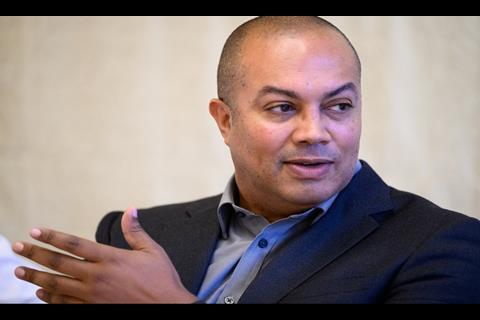


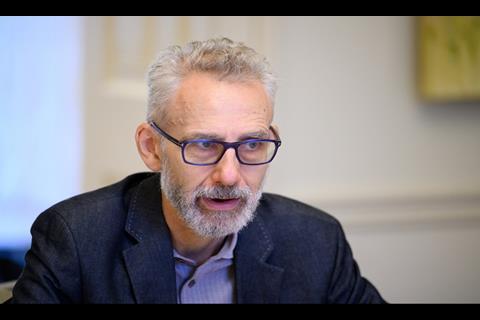
As a strong start, the panel had no difficulty naming technologies that they felt had the potential for widespread tangible impact.
Many thought virtual wards would continue to be successful. Philips UK and Ireland managing director Mark Leftwich believes these will have “the biggest systemic impact in transforming care for the future”.
Indeed, the Future Health Index found that 62 per cent of UK healthcare leaders say clinicians at their organisations feel positive about virtual care – though this is behind the global average of 72 per cent.
The King’s Fund chief executive, Sarah Woolnough, added that virtual wards meet a “burning platform priority” as they free up overcrowded hospitals and ease workflow pressures.
“The NHS is running very hot. It can only focus on so many priorities. And innovations that tap into key agendas and priorities stand a better chance of success,” she said.
Another advance the panel spoke highly of was simple technologies that improve the patient experience or make employees’ lives easier. Independent Healthcare Providers Network chief executive David Hare cited systems that allow patients to send text messages when they’re running late, massively reducing did-not-attend rates.
Similarly, Peter Howitt, managing director for the Centre for Health Policy and the Climate Cares Centre at the Institute for Global Health Innovation, highlighted improvements to working practices that could aid staff retention. He thinks tools like route optimisation software or easier ways of recording and accessing notes “would massively improve productivity of community nursing, and perhaps make it a much more attractive area to work in”.
The NHS is running very hot. It can only focus on so many priorities. And innovations that tap into key agendas and priorities stand a better chance of success.
These innovations clearly have potential, but they can only be effective if they are fully embedded in the systems that patients and employees use. For this to happen, Victoria Tzortziou Brown, Royal College of General Practitioners vice chair (external affairs) and NHS North East London research and innovation lead, believes three components must be in place: autonomy for clinicians and systems to innovate, getting clinicians on board through good leadership and working with patients.
Patient’s Association chief executive Rachel Power cited the NHS App as an example of an innovation which often works well but has flaws when viewed at a systemic level. Carers, for example, need different accounts depending on which GP they are using.
“[Innovation] shouldn’t depend on that postcode lottery,” she added.
Virtual wards perhaps provided further lessons about how spreading innovation is sensitive to higher political and strategic levers being pulled. Virtual wards grew massively when funding was ringfenced, but growth has now stalled.
The Royal London and Mile End Hospitals chief executive Neil Ashman believes “dedicated funding has helped,” but, as an acute provider leader, he has “got to start finding the savings to generate funding to run our virtual wards”.
Health Innovation Yorkshire & Humber chief executive Richard Stubbs pointed out it is easy to look at an innovation that is failing to embed and assume the problem is the innovation itself, rather than problems in the wider ecosystem.
Illustrating this, the incentives for an NHS provider to innovate — again in the case of virtual wards — may not be aligned with other realities. Dr Ashman noted hospitals earn money through elective procedures, so “keeping people out of hospital isn’t yet incentivised through anything other than an absolutely urgent focus on safety”.
Ecosystems may encourage change from the bottom-up or the top-down, but most agreed leadership was a critical component. Ms Woolnough referred to a “golden time when we valued what it takes to embed change”. She pointed to progress in cancer around 15 years ago, where a National Cancer Action Team coordinated activity, shared best practices in both technology and pathways, and helped local units embed lasting changes according to their needs.
Dr Tzortziou Brown is firmly in the bottom-up camp, believing commissioners should facilitate innovation rather than impose it. What stops this, she said, is targets that rob clinicians of the space to work with patients and each other to develop solutions. “We are just doing the same thing, complaining that it’s not working, but we cannot seem to find the time to think outside the box,” she said.
The human factor is crucial, agreed Ms Power. She echoed the need for buy-in among practitioners, so they can then bring patients along on the journey. “If the frontline clinician is not able to explain the benefits of something and understand and trust the benefits, then you are never going to have spread,” she said. “And I think that’s what happens.”

Industry has a vital role to play in health innovation, especially in the research and development phase. Mr Leftwich believes that role should extend beyond being simple suppliers and gave the example of a four-year partnership Philips undertook with the NHS on digital pathology: “The technology was there. The desire from NHS England to do it was there. The four years was the cultural change – picking the trust and taking them through the journey and going from very analogue to an incredibly digital solution.”
This kind of partnership requires a long-term commitment between tech and healthcare providers, he said, but pays dividends once the commitment pays off and can demonstrate its impact via better patient outcomes and cost savings.
One person with vital insight into the role between suppliers and consumers of innovation is the Department of Health and Social Care director of medical technology David Lawson. He noted innovation is often seen as adding cost. Even where it makes processes more efficient, the perception is that this means more care can be carried out, potentially resulting in more cost to the NHS.
Mr Lawson would like better guidance for hospitals to evaluate industry claims about medical technology. Not only would this make it easier for procurers to understand whether a product is right for their needs, but it would also give suppliers a clearer sense of the criteria their customers might use to assess the impact of a product.
He senses medtech budgets are being ineffectively managed and feels a “lack of visibility” further hinders this, adding: “Decision makers at a local level, which is the right place for decisions to be made, are not able to make informed decisions.”
Mr Leftwich would like to see greater emphasis on investment’s long-term value and have this factored into NHS procurement processes. Currently, hospitals with major capital challenges — in their estates, for example — are having to base innovation decisions on today’s capital costs, but NHS procurement is “nowhere near where innovation is at the moment”.
He gave the example of the latest MRI scanners that can be optimised by upgrades via software over a 20-year lifespan versus cheaper ones that can’t be upgraded but remain in place as a capital investment. Often a hospital will choose the latter based on acquisition cost, even though this may not be the best long-term investment.
Our Future Health chief executive and chief medical officer Raghib Ali leads an organisation which works with the NHS, industry, and academia to assess the outcomes of an innovation or intervention and their relative costs. He acknowledged investing in prevention has always been hard, given such investments extend well beyond election cycles, but the evidence base is set to grow.
The Future Health Index suggests a positive trend in this area, too: around three-quarters of leaders (72 per cent) are either already investing or planning to invest in preventive care to reduce long-term healthcare costs.
Ms Power asked the panel to look at outcomes in a broader sense and consider investment in innovation in terms of its impact on the economy – improving the lives of people whose health prevents them from working or learning.
“If we start to measure outcomes, and we start to commission pieces of technology or any other work based on the outcomes for the individuals who are going to use it, then I think we are going to have a) a healthier society, but b) we are going to save money,” she said.
The NHS could take better advantage of the private sector’s specialisms to improve productivity and save money, said Mr Hare. He highlighted the community diagnostic centres programme as one initiative where significant savings could have been made by having more private-led providers involved earlier.
“A billion pounds worth of public capital was spent in the public system,” he said. “Hundreds of millions could have been saved if you’d have put that into the private system.”

Dr Tzortziou Brown summarised the task facing those wanting to embed innovations at scale in the system: “Clinicians and service users need to believe and trust in the benefits of those different innovations. And in order to do that, you need to prove the value for the system, rather than the value for a siloed organisation or a separate provider.
“A lot more effort needs to be invested into this implementation science.”
We need to move from admiring the problem to solving the problem
Ms Woolnough stressed leadership is crucial to this, but adoption is never “front and centre” for leaders because of other pressures. She has heard calls for the funding of adoption and spread to be part of every NHS board meeting, adding: “If it were, you would drive a different sort of action.”
Mr Stubbs suggested investment in adopting innovation should be ringfenced, and “we should be pegging it to a fraction of the total health and care budget”.
He likened the situation to an Olympic 4x100m relay where all the hard work on innovation is being done on the first three legs, only for the system to falter when crossing the line.
“For all the world-class research we have in this country, we are not investing in the final leg that’s going to make a benefit to patients,” he added.
Mr Leftwich said that he sees great benefit in providers having employees on-site, working with hospital staff to ensure that technology is being used to its full potential. This requires an openness from trusts, which is “led from the top – from the leadership,” and that providers need access to drive the necessary cultural change.
As a hospital chief executive, Dr Ashman recognised the “final leg” analogy, conceding hospitals are perhaps not being the adopters they need to be.
He would like to see a better flow between NHSE’s vision for innovation and the realities of implementation in cash-strapped, resource-drained front-line services: “I wonder if there isn’t an issue around information governance, compliance, trusted partners, conflicts that we could explore that would make it easier for a general practice to pick up a new technology, secure in the knowledge that it has somehow been kite-marked as ‘this is good to go.’”
Mr Lawson expressed hope he would not be having these conversations in three years. He issued a call to action, stressing how urgent the topic is to a “broken” NHS: “We need to move from admiring the problem to solving the problem. And actually, a lot of the solutions, we talked about today.
“My fear is we don’t, as a system, collectively, get on and start solving this challenge.”
The 2024 UK edition of the Philips Future Health Index can be found here.
‘Grown-up conversations’ needed
Wary of how sceptical some practitioners can be of national programmes, Mr Stubbs suggested a more flexible approach within the system and a more mature relationship between the NHS and industry was needed.
He warned previously leadership has been guilty of “showing the prize and expecting the system to come towards it. We know it hasn’t got the capacity to do so.”
Rather than mandate change, an approach of spreading innovation through adoption and adaptation would allow individual entities to take on innovation on their own terms.
He added this required a “grown-up conversation about what gets harvested and what gets spread – and it’s not going to be everything.” Being more selective about the technologies adopted at scale would benefit not only taxpayers and patients, but also the industry, where SMEs “burn through cash waiting for the NHS to make its mind up”.
Meanwhile, Mr Howitt pointed to a shift away from an improvement model towards a regulatory one, “which arguably incentivised not taking risks”. This is exemplified in the demise of bodies like the NHS Modernisation Agency and the concurrent establishment of the Care Quality Commission. The former, he argued, encourages innovation by providing support capacity, while the latter prioritises compliance.
The data sharing opportunity
The panel widely agreed that, when done well, data sharing can be transformative. However, its potential has not yet been reached, to the frustration of patients and clinicians.
In the Future Health Index report, 94 per cent of healthcare leaders reported data integration as a key challenge that is impacting care.
The Patient’s Association worked with DHSC on this topic earlier this year and discovered patients have realistic expectations around data protection. Establishing these upfront may help to ease some of the sticking points around sharing.
“We need to be honest about the risk of breaches,” said Ms Power. “The minute we start using patients as grown-ups in the conversation, you’re not going to be scared to have that conversation.”
Mr Howitt feels the messaging on data sharing has been “wrong for a long time”. He would like to see more focus on the benefits rather than the risks because the data in the NHS “should be our massive comparative advantage compared to every other health system in the world”.
Dr Ali and colleagues were able to use this to their advantage during the pandemic, combining primary, secondary, and census data to explore why covid was disproportionately affecting people from a minority ethnic background – “something no other country could do”.
He agreed informed consent is important, which was one of the reasons why Our Future Health was established. Participants in the research programme are aware no data can ever be completely safe, even when custodians take every care and follow every best practice. The fact the service now has nearly 2 million subjects is a testament to the value people see in it.
“I think it will, hopefully, be a transformational resource for lots of us and lots of types of innovation going forward,” he said.
Photos by Tom Parkes and videos by Daniel Kutcher