
















An HSJ roundtable – in partnership with IBM – explored how existing and emerging technologies could deliver both immediate efficiencies and long-term transformation
How can digital innovations help the NHS with its productivity problems, both now and in the long term? An HSJ roundtable, in association with IBM, addressed this crucial question, drawing on the experience and views of panellists from across the NHS.
In association with
They concluded there were technologies which trusts could adopt immediately and which could then make a difference in the short term, delivering in-year savings. For example, ambient voice technology (AVT) can be used for note-taking in clinical situations, as well as minuting meetings and other administrative tasks.
But expanding technologies already in use – such as virtual wards and remote monitoring – could also be important. Trusts are at different points in adopting these, and there may be opportunities to use them more widely.
In the longer term, adopting AI presented further opportunities.
The panel
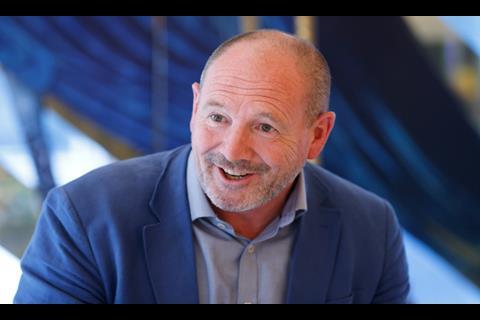
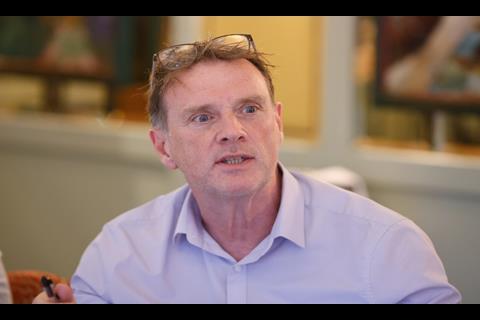
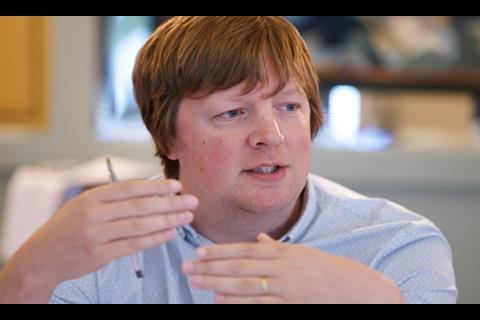
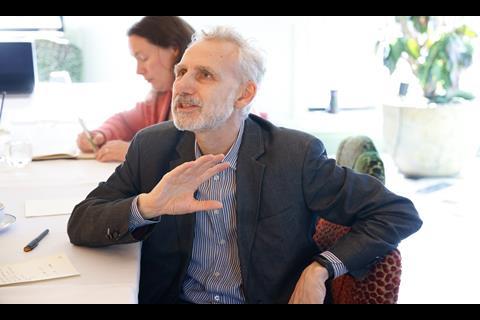
- Matthew Coats, chief executive, West Hertfordshire Teaching Hospitals Trust
- Mark Davies, chief health officer, IBM
- Shane Gordon, executive managing director, James Paget Hospital
- Megan Morys-Carter, director of digital innovation, Oxford University Hospitals Foundation Trust
- Mark Mould, chief operating officer, University Hospitals Dorset Foundation Trust
- Luke Readman, director of digital transformation, NHS London
- Mark Taylor, head of innovation, South Tyne and Sunderland Foundation Trust
- Alastair McLellan, HSJ editor (roundtable chair)




NHS organisations are facing a financially challenging year, with many having cost improvement programmes exceeding 6 per cent. Delivering these will require a step change in efforts and is unlikely to be achieved without changes in how they work.
At the same time, there has been a focus from politicians and others on “NHS productivity” and the growth in staff numbers since the pandemic, without any corresponding growth in activity. Trusts have been told they must cut some of their non-clinical workforce.
Chairing the roundtable, HSJ editor Alastair McLellan said the message from the top was that technology could be used to help dig the NHS out of this hole: “It’s got to improve care… but it has got to at least offer the promise of cash relief.”
West Hertfordshire Teaching Hospitals Trust chief executive Matthew Coats highlighted three technologies which he felt would be transformative but also disruptive – remote monitoring, the NHS App and ambient listening.
At his trust, a virtual hospital approach was first adopted during covid-19 but has continued, with about 70 to 80 patients stepped down from a hospital ward to their own homes, he said.
The trust had continued to invest in this when it could, even when central funding had declined, because it had helped improve the emergency care pathway. By reducing the number of people in hospital, especially those being looked after in corridors, the trust has saved £8m on temporary staffing in the past year and been able to close a ward.
But Megan Morys-Carter, Oxford University Hospitals Foundation Trust’s director of digital innovation, said there was tension between what was “the coolest technology” and what would actually make a difference.
“The way to save money in the short term is to train people really well to use the software they already have,” she said. She used the example of very basic Microsoft training, which could save a lot of time if people did simple things like saving files in the right place and using Excel.
Her trust has rolled out digital consent recently and ensured that support was available to staff to use the technology; it was around 70 to 80 per cent of the way there on adoption. It was also about to start piloting AVT. Support from suppliers around areas such as training was often available at the start, she added, which was helpful when trusts had little money to do this themselves.
Getting processes right before deploying more advanced technology, such as AI, may be important as well. Mark Taylor, South Tyne and Sunderland FT’s head of innovation, said saving small amounts of administrative time across many departments could add up.
Some useful tools can be readily available and effectively free. University Hospitals Dorset FT has just started using the NHS App at the door of its emergency departments.
This was effectively cost-free to the trust but streamed patients in different directions, said the trust’s chief operating officer, Mark Mould. This could mean it would need fewer reception staff, but could also take pressure off the department during surge periods, he added. Ultimately, it could flatten demand in the emergency department.
IBM’s chief health officer, Mark Davies, said the technology which would make the biggest impact might not be that which is most clinically interesting, but might be something which would help find efficiencies in an NHS organisation’s “middle or back office”.
IBM had done some work in Dorset, which had involved process mining identifying where the bottlenecks were in processes in parts of the organisation, such as theatres and then applying technology to release value, he said. This could be done in a short time – a matter of weeks – yet could release significant savings.
And the company had used the same approach on itself, including in areas such as procurement and HR, removing $3.5bn from its operating costs, he added.
Mr Mould said the data mining approach had revealed unexpected details: his trust found that sending out reminder letters for appointments 28 hours earlier could reduce did not attends.
One technology that has garnered much interest in the last year is AVT. This has been trialled in London across multiple centres and is now being evaluated, said Luke Readman, director of digital transformation at NHS London. It had enabled accident and emergency consultants to see two more patients per session. When replicated in areas such as outpatients, this had the prospect of reducing overtime costs.
But Shane Gordon, managing director of James Paget Hospital, which is now part of a wider group of hospitals in Norfolk, sounded a note of caution about the technology: “I still am waiting to see what their real-world performance is at scale, particularly when you’ve got a very diverse workforce with a very diverse set of accents.”
He felt there were still opportunities in the admin workflow and in areas such as stopping patients from having to rebook appointments, which would ultimately reduce the need for admin staff.
Some technologies might not be immediately time-releasing, but could release time to care. Others could reduce errors, such as technologies to identify fractures which might otherwise be missed. Use of this in emergency departments at East Suffolk and North Essex FT, where Dr Gordon used to work, had reduced missed fractures by 80 per cent. In the medium to long term, this could offer savings on litigation, he said.

Can the NHS stop doing things or will it layer things over the top? asked Mr McLellan, pointing to the risk of simply digitalising inefficient processes without getting rid of the inefficiencies and actually realising the savings.
Making changes will involve several challenges, from getting a business case for investment accepted in a cash-strapped system to dealing with pushbacks in some areas, which could narrow the field of what could be looked at, he said.
But the current need for savings may have made this easier. “In my organisation, everything is up to be taken out in terms of costs,” said Mr Mould. “In terms of cost reduction, we are looking at everything across the board.”
But clinicians might feel time released by AI or other technologies could be used for research and development or just to have an easier life, suggested Mr McLellan. Did this mean the introduction of technology freed up time, but did not lead to the expected savings?
How time saved was used depended on the local context, Mr Readman said, adding it could include reducing unbudgeted staff costs when people stayed late and reducing pressure on staff.
He added that there could be significant gains in back-office functions because of these changes as well, but noted there were costs to adopting “software as a service”, which was effectively rented by the year and costs around the transformation and support needed.
“The technology is great, but delivering the transformation and the human support to get the transformation out is a bigger question still,” Mr Readman said.
Mr Taylor said cost savings might not be immediately obvious. Freeing up people’s time to work on the next big thing or do more research could bring cost savings in the future.
Ms Morys-Carter said OUH was planning to measure not just time saved by using AVT but also the staff experience. Using AVT could also generate quicker letters, which might lead to patients being discharged earlier, while digital consent could save costs in storage and time spent retrieving records, she added.
While the cost savings from better training on basic programs had indicated savings of £5,000 per staff member, these were widely spread and difficult to cash, she said. However, as the trust started not-to-fill vacancies and gaps emerged in departments, there was renewed interest in this.

Digital technologies will have a transformative effect on healthcare in the longer term, but what might that look like?
Dr Davies suggested some focus would be on the interface between the patient and the healthcare system. “There are a large number of insurance companies that use AI triage and care navigation to control their costs,” he said. This was less well-established in long-term condition management, but was beginning to happen. He also suggested some forms of AI could help with clinical decision support.
The regulatory position with some technologies will be important: shortly after the roundtable, NHS England said trusts should only use AVT that had been registered as medical devices.
Dr Davies said that, as technologies rapidly evolve, companies could need to reapply for regulatory approval as more generative AI is incorporated. “We do have a problem between the way this technology is moving and the inflexible way that our regulators are gathering evidence,” he said.
A high standard is likely to be required of many technologies before they are adopted. Ms Morys-Carter said one AI technology she had used had made up meeting notes on the first attempt. “You have to use a modicum of common sense,” she said.
But she added there were uses for AI around, for example, predicting falls or using big data sets for cancer. Some chatbots were using responses to build on a conversation. “They are currently used for simple things, but there is massive potential if you link to an AI system,” she said.
There are cases when using AI can improve on existing practice. Dr Gordon said his trust had started using reporting radiographers to report on some scans, along with AI. This was cheaper than using consultants and could improve waiting times.
Several speakers felt imaging was one of the areas with the greatest potential. However, Mr Readman pointed out that technology which could double-read images had been around since the late 1990s, but was still not widely adopted.
“The NHS needs to act as a single system, not lots of different things,” he added. “The variation in our system is still too big for us to rely on the data to put into AI models at the scale that we need it to work. And I think there is a big barrier in regulation.”
There is also a deployment challenge, said Mr Coats, as well as one around integration – currently AVT does not integrate with electronic patient records, for example.
“There is a policy challenge around this. It’s moving so fast,” he said. “If you start doing active care planning through an AI tool and a mistake is made, where is the responsibility, and how do you govern that?” The NHS needed to recognise this challenge around liability, he added.
Dr Gordon said primary care is generally supportive of a data-driven approach to population health: “It’s less about our IT needing to drive it but more about working in partnership with those in primary care and their rich data set.”
So, what will be the single technology which will make the greatest impact on the NHS in the next three to five years? Mr Readman said it would be AI in immunology, which he felt would quickly ramp up its benefits, although risk appetites needed to increase to allow for this.
But making IT more user-friendly for the public would also be important, said Mr Taylor, while Dr Gordon added: “Our big challenge in the NHS is accessibility at the time of need.”
And Ms Morys-Carter predicted that as patients got used to using AI in the rest of their lives, they might become more accepting of interaction through, for example, a bot calling them.
Photos by Neil O’Connor and videos by Daniel Kutcher