













As NHS organisations turn to AI to improve productivity, an HSJ roundtable, in association with Multiverse, looked at the critical role HR and learning leaders play in its safe and effective adoption
In association with
Adopting and embedding AI use within NHS organisations is often treated as the IT department’s domain. But HR and learning and development teams play a pivotal role in ensuring this happens smoothly with maximum staff engagement and appropriate uptake.
Senior HR leaders can drive change and help their organisation transform to improve productivity and employee experience, while also reflecting and dealing with the concerns of staff.
This HSJ roundtable, in association with Multiverse, set out to discover what was being done in practice and how problems were being overcome.
Panellists
- Ngozi Anya, assistant director of people, learning and development, Birmingham and Solihull Mental Health Trust
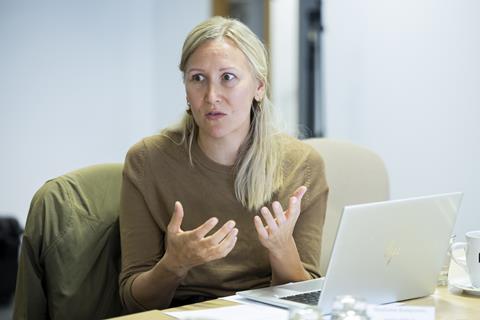
- Susana Lucena-Amaro, assistant director of learning and development, Barts Health Trust
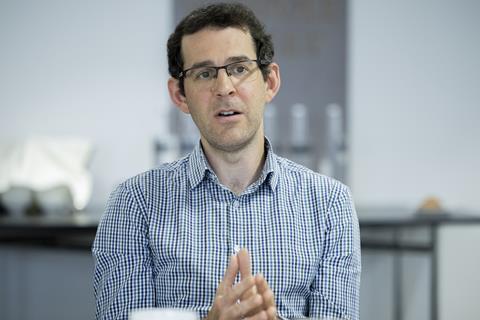
- Kieran Kelly, MD of education academy, Barts Health Trust
- Stephanie Kumpunen, senior fellow, Nuffield Trust
- Kieran Poole, NHS account manager, Multiverse
- Shilpa Shobowale, senior project manager, digital transformation and technology, Health Innovation Network South London
- Alison Moore, HSJ correspondent and roundtable chair






AI is here, and NHS organisations must equip their staff to use it safely and efficiently while acknowledging that some may have concerns.
That was the overwhelming message from the roundtable. The discussion highlighted the challenges in introducing a rapidly changing technology where everything from governance to people’s concerns about their jobs must be addressed.
Perhaps inevitably, adoption varies both between organisations and within them, but the transformation that AI is bringing is profound.
“I’ve been within digital transformation for a few years, and AI is the very first time in a long time where it is changing the role and the tasks that someone junior is doing are quite redundant now,” said Shilpi Shobowale, a senior project manager in digital transformation, Health Innovation Network South London.
This presents challenges for HR and learning and development leaders, including asking the workforce to scale up in areas which they had not previously perceived as part of their role and potentially relinquish work which they might have excelled in but which is now being automated, she said.
Some roles were changing fundamentally. Clinical secretaries, for example, might no longer be needed to type letters but could take on other duties, said Susana Lucena-Amaro, assistant director of learning and development, Barts Health Trust.
But some staff are not digitally literate and need help mastering new tools. “I think addressing the initial gap in digital literacy is fundamental,” she added.
NHS account manager at Multiverse Kieran Poole highlighted how important it was to raise overall digital literacy and confidence, and support people who might feel left behind. Multiverse mainly does this by using the apprenticeship levy to fund staff learning, he added.
However, AI can free people to do higher-value work which they may prefer, suggested Ngozi Anya, assistant director of people, learning and development, Birmingham and Solihull Mental Health Trust.
“Sometimes when people say we’re worried about this, it is about things being taken away, but perhaps thinking about it in another way is to ask if AI were to come tomorrow and sort this bit of mundane [work], what would you spend your time doing? And people may come up with ideas of actually I’ll get on with X or Y or Z,” she said.

One of the drivers for greater AI is, of course, financial. This can leave HR professionals trying to bridge the gap between financial imperatives for their trust and the impact on staff. “We have to be mindful that there’s a human in the middle of it, but the drivers are the financial efficiencies and productivities, so we have to work within that and use our leverage where we can,” said Kieran Kelly, managing director of Barts’ education academy.
Some of the concerns about AI adoption are that it will reduce the entry-level jobs where people mature into roles before progressing through organisations and that it will reduce their ability to learn to think critically.
“There is a need to have that development pathway where we help them understand the basics and the fundamentals of what they need to do,” said Mr Kelly. “The tension being that we’re removing those in order to drive efficiency and productivity. And I think that’s where people in HR really need to be at the table to say the workforce is not going to be efficient or effective in 10 years’ time unless we really think about what that pathway looks like.”
But while the assumption usually is that AI will affect more junior roles, that may not always be the case. Senior fellow at the Nuffield Trust Stephanie Kumpunen said that one hospital in the US had developed the role of chief clinical prompt writer who helped colleagues get the most out of AI.
One of the challenges is the rapid pace of change with AI: roles would need to be redesigned almost annually to keep up with the technology, she said. Her work looking at GPs’ AI adoption had shown the range of tools available – some of which were regulated, and some which weren’t.
As with all changes, it would be wrong to assume that mastering an AI tool now sets you up for life. Organisations need to be able to respond to continual change and build in resilience and adaptability, suggested Mr Kelly. That was a cultural challenge where HR could really step in.
“There’s something about building into the management and leadership thinking about what it means to support an individual in a period of continuous change,” he added. “As an employee, you want to know that you’re going to be supported with the right skills at the right time with the right support to look after your role and progress in your role should things change. I think that’s where HR really needs to step in.”
One example of this continuous change may be in how AI tools are purchased and therefore used: Mr Poole said a lot of AI companies were moving to a pay-for-use model rather than a pay-per-user one.
Organisations might then focus on very specific uses, where they knew what the benefits delivered were, rather than on wider AI use. “We know it is good for some things, and it is not good for others,” he added, suggesting that organisations might also choose to keep some tasks human-driven because they allowed staff to develop critical thinking skills.
But in all this, HR and learning and development leaders can play a role. They could end up holding the ring between staff who have concerns about AI and their ability to adopt it and boards who are under pressure to use it to improve productivity. And, Mr Kelly said, HR departments could ensure that the staff voice is heard and encourage boards to think over a longer period than the annual business plan.
Guardrails and governance
Organisations and individuals often voice concern about who can access potentially confidential information once AI is involved, especially given the many reports of information being accessed inappropriately, either by NHS staff or through hacking.
Mr Poole said that much of Multiverse’s teaching programme started with looking at what AI users in the NHS should and should not do so that, once participants started to build their own tools, it was done with patient safety in mind.
Ms Lucena-Amaro said it was about “behavioural guardrails” and did not necessarily require additional governance. “We need to train up and work with our OD and people colleagues,” she said, pointing out that AI tools could have biases which needed to be understood.
Mr Kelly added that a lot of the concern was around people doing things accidentally when using AI. “I think from an executive level, a lot of the conversations that go on are less about the risk of what AI would do, and it’s more about the risk or the lack of understanding about how colleagues might do something inadvertently because they don’t necessarily understand the bias or how to prompt or what to use it for, how to sense-check or what their role is in being that sort of governance lead themselves within what they’re doing,” he said.
But much of the infrastructure and guardrails were already there, he added, and it was more about training and trusting individuals to use it.
In large trusts, there could also be questions around who had the power to say which AI programmes could be used, with several different departments involved. Some colleagues have seen what AI can do and want to bring in tools they have used outside, he said. This highlighted the need to communicate what tools could and could not be used and the importance of following processes.
And there will be a need to adjust to the widespread use of AI. Ms Kumpunen highlighted the issue of business continuity – what happens if we are dependent on AI because it is built into our systems and ways of working and then it goes down? How do we continue with essential tasks in that situation? “We seem to be racing to use AI, but are we building a backup in case it’s not there?” she asked.
Dealing with staff concerns
Staff can have all sorts of concerns about AI – from their jobs disappearing to the idea that it will cause irreparable damage. Helping them understand it and providing a safe learning environment are important tasks for HR and learning and education teams.
Ms Shobowale has been involved in research on AI’s impact on non-clinical staff, which showed that training on a specific tool was not enough and what was wanted was continuous support: “ I think it needs to be organisational-level support so that any users of any type of AI tools have a safe space to be using the tools, practising and failing sometimes and know you’re not going to mess up the whole system or it is going to go bust because you did the wrong font.”
But the emotional side and people fearing loss of their jobs also needed to be considered, said Ms Anya: “I think HR is quite important in supporting that and we can’t ignore it… there’s dealing with the fear and anxiety and reassurance.”
Other staff may have different concerns, some of which may be outdated or based on false information. Mr Kelly said that some may be thinking about what impact AI has on, for example, water use. “I think as an organisation, from an HR perspective, we have to understand that lots of staff are carrying this into the workplace,” he said.
Mr Poole added that concerns around environmental and electrical consumption were very common in operational users and in boardrooms and could become challenging, although quantifying the financial impact of using AI could help.
And ultimately there is a question of how to sell AI to staff. Some might appreciate the time it freed up to do less mundane tasks and concentrate on more fulfilling parts of their job. Ms Kumpunen said some groups might disproportionately benefit from AI adoption, such as those who are neurodivergent.
Mr Poole said many might not have a huge interest in the financial position of the trust but cared about how they felt at work and how they could support colleagues. “I think that’s the human story that has to be told,” he said.
Photos of panel by Wilde Fry and videos by Daniel Kutcher