

















HSJ brought together a panel of trust chief executives drawn from its annual list of the NHS’s Top 50 CEOs. Their discussion explored how trusts will cope with the renewed financial challenge and what values-based leadership means to them
Sponsored by
Top-rated NHS provider CEOs discussed post-covid changes including workforce productivity, technology advancements, and values-based leadership for transforming healthcare at the roundtable.
The panel
- Glen Burley, chief executive of South Warwickshire University Foundation Trust, Wye Valley Trust, and George Eliot Hospital Trust
- Dame Jackie Daniel, chief executive, Newcastle Hospitals Foundation Trust
- Daniel Elkeles, chief executive, London Ambulance Service Trust
- Beccy Fenton, head of health, KPMG UK
- Phil Lobb, senior associate, KPMG UK, and non-executive director, Northumbria Healthcare Foundation Trust
- Siobhan Melia, chief executive, Sussex Community Foundation Trust
- Ify Okocha, chief executive, Oxleas Foundation Trust
- David Probert, chief executive, University College London Hospitals Foundation Trust
- Louise Stead, chief executive, Royal Surrey Foundation Trust
- Alastair McLellan – HSJ editor and chair
Dealing with the return of financial pressure
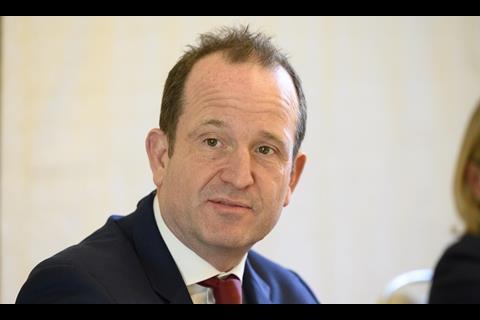
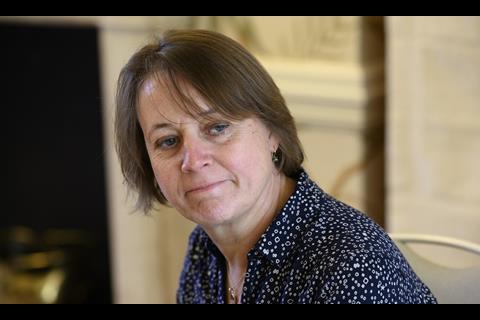
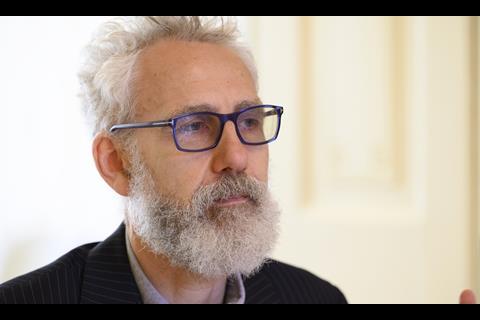
Many of the CEOs at the roundtable complained there no longer seemed to be any reward for good financial performance now that the health of system finances trumped those at individual organisations
The NHS was in an unprecedented position during the pandemic and financial pressures were put on the back burner while the service concentrated on saving lives. But in 2023-24, trusts and integrated care systems once again face tough financial targets and demand cost improvement plans of up to 7 per cent.
The first part of the HSJ/KPMG Top Chief Executives Roundtable set out to examine how trusts will cope with this renewed financial challenge.
Several CEOs felt 2023-24 was turning out to be among the most challenging years they had ever faced. David Probert, CEO of University College London Hospital Foundation Trust, said his cost improvement programme was the “highest level we have ever had, at nearly 6 per cent.”
The scale of the challenge had also shifted, he added. “Whereas previously you’d be focused on the four walls of your organisation, you’re now focused on the four walls, plus the broad geography in which you work. So, it’s not so much UCLH’s financial position entirely that you’re responsible for, but also working with your colleagues across, in my case, north central London.”
In Northumbria “pretty much our entire cost reduction plan is predicated on [improving] productivity”, pointed out non-executive director and KPMG associate Phil Lobb. “We don’t even call it cost reduction. It’s a productivity review,” he said.
“One of the main problems that we face from a long-term perspective is the inability to invest sufficiently in capital, which isn’t just about money, it’s about quality [of care] and everything else. That’s the thing I worry most about.”
This lack of ability to invest – and therefore to make productivity improvements – was raised repeatedly by CEOs. In some cases, they said their trusts were sitting on reserves that capital restraints prevented them from using while others felt those reserves would be depleted as they (and the systems they worked in) struggled to hit financial targets. The CEOs of the FTs represented at the roundtable said their historic freedom over spending capital had virtually disappeared as ICSs flexed their muscles.
Many of the CEOs at the roundtable complained there no longer seemed to be any reward for good financial performance now that the health of system finances trumped those at individual organisations. Trusts that were in good financial health were being asked to go further, limiting their ability to invest in improved care.
Oxleas FT CEO Ify Okocha, for example, said his trust was facing a cost improvement target of 7 to 8 per cent, despite a 40 per cent increase in demand for mental health services.
Despite this he added that when ICSs were in a financial hole, there was a tendency to look to mental health trusts first to make [further] savings.
“People talk to mental health providers, saying: ‘Can we have a bit more money to balance the books… we’ve been asked to find £10m to balance the books and it’s been suggested that we may want to delay use of our mental health investment standards money’.”
Dame Jackie Daniel, who runs Newcastle Hospitals FT, said accountability for financial performance was “back with a vengeance”.
She admitted that, in discussions with ICSs about the trust control totals she “went further than I wanted to go in agreeing [a control total] by several million.” The pressure to quickly agree on an acceptable financial position had consequences, she said: “We haven’t got any headroom to be thinking about the consequences of some of the decisions we’re making… You start to unravel, unravel stable positions, the instability spreads”.
This point was expanded on by Louise Stead, CEO of Royal Surrey FT.
She said: “What you’re saying to a workforce that is already exhausted is you’ve got to work harder [and] smarter. [But] you’ve got to have the head space to think about how you can work smarter. And I think that’s the most difficult thing at the moment when you’re already trying to get on top of all the CIPs.”
Industrial action had also left people feeling “really, really down”, Ms Stead added, and also meant money had to be kept back from planned investments to help cope with the disruption it caused.
In some respects, the ambulance trusts has been luckier than those in the acute sector. The government recognised the exceedingly difficult position they found themselves in and provided more money in return for a pledge to deliver a category two response time of under 30 minutes.
However, London Ambulance Service CEO Daniel Elkeles told the roundtable that handover delays were still proving a massive drain on productivity.
“Our ambulance crews put in six and a half thousand hours of work yesterday, almost a thousand of it, one way or another, stuck at a hospital. That’s a huge impact on your ability to be productive.”
There were possibilities to upskill staff so fewer people were conveyed to hospitals, he said. But that required a good system working with community providers to ensure other pathways were available.
Siobhan Melia, CEO of Sussex Community FT claimed that “it’s not that people don’t know how to deliver on cost improvement programmes, or… how to be efficient and responsible and professional in undertaking their leadership roles. It’s simply the pandemic, the recovery, the industrial action… had had a very attritional impact”.
She said the switch back to much stricter financial control had felt like falling from “a cliff ledge” for many staff.
Ms Melia warned that there had been “a deceleration in investment” in community services, and the NHS was now “at a point where brave decisions around sustainable investment to create sustainable alternatives for patients and for people in their local communities are going to need to be the next strategy for the sector.”
Ms Stead warned that many of the efficiencies planned would not realise the immediate savings hoped for. In particular, she said that while the switch to community-based services was welcome, it was difficult to suddenly move money out of acute services.
“I think there’s been little acknowledgement of the fact you have got to have some sort of dual running whilst you can make those efficiency gains. The virtual ward is a great example. There’s no funding for that from next year. It’s just baked into the bottom line”.
Looking – for a moment – on the bright side, Mr Burley said he felt investment in improvement methodology did offer some hope for harnessing staff ideas and energy. Other panellists found hope in the way rapid changes had been made to services during the pandemic.
KPMG head of health Beccy Fenton said productivity increases could be achieved if frontline staff see improvement as part of their day-to-day role, rather than as an add-on. Developing skills and capabilities among managers to do this was important, she concluded.
Agency costs and recruitment
Almost all trusts have expressed a determination to reduce their spend on agency staff. However, the roundtable CEOs were sceptical that 2023 would be the year that the NHS got tough on agency working.
Mr Elkeles said: “As an individual organisation I can make a trade off: am I prepared to pay the enhanced rates to get me the extra people that enables me to deliver, in my case, quicker response times - or am I going to try and buck the trend and say: ‘I’m going to stop paying incentive payments to try and wean people on to a different rate of pay’?”
The trouble with the latter option, he stressed, was that in the “short term… things get worse.”
He also questioned whether there was a mechanism which would enable organisations to work together to contain agency rates. The “massive win” which could be secured by the NHS holding the line on agency rates was “really hard to get to”, he said.
Mr Lobb suggested that speeding up recruitment processes could lead to substantial savings in agency spend. He pointed out this was one of the few actions trusts could take that would have an “in year” impact.
However, Mr Burley feared concerns over pay and other benefits of working could undermine recruitment efforts.
“We need to, as an NHS, demonstrate that it’s a good thing to do to be in the NHS, to have a pay award that actually rewards people who stay.”
He also stressed the importance of developing “roles that keep people in the NHS, allow them to operate to the top of their licence, and be incredibly flexible about their retirement and life choices.”

For several of the CEOs, the best way to remain grounded and value-focused was to maintain contact with staff, especially those on the frontline
Organisations always claim to be values-led and NHS trusts are no exception. Those values may have been sorely tested over the course of the pandemic and during times of financial stress, but have generally shone through.
But NHS organisations and their leaders do sometimes fail to live up to the values they champion – often with disastrous results.
Mr McLellan asked the assembled CEOs what causes NHS leaders to make these poor decisions and what can be done to avoid them.
Dame Jackie, who led the troubled University Hospitals of Morecambe Bay FT before moving to Newcastle, pointed to two areas: pressures on people to toe the line, and a loss of connection with their team which meant it was difficult for them to receive feedback and constructive criticism. A moral compass was important, she added, as was the willingness to say when something was unacceptable.
From a CEO’s perspective, it was important to have a small group of people who would act as checks and balances on their decisions and give feedback, Ms Melia said. CEOs needed to role model behaviours which were in alignment with trust values to bring them to life and be meaningful, she added.
Dr Okocha said: “One of the things I’m really proud of is that within two months of becoming chief exec, I did a 360 feedback with [my direct reports] and the board.”
Clarity around expectations and goals can help trusts maintain values said Ms Fenton, who worked at executive level within the NHS before joining KPMG.
“I heard someone say once, ‘I pay them enough, they should know what to do’”, explained Ms Fenton, adding that this confidence was often misplaced.
She continued: “At Mid Staffs, there were clinical directors who were clinical directors in name, but no one had given them clarity around what actually they were being asked to do”.
There had been no management training offered to these clinical directors and no focus on the skills and capabilities they would need in a leadership role, she said. “I think you can then hold people to account in a more supportive way if you’ve been really clear about what their goals and objectives are [and] what their personal development plan is.”
Mr Elkeles said: “Culture is the thing that you have to really get right”, but he added that each organisation presented different challenges to meeting that goal.
For his trust, it was the fact that it operated from so many different sites. London Ambulance Services has responded to this by asking 2,000 staff about what makes a good or a bad day – and using the answers to develop the trust’s values.
Mr Probert said all the organisations he had worked in during his career had gone through periods of stress.
He said these situations frightened leaders into making short-term decisions.
“Leaders sometimes panic when they don’t know the answer [to a problem] and therefore act in a way that’s contrary to the values. There was a period of time – [and] I hope it’s not returning – where people felt very uncomfortable saying ‘I don’t know how to do something’.”
Mr Burley said: “The important thing for me about values-based leadership is not necessarily the values themselves, it’s the fact that they’re shared by an organisation and that the chief executive of the board understands that organisation.
“Values-based leadership is a trust and confidence thing for me that will, over time, give you the ability to make some mistakes, [because it will] be accepted that you made a choice that was based on the values that they recognise and share with you.”
But how will the growing financial pressures affect leaders’ behaviours?
Mr Probert said: “I don’t sleep very well when money is a difficult challenge. I don’t sleep at all when I’m worried about clinical care.”
He added that there was a risk “the relative short-termism we’re all facing at the moment, [will mean] a lot of people being asked questions that they don’t know the answers to and will react [to those questions] in a non-value driven way.
“I think there’s definite challenges to the professionalism… of our fantastic finance leaders.” He was particularly concerned they were “being asked to put in place plans that [they] may not fully agree are deliverable, or are highly risky. But again, you balance that with the values of the system that you’re working with, trying to make the best decision for the people around you. And constantly reminding yourself of why you’re doing what you’re doing for the broader population.”
Dealing with difficult issues has been made more difficult by working practices developed through the pandemic said Ms Stead. She said the NHS’s [Microsoft] “Teams-based culture” had often “eroded” relationships and trust.
There was agreement that being values-based was not “just about being nice.” Leaders sometimes had to say something that was unacceptable and challenge others. Mr Elkeles, for example, said LAS was taking a hard line on discrimination and leaders were challenging differences in the standard of care offered to patients that might not be noticed by other staff members.
For several of the CEOs, the best way to remain grounded and value-focused was to maintain contact with staff – especially those on the frontline. “No presidential visits – you sit and have a cup of tea,” said Mr Probert.

NHS CEOs discussed financial improvement, technology advancements, and values-based leadership to transform healthcare at the HSJ roundtable, writes Beccy Fenton
It was another great morning with some of the top-rated NHS provider CEOs at the annual HSJ roundtable – I always enjoy hearing their views and how they approach such demanding roles.
The first topic of debate this year was around financial improvement. It was certainly clear that everybody in the room agreed that “the money was back with a vengeance”. We discussed some of the things that were different post covid.
One key point was around workforce productivity – post covid the NHS employs more people, costing more, but doing less. With workforce as one of the biggest areas of cost in the NHS, it must be at the top of the agenda for transformation in order to reduce costs.
The second thing that’s different post-covid is the huge advances in technology that have been seen in many sectors during and since the pandemic in areas such as machine learning, generative AI, and automation. All of these need to be considered as part of the way to transform care and the workforce and reduce current and future costs.
And the third area that’s different is the existence of the ICSs and the integrated care boards whose primary function is to improve the health of their local populations, improve the quality of care and improve value for money.
The ICBs have the commissioning powers and have the ability to lead and drive integration of care to reduce the reliance on acute hospital care and improve areas such as prevention, primary, and community care.
Some of the key ingredients for success were also discussed such as headroom for leadership, a longer-term view and the right financial incentives.
The second topic of debate was on values-based leadership. We had an excellent conversation discussing when this works well and when it goes wrong when leaders are under pressure to deliver against performance targets. One of the conclusions reached was that leaders need to make their organisations’ values living and part of daily decisions, asking themselves as leaders, “are we doing this in line with our values?”. We also discussed the power of the CEO and how one person’s values and the way they role model those values has such a huge impact on the culture of the rest of the organisation.
As ever, the CEOs were full of tips and thoughts on these subjects – and, at a time when it is easy to be gloomy about the pressures the NHS faces, showed how things could be made better.
Photos by Tom Parkes and videos by Ed Christmas