












Produced in association with
Some of HSJ’s top 50 chief executives explore both the pressing issues of diversity and inclusion, and how their own roles are changing in an environment of competing demands
HSJ’ s top 50 chief executives are recognised as being at the pinnacle of their profession, with insights into running NHS trusts which display a deep understanding of both their organisations and the areas they serve.
Each year HSJ brings a group of them together to look at some of the most pressing issues for the NHS today. This year we looked at diversity and inclusion in the NHS – which led onto a wider discussion about racism, homophobia and other attitudes staff often encounter in their work. Our chief executives were determined that the NHS should offer opportunities to advance to all staff and that more needed to be done to overcome barriers to this.
They then turned to “purpose” – why they and their organisations were there and what their main priorities should be in an environment where every one of them has to balance competing demands for their time. The answer to the question “why am I here?” seems to be evolving with many chief executives stressing the system role they now have and the need to inspire staff and empower them to deliver the best care possible.
The panel
- Sam Allen – Sussex Partnership Foundation Trust
- Tom Cahill – Hertfordshire Partnership University Foundation Trust
- Nick Carver – East and North Herts Trust
- Neil Dardis – Frimley Health Foundation Trust
- Stephen Dunn – West Suffolk Foundation Trust
- Garrett Emmerson – London Ambulance Service Trust
- Dame Marianne Griffiths – Western Sussex Hospitals Foundation Trust and Brighton and Sussex University Hospitals Trust
- Nick Hulme – East Suffolk and North Essex Foundation Trust
- Paul Jenkins – Tavistock and Portman Foundation Trust
- Alastair McLellan – HSJ editor, roundtable chair
- Andrew Ridley – Central London Community Healthcare Trust
- Melanie Walker – Devon Partnership Trust
- Kate Wilson – Korn Ferry
Diversity and inclusion
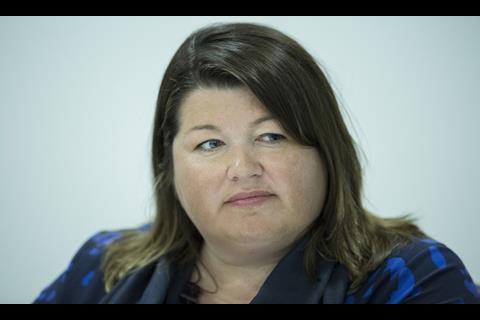
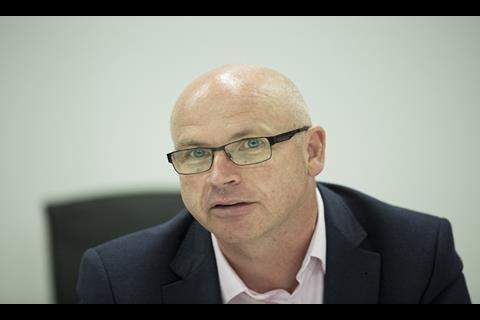
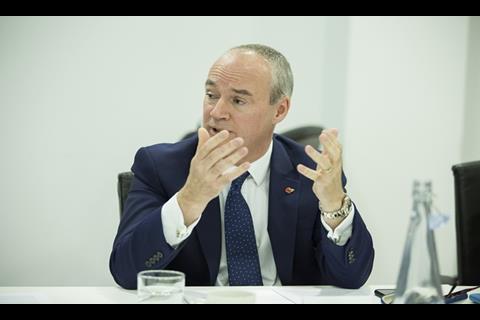
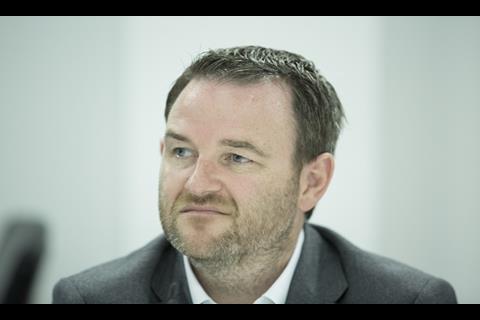
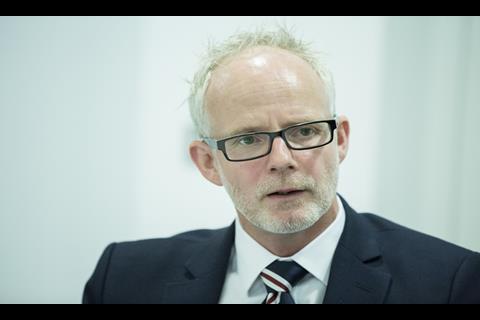
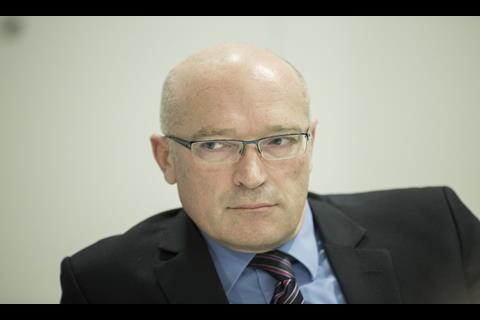
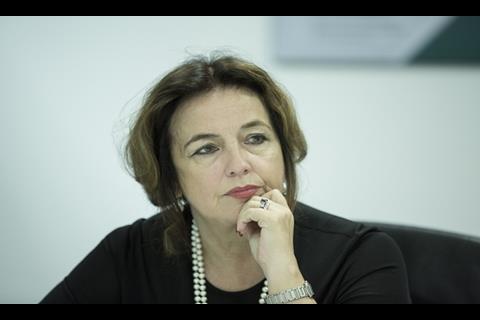

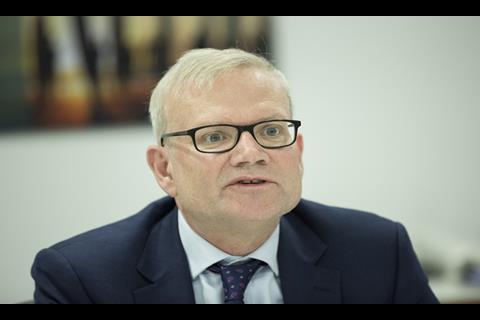
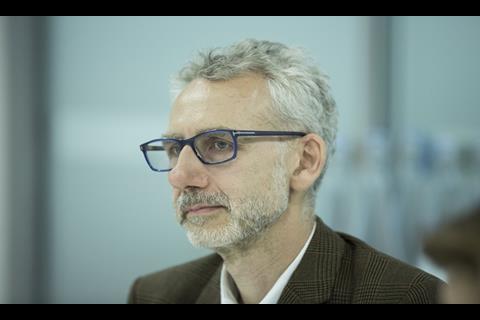

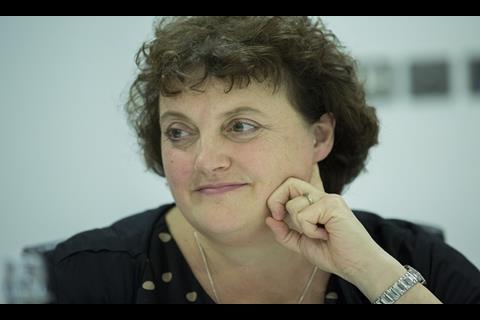
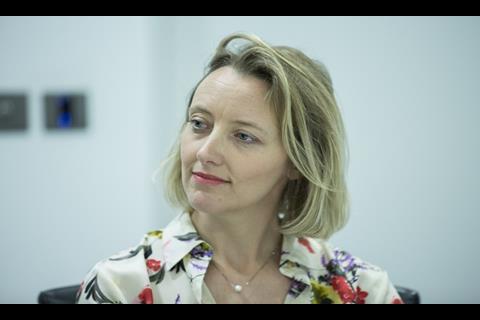
The participants discussed representation at the top of NHS trusts and what can be done to create a more diverse leadership
The NHS is a diverse organisation, employing people of every race, colour, religion and sexual orientation. But many of these groups are not well represented at the top of NHS trusts.
Only a handful of the NHS’s chief executives are from a black and minority ethnic background, for example. And while women have made some progress over the last decade, that may not be the case for managers with other characteristics – and information is often thin on progression for managers with disabilities or who are LGBT, let alone other aspects such as class background or neurodiversity.
This year’s top chief executive roundtable looked at these difficult issues around diversity and inclusion – and what the NHS and those at the top of organisations within it can do to create a more diverse leadership, which reflects the communities it serves.
Difficult situation
But the session started with Marianne Griffiths, chief executive of both Western Sussex Hospitals Foundation Trust and Brighton and Sussex University Hospitals Trust, talking about the very difficult situation she had inherited at BSUH where relations with some of its BME workforce were very poor – she said she had not realised the extent of “the damage done” to the organisation. This had been long-standing and toxic, with what she described as “sticking plaster” solutions in place and had led to a number of employment tribunal cases.
How do we challenge our staff when they make those comments? Do we reflect the community we serve or do we challenge the community we serve? I think we have a responsibility to challenge some of that
When Ms Griffiths was appointed nearly three years ago, she decided to address the issues and asked Yvonne Coghill, director of implementation for the Workforce Racial Equality Standard, for assistance. She found there were issues which were not being addressed around inequalities but there was almost an “extremist, very anti-organisational” BME structure which excluded anyone who was LGBT and did not really like anyone who was not Christian.
But there was also a need to lead from the front: the trust had to do some “brave things” which led to employment tribunals but was a signal to the organisation that they were taking the issues seriously. She set up a board-led network structure – not just for BME staff but also those who were LGBT. The trust also set up a “celebrating culture” event, reverse mentoring schemes and recruitment panels which better reflect the trust. Support and practical advice is being given to people who are short-listed but not appointed – something which is known to be an issue with BME staff. This had culminated in a much improved Care Quality Commission report which had recognised how the trust’s culture had moved on.
Several of the chief executives work in areas where their workforce is more diverse than the local community – sometimes partly because staff shortages have meant they have had to actively recruit abroad. “In a Brexit challenged environment all our staff are contributing to great care,” said Stephen Dunn, chief executive of West Suffolk FT.
Some staff encountered overt racism as they went about their jobs. “We have some of the most right wing, bigoted, racist and homophobic remarks and behaviours certainly in north east Essex,” said Nick Hulme, chief executive of East Suffolk and North Essex FT, who said chief executives had to challenge this. “How do you deal with a patient who says they refuse to be treated by a black nurse which is not uncommon?
“How do we challenge that as leaders? How do we challenge our staff when they make those comments? Do we reflect the community we serve or do we challenge the community we serve? I think we have a responsibility to challenge some of that.”
This experience of overt racism was shared by others. Andrew Ridley, chief executive of the Central London Community Healthcare Trust, had accompanied a nurse on a domiciliary visit to a patient where the first words said to her were “black bitch.” When he spoke to the WRES taskforce about how common this experience was, he found the answer was more than he realised – and more than was reported. Staff also said when there was a known problem with racism, they would deploy white staff. “I hope we get into a conversation about that kind of behaviour and make it clear we won’t tolerate it,” he said. “We might be a universal service but we need to be stepping into this space to support staff.”
Devon Partnership Trust chief executive Melanie Walker suggested it was sometimes easier to deal with overt racism or homophobia than some of the more subtle forms she saw in Devon. “If we believe in the NHS Constitution then we are required, I think, to call it out,” she said.
Equality of opportunity
But the roundtable’s concern went beyond tackling racism staff may encounter to ensuring that all staff get the opportunity to rise through the organisation. And Nick Carver, chief executive of East and North Herts Trust, was clear. “We need to be a bit cautious about being too virtuous,” he said. “We have failed as a senior cadre to recognise talent and bring it through. We need to sharpen up some of our processes.”
Changing the dial on this may require different approaches with different groups. Paul Jenkins, chief executive of the Tavistock and Portman FT, said there were some groups where a pipeline was obvious but there were others where there was not and were less diverse – in his field it was psychologists – and this might be an area where professional bodies needed to get involved in ensuring there was a pipeline coming through. He stressed ensuring everyone had opportunities within a trust might require “management by repetition” and continual reinforcement of messages.
Unusually, London Ambulance Service Trust was significantly less diverse than its surrounding community – possibly because of stereotypical images of what emergency services looked like, said its chief executive Garrett Emmerson.
In the ambulance sector, paramedics were far less likely to be from a BME background – reflecting the undergraduate intake and also the countries where overseas staff were most likely to come from, he pointed out.
But Mr Emmerson added the NHS was ahead on its approach to diversity issues compared with other sectors. Leaders from other sectors were always amazed by the WRES data the NHS used. Mr Ridley said the fact it was based on data, made it particularly powerful and hard to challenge, and had enabled his organisation to make improvements: London trusts had also agreed to fund a London WRES team. While WRES data was sometimes “uncomfortable” it had prompted action in his own trust.
One area highlighted was the issue of board recruitment. “Often, we see organisations who struggle to recruit a diverse population at senior levels haven’t challenged themselves on what’s really required for the role versus what’s traditionally been seen as important,” said Kate Wilson, associate client partner at Korn Ferry. “This can mean a range of good candidates are excluded because they don’t meet very specific requirements which have been too narrowly defined. We need to widen the gate and this means looking hard at what we assess people for when we recruit.”
Deeper awareness
Individually, there were things that chief executives could do. Mr Ridley said that mentoring people from different backgrounds was one. “That is something we could all personally do which could make a big impact,” he said.
Approaches in some other countries to underrepresentation from some groups have included quotas but there were some qualms about the use of quotas around the table but also a recognition of the need to speed up progress
Ms Wilson highlighted that access to stretch experiences are critical in fast-tracking career development and tend to be less accessible to people with protected characteristics. Managers also tend to develop “go to people” so it’s a self-perpetuating cycle that those who get access, build their capability more rapidly and visibly and are seen as high potential. Sometimes the barriers people face are not immediately obvious and it takes time to understand what they are. Mr Jenkins said he and the chair had private meetings with BME staff which had helped them gain a deeper awareness of their experiences and perceptions.
Ms Allen had spoken to staff who had conditions such as autism and ADHD about the challenges they faced within the workforce: this had made her realise the extent of the blockages put in their way. Neil Dardis, chief executive of Frimley Health FT, had found listening to staff was crucial – he stressed that there was both a long term aspect to changes and the need to move at pace now but ensure anything done was sustainable.
Ms Walker had used QI approaches in her trust, and had been impressed by the impact of a Schwartz round looking at equalities and staffing. “We talk about it bringing the whole you to work,” she said.
Approaches in some other countries to underrepresentation from some groups have included quotas but there were some qualms about the use of quotas around the table but also a recognition of the need to speed up progress. Ms Allen pointed to the push towards women on FTSE100 boards which had led, in some cases, to tick box approaches.
Mr Emmerson made a distinction between targets and quotas. Demanding a diverse shortlist was a start – but he pointed out the London Ambulance Service had 48 per cent BME representation among its applicants but only 22 per cent among its staff. Understanding why that happened and what support was needed to stop that happening was important.
Ms Griiffiths said her view on this had changed. She was now being more creative – for example, approaching Amex which was a big employer in Brighton and had many senior people from different backgrounds who might make non-executive directors in the NHS in their retirement.
Hertfordshire Partnership University FT chief executive Tom Cahill said: “There is something about quotas and targets as a lever for change. Something radical has to change….I don’t think we will change in the next 10 years unless we get brave.”

The roundtable discussed how chief executives’ perception of the purpose of their roles is changing
An NHS chief executive’s job is now about much more than their own organisation. What gets them out of bed in the morning is a desire to enhance the role their trust plays in both the local healthcare system and as a major employer in their local area, with the ability to influence some of the underlying determinants of health for the population. There was very clear sense that chief executives’ perceptions of the “purpose” of their roles is changing.
That was the clear message from the second debate in the HSJ roundtable. But the participants also saw challenges in doing this – ranging from balancing these ambitions with demands around access targets to the need for different support and development for them to take on this enhanced role and what it meant for talent development.
Approach to leadership
Neil Dardis, of Frimley Health Foundation Trust, felt there was a “more open and less heroic” approach to leadership. It was no longer enough “just” to run a hospital – leaders needed to think about other parts of the NHS and the wider determinants of health.
But Nick Hulme, chief executive of East Suffolk and North Essex FT, felt there was not yet enough of a burning platform which meant chief executives of provider organisations could focus on the wider system at the expense of key deliverables in their own organisation. “We are still going to be rewarded, praised and indeed promoted for delivering excellence for our organisations,” he said. “If I am failing on the significant deliverables that are expected by NHS England or NHS Improvement and the board, and I say I am doing some great things about long term conditions…..it is thanks Nick but don’t catch yourself on the door on the way out.”
It was no longer enough “just” to run a hospital – leaders needed to think about the wider determinants of health.
System working was very much a choice, he said: he managed to spend time speaking about housing, education and employment in the local community. One initiative had been working with a local art gallery around holiday clubs for kids, ensuring they got some exercise, healthy food and an opportunity to be creative.
But there was still a “daily grind of delivery.” An exceptional manager was more likely to be placed in a role addressing four hours in accident and emergency or 62 day pathways for cancer than redesigning community frailty pathways, he said.
“I am increasingly seeing myself as a system leader with accountability for a couple of hospitals and some community services,” he said, but the behaviours and attitudes he saw nationally and regionally did not reflect the rhetoric of the long-term plan, he added.
Paul Jenkins, chief executive of the Tavistock and Portman FT, said in an ideal world he would spend more of his time on strategic matters. One of these would be the NHS and the environment where the agenda, which once had a momentum, now felt as if it had been crowded out. He was also interested in the poverty agenda and the role the NHS played in this – including its role as an anchor employer which allowed people to develop. Being able to protect time as a senior leader for these sorts of issues was important, he added.
There was an argument for flipping what were seen as chief executives’ core and secondary responsibilities, suggested Tom Cahill, chief executive of the Hertfordshire Partnership University FT. A secondary responsibility might be what life was like for a child born in his area – should that be his core responsibility? While focusing on this might be the right thing to do, it also had benefits for the NHS in potentially reducing demand further down the line. “We know that if we don’t do wellbeing or population health we will drown,” he said.
For West Suffolk FT’s Stephen Dunn the chief executive role was an opportunity to make a big difference to the community. “I think it is changing – roll back 10 years and it was all about competition,” he said. “We are working towards partnership – that is more of the job. You can take advantage of that change in system focus.”
For example, he had appointed a public health consultant and doctors, and was thinking more about what they could contribute to prevention. There were also opportunities to influence the health of the trust’s workforce and link into other areas through partnership working.
Nick Carver, from East and North Hertfordshire Trust, said that the era of competition had left its mark – for example, in talent development where islands had been created.
Public acceptability
Garrett Emmerson – who has worked in local government and transport before moving to the NHS to head London Ambulance Service Trust – saw some of the changes as being around public acceptability. What would have been accepted almost without question 20 or 30 years ago, would now be challenged. “The health agenda is a very big political football nationally but not so much of a political football locally…transport is the other way around,” he said. “That changes your perspective on how you manage reputation and your organisation.
The data shows that truly purpose driven organisations perform better than their peers and today’s workforce is increasingly demanding “purposeful” work
“Local government is probably 20 years ahead in tackling the efficiency agenda,” he said. The sucking out of money from local authorities had driven the whole agenda towards efficiencies and shared services and personnel. “We are nowhere near that but the opportunity is there,” he said.
Andrew Ridley said that some of the services he provided in Central London Community Healthcare Trust were commissioned by local authorities and had been transformed: he felt local authorities had coped with their economic position creatively. But he was very aware of the impact of the NHS on the local economy, as a major employer and also as an organisation which procured goods and services locally.
But some of the problems NHS chief executives can face in having a wider and longer term perspective were illustrated by Melanie Walker, from Devon Partnership Trust. Devon often “flips back into a pressing financial deficit” which made this the immediate discussion, she said, yet it was hard to make any changes which affected beds. “The noise in Devon around the closure of community hospitals is huge and disproportionate…we have had to close a few beds recently on one of our beds in Barnstaple Hospital. That will cause me some political noise,” she said.
She was still having to justify investment in mental health. While the acute trusts had the time to “do the right things,” this could mean that people with mental health and learning disability problems might be disadvantaged yet again, she said.
Sam Allen said she saw part of her core purpose at Sussex Partnership FT as around “grounded optimism and inspiring a sense of belief.” But she said the NHS needed to be part of the fabric of the community but not “disappear up its own backside” in thinking it knew best and that it represented the health and well-being of the community.
With the conversation exploring a shift in chief executives’ sense of purpose to encompass a broader sense of their impact on their communities, Kate Wilson, associate client partner at Korn Ferry, highlighted that this sense of social purpose is a powerful lever for unlocking staff engagement. ”The data shows that truly purpose driven organisations perform better than their peers and today’s workforce is increasingly demanding ’purposeful’ work,” she added.
Reflecting this in the evolving structure of the NHS is unlikely to be straightforward. Mr Hulme was keen that areas racing to become integrated care systems should be judged on how they understood communities and how commissioning reflected this – rather than whether they were meeting targets – and felt this was getting a hearing. “Don’t make becoming an ICS the ambition – make the ambition to prove your work is part of the system and you are using the vehicle of the ICS to do that,” he said. “If we want real change we have to change that for which we are held to account.”
To find out more about Korn Ferry’s report on diversity and inclusion 5 classic (and often overlooked) D&I mistakes click here.

Dr Navina Evans gives her unique perspective on how she works to promote diversity and race equality within her own organisation
HSJ’s top 50 chief executives list for 2019 includes just two chief executives from a BAME background, reflecting the very few who make it through to those roles.
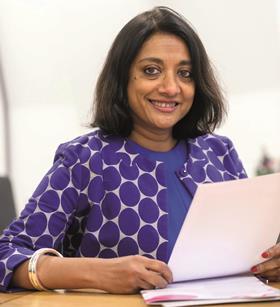
Dr Navina Evans, of East London Foundation Trust, was number two in the list but was unable to attend the roundtable. However, she agreed to give her unique perspective on how she works to promote diversity and race equality within her own organisation.
“There is increasing and welcome attention to the importance of inclusion and race equality to the successful delivery of care. It is acknowledged as a priority in the delivery of the Interim People Plan. Many leaders are having open and honest conversations about how complicated this can be to address.
In London, improving the experience of BAME staff and changing the face of leadership to reflect our communities has been identified as a collective priority. This will be part of the work plan agreed by all London’s NHS chief officers to be monitored via the London regional talent board, reporting to the regional director. As individual CEOs we all find this work difficult and we have agreed that we can do better by working together.
I wish to share the principles which I return to time and again to monitor my own progress in the hope that it will aid the discourse.
1. I must keep checking if I and fellow leaders are convinced that race equality really matters, and that we are not just going along with it because we must. I stand up for the belief that diversity brings challenge and richness to debate. Diversity guards against the comfort of false assurance of performance and quality in care delivery.
2. I must enable open discourse. We should have difficult conversations which allow for disagreement, debate and struggle. We should not be comforted with reassurance like, “we are colour-blind.”
3. I must be open about the need to improve the diversity of leadership in my own organisation/sector. As we take the time to change the diversity of my leadership community, I must ensure that we find other ways to bring diversity into the important deliberations of how we deliver care.
4. I must use the scrutiny of stakeholders to help me do my job. Non-executive directors, governors, commissioners, patient partners, staff side and others should be expected to bring race equality into their regular work with us.
5. As a senior BAME leader I have a responsibility to step up. In addition to delivering the organisation vision, mission and strategy I must bring the BAME perspective into any place where I have a voice. I act as a role model, as my colleague Lorraine Sunduza, chief nurse said, “I represent what is possible.”
6. I must use the precious time which brings me close to staff and patients wisely, to listen and observe carefully, to look for examples of inclusion, and be sensitive to signs for concern. I must make the connection between race equality, quality of care, staff wellbeing, patient safety and patient experience.
7. I must make sure that my trust board pays attention to this. It should be a struggle for the board, if it isn’t, we are not adequately addressing this issue. The board must want to be in touch with the barriers and enablers which make a difference in our organisation. The board should celebrate well-earned successes and be aware when inevitable difficulties arise.
8. Together with the chair I must ensure the trust board is open and transparent, able to tolerate being exposed at the same time as holding on to hope and solutions.
9. I must make race equality business as usual for the executive team. As we demonstrate collective leadership we all share the responsibility and accountability for change.
10. As CEO I am the trust lead for equality and diversity. This means directing the right proportion of my attention, emotional and leadership energy to executing this function. This means letting go of power to enable change, whilst ultimately being accountable for outcomes.”
Photos by Wilde Fry and videos by Daniel Kutcher