











The issues many trusts are experiencing with their accident and emergency departments may seen insurmountable but the Emergency Care Summit revealed a few simple steps that can be taken to address the problems in the short term. Claire Read reports
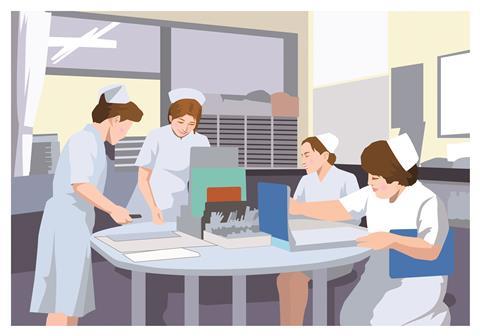
Staff have got plenty of ideas for innovating but they need the green light from above.
At one acute trust lives a rather unconventional swear box. Its presence does not mean fines are levied for the use of profanity; instead, there is one very specific phrase - not conventionally rude - the uttering of which means money must be placed in the tin.
“Last year, we swear boxed if you said ‘four hours’ in our site office,” the organisation’s deputy medical director told the HSJ Emergency Care Summit, held last month in association with McKinsey Hospital Institute.
“We didn’t talk about targets,” he continued. “It was all about flow - actually, our daily reports started with the discharges.
“You have to mention those people in A&E, of course, but we tried to lighten it by using the phrase ‘the people who have overstayed their welcome’. We all knew that meant 240 minutes.”
- Homa: We need a sustainable workforce to keep up with winter pressures
- Emergency care summit: Sustainability remains A&E’s biggest issue
- Sign up here to get Hospital Transformation resources by email
- Hospital Transformation home
- Join the debate using hashtag #HSJHospitals
Getting people on board
It was a memorable example of what many argued is a relatively simple short term tactic in managing the challenge of emergency care: remember that success relies on people and not just processes, and choose your language accordingly.
“It’s important for us all - including us at McKinsey - not to lapse into treating this as just a mechanical process,” emphasised John Drew, partner at the management consultancy and head of McKinsey Hospital Institute.
“You’ve got a web of relationships, people who might have lowered their aspirations, lost the belief that it’s ever going to work, and that organisational behavioural problem needs solving in parallel to the capacity and flow problem.”
‘The phrase “performance management” turns people off… it’s another target, another thing to be beaten with’
Demoralised individuals are unlikely to respond to yet more talk of targets, suggested one delegate.
“The performance word isn’t necessarily the right one to use, especially at shop floor level. It’s seen as quite confrontational; as something that potentially people can be blamed with.
“Ultimately, it’s about the patients and it’s about getting everybody on board, and the phrase ‘performance management’ turns people off. For those of us who have been in the NHS for a long time, it’s another target, another thing to be beaten with.”
This is not to say that individuals should not be made aware of the part they have to play in tackling this issue - quite the opposite. As a leader at one of the regulatory organisations put it: “There is a subtle difference between being held to account and feeling accountable.”
The manager continued: “We need to get to the point where people feel accountable for delivering what they need to because it’s actually delivering the right patient experience, and the right outcome, and that they feel an accountability to their partners in the system for doing the right thing.”
Monitoring performance
According to one director of emergency care, many individuals are not quite there yet - a contributing factor to the A&E pressures, she felt, and one that could be targeted in the short term.
“It’s interesting - when we have meetings in the hospital, when you’re speaking to clinical leaders, they are very interested in new developments, new schemes, spending money, but if you say where are you in the chain of responsibility, accountability and delivery of this target, there is a look of horror and fear.”
‘We’ve got to be very robust about our process and systems’
She continued: “I think we’ve got to be very robust about our process and systems, and I don’t think we always are in provider land. We’ve got to bring that together with the interface of what’s happening in primary care and social services.
“I think we’ve got to be very clear system-wide about accountability, responsibilities and deliverables, and have a very, very closely monitored performance management framework that’s done on a daily basis.”
Changing mindsets
Driving a collective understanding of the challenges of emergency care had been a theme throughout the summit, and dominated the discussion of short term solutions to the crisis.
What was very clear to attendees was that an appreciation of the problems with emergency care needed to extend far beyond the department in which that care was provided. It needed to be spread throughout the hospital and trust - not least because (to borrow and rework a famous phrase from an American election) “it’s about the discharges, stupid”.
“In the summer, A&E attendances are much higher than the winter and we nearly always manage everywhere,” pointed out a national leader. “It’s admissions. It’s only the admissions that are going to make any difference.”
One respiratory consultant from an acute trust detailed the impact of a cross-hospital focus on discharging patients in a timely fashion.
‘We’ve got to have a very, very closely monitored performance management framework’
“One of my obsessions is weekend discharges and the other is outliers [a patient on the “incorrect” ward for their condition - a medical patient on a surgical ward, for instance]. So one of the ways we’ve tried to tackle that this winter is to try and be transparent about what our expectation is at a weekend, and what the consequence will be if we don’t collectively achieve that,” he explained.
“Nobody likes outliers - physicians despise outliers - so our approach is ‘if you achieve this by specialty then hopefully on Monday we’ll have a paucity of outliers’. And it’s worked.
“It’s not a target but people go to work with a slight change in mindset - rather than think ‘I’ve got to review these patients and I might get a couple home’, they think ‘I’m reviewing these patients with a view to getting three people home’.
“Other factors have contributed but our weekend discharge rate has increased by 17 per cent, which is an important number. And consequently we’re starting the working week with a bit of capacity and few outliers.
“It didn’t work at the very epicentre of winter,” he admitted, “but it’s been something clinicians have responded to positively because it’s not about ‘you must drive down length of stay’, it’s ‘please can you achieve one or two
more discharges?’.”
In other words: build a story and understanding that makes sense to the individual and provokes action.
Blurred boundaries
Multiple delegates suggested it is a similar situation in local health economies. If emergency care is a system-wide issue, it follows that a system-wide understanding must be constructed.
“I can’t emphasise enough the importance of a single shared understanding of what the underlying causes [of the emergency care problems] are,” said Peter Homa, chief executive of Nottingham University Hospitals Trust.
“For us, it’s moved the conversation on from ‘well, we just need to push the juniors to do the TTOs [to take outs - the medicines prescribed and dispensed for a patient on discharge] on time’, to ‘how as a system do we optimise this?’
“That’s not in any way to deny the importance of us making sure that, within our sphere of responsibility, we challenge practice where that’s appropriate,” he emphasised. And there are always grounds for improvement.
“But having a single version of that understanding is important - having an absolute shared commitment and determination to getting this problem sorted for our patients, and expressing it as a patient safety challenge, not as a national target.”
A clinical commissioning group manager echoed this: “Where we’ve had success in our area is where we have really blurred the boundaries between organisations. We’ve set up a group where senior community partners have daily meetings around some of those most complex patients, and ward sisters attend those meetings and talk about those complex discharges.
‘Seven days a week, we’re sharing the pain with our staff - which is exactly where we should be’
“It’s empowering the wards to take clear accountability for those patients and plan their discharge accordingly, but it’s also supporting the wards by giving them access to, and an understanding of, the out of hospital services that exist.
“What we’ve managed to do is create real partnership working between the operational teams in hospital and out of hospital. So now we have complete visibility around all our community capacity. We monitor length of stay in the community [and] we understand the planned discharge dates of every patient in the community in the same way we do in hospital.
“We haven’t fixed the system, but we’ve got that shared understanding. It’s almost like the system targets have priority over the organisational targets - the organisational targets are an enabler to the system targets, and we always talk about the targets at system level.”
A colleague at the local acute trust added: “The refreshing thing as a provider is the commissioners have a target for their discharges. She’s haunting me on my target, and I’m saying “where are you with those complex discharges?”.’
One acute trust chief executive argued that a joint understanding sometimes needed to go as far as to constitute a shared experience. Asked how his job had changed as a result of the problems, he pointed to the fact that being senior manager on call now meant being on site.
“Seven days a week, we’re sharing the pain with our staff which is exactly where we should be. If we’re not doing that as senior leaders, then we’re not doing our jobs.”
He related the tale of when he made it a personal mission to resolve two delayed discharges. “Trying to do that took me ages. I think there are occasions when it’s helpful both from a personal point of view to live the pain of our staff and then to understand what we do to decongest the system; without that I wouldn’t have known.
“I would have had reports mediated to me. But unless we experience some of the pain of our staff in a visceral way, we can’t put proportional energy into solving it.”
The Emergency Care Summit was held by HSJ and the McKinsey Hospital Institute on 12 February under Chatham House rules. Speakers’ identities have been protected unless individuals have given permission to make their contributions explicit.



4 Readers' comments