









By continuing to use the site you agree to our Privacy & Cookies policy

John McGowan on service-user involvement

It’s time we shattered a great NHS myth and said that service-user involvement is often of little or no use
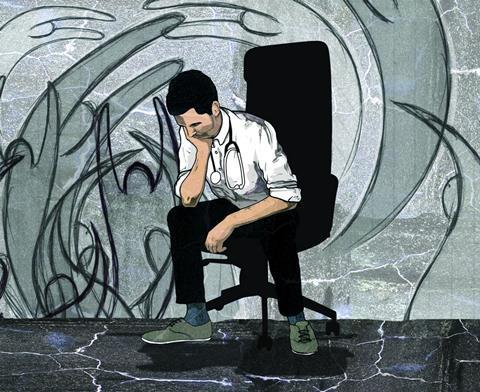
“If you want to know about a restaurant you should ask the diners,” said Matt Muijen, the former director of the Sainsbury Centre for Mental Health. Since the 1990s, this sentiment has been seen in action throughout the NHS. In think-tank reports, government policy and local services the message is: let’s get service users involved wherever we can. Thus, people whose primary qualification is having used services are now an accepted part of NHS decision making, recruitment, policy advice and professional training.

The best user involvement harnesses a passion for making things better

Service-user involvement has huge potential benefits. As consumers of health services, we all have something legitimate to say about lateness, tatty buildings, staff attitudes and the like. In addition, some users have been around services long enough to have a greater depth of knowledge than many staff. Experts-by-experience are also in a position to represent the views of other users who may not be able to speak to staff candidly.

Clearly there are limitations to the perspective offered by health professionals. In an area like mental health, which has a chequered history, it’s easy to see where things come up short. Users can even challenge what is defined as illness and what is perceived as “normal”. The best user involvement harnesses a passion for making things better and can take professionals to the person behind the diagnosis.

But there are also times when it’s a struggle to see the benefits. My experience as a clinician is that the upside of user involvement can be eclipsed by less productive contributions. Sometimes these are based on an assumption that the kind of passion and will to challenge, described above, are totally lacking in NHS staff. It can also be taken for granted that knowledge of one’s own difficulty confers automatic insight into someone else’s; and that using services equals knowing how to improve them.

Last time I watched Wimbledon, Tim Henman was in the commentary box. Despite his career as a top flight player I don’t recall Tiger Tim ever having been in the top 10 for talking, though that is the major part of a commentator’s job. The John McEnroes - who can do experience and expertise sublimely - are pretty rare.

Perhaps in common with many NHS staff I wonder if user participation has added much value to certain issues. Sometimes contributions seem not only uninformed, but driven by personal agendas, with people bringing frustration from all parts of their lives into the room. Here lies the fundamental problem with asking the diners: we all know what we like to eat, but this doesn’t mean we have any idea how to run a restaurant.

So what do most NHS staff do when service user input seems less than useful? Often I feel stumped, and stare at the floor. I’ll take a bet that at some point, many readers have done something similar. The mere fact that someone brings suffering with them can make it incredibly difficult to question what they say, in the way one might with other contributors. As a result, having a frank and honest discussion about service-user involvement has become an enormous taboo.

It is service users themselves who are most affected by the lack of plain speaking. This is because staff, who feel unable to respond truthfully, may take the easiest option: to ignore user contributions. If staff can’t question users as they would other colleagues, there is the danger that user involvement will become little more than an empty gesture.

Furthermore, those staff who do value user involvement, but would like to place it on a more formal footing, will find it extremely difficult to suggest that service users meet certain professional requirements such as job descriptions and codes of conduct. Desiring a more formal involvement means openly acknowledging that experience alone is not always enough, and that service users often need other knowledge and skills.

Legend has it that when Ben Bradlee (former editor of The Washington Post) was asked what he felt about the blogosphere and “citizen journalists”, he replied: “I don’t know. What do you think of citizen surgeons?”

Service users are involved in the NHS in many significant ways, including, in mental health, clinical interventions. If their contribution is to have any true meaning we must give ourselves permission to have, at last, a genuinely frank debate.


Readers' comments (16)

  • Richard Russell

    I agree with a lot of what is said in this article.

    For me, I have always found getting the involvement of service users, clinicians, GPs, commissioners, providers, local authority (the list goes on) as well as activity and financial date (incl benchmarks) is very worthwhile in giving as informed a position on the current service provision as possible and how it can be improved.

    I've never had a situation where there was a consensus across all stakeholders & data across all areas and sometimes some of their input is inadequate.

    When it comes down to it usually one person leads the project and they make the recommendations. They will have to decide on the value of the various stakeholder input and on the balance of all views make the recommendation.

    I have seen times when patient views had a greater weight than clinical views as the clinician was trying to be protective of their service. Other occasions the clinical view had a greater weight as the patient didn't want any change, even for the better.

    Always ends up with the project lead making the end decision.

    If we are going to be frank then rarely is any stakeholder involvement unbiased and how we deal with this needs to be the debate.

    Unsuitable or offensive?

  • From a National Voices perspective I couldn't agree more. Good user involvement confers a responsibility on both professionals and users. Professionals need to engage sincerely and willingly. Nothing is worse than tick-box tokenism. Conversely, service users add most value when they are not grinding personal axes. Sometimes they need guidance, support and training to get to that point. There might also be fewer people with axes to grind if their concerns had been dealt with more effectively in the first place.

    Unsuitable or offensive?

  • As a mental health service user I'm all in favour of having an open and honest debate about the relevance of User involvement within NHS mental health services - or any other NHS services for that matter - but starting from a completely 'uninvolved' perspective as John McGowan has former SCMH Director Matt Muijen summarising the pro-User involvement position as “If you want to know about a restaurant you should ask the diners,” as his target to take down. And sure the leap from the diners being able to talk about the quality of the food and service the restaurant provides to demanding the right to run and work for the restaurant is one that SCMH made along with NIMHE and the leading mental health charities and they also networked to restrict the practice of User involvement within services to an elite group of users who could be paid or at the very least readily expected to promote their corporate agenda.An agenda that has very little to do with experience gained from using services or not being able to effectively use them at all.

    Under Labour NIMHE became unchallengeable and simply pushed Government policy in partnership with the charities back at NHS mental services and in many cases simply used User involvement as leverage to steer contracts or funding back towards themselves.

    Most people reading this comment are well are aware of this.

    The recently published Rowntree Report on User involvement , which generally finds that there is little evidence for any credible User involvement in Health services , also picks up on why orgs like SCMH , Mind and Rethink pose real barriers to any genuine User involvement in research, commissioning and service re-design, at any level, by spelling out that these orgs refuse to acknowledge their conflicting 'service provider ' and ' advocacy ' roles.

    Indeed we've seen the charities create the £750,000 National Survivor User Network to falsely create impressions of having a mandate to broker on behalf of their service users and they use their professional service users - usually fully recovered of course - to plug this vehicle back into the NMHDU , the core of former NIMHE , and the Government advisory bodies on which the charities already sit.

    Is that kind of User Involvment formal and professionally minded enough for you Mr McGowan? Is that the sort of User Particiaption framework you feel you can comfortably do business with?

    We've just seen the outcome of a similar conflict of interests being acknowledged around the NHS Confed but down at the level of User involvement , apart from Rowntree and service users themselves , no one within the NHS seems remotely interested in acknowledging the conflicting service provider and advocacy roles of the NIMHE/Corp charity network . Or Trusts which pay the same elite band of professional Service Users to do their bidding as well.

    Unless you can conform to a toxic and rigged professional User Involvement agenda, well, you really shouldn't be involved in any meaningful decisions about your treatment and care.

    I understand why John McGowan and other staff view User involvement as problematic but since its clear that no credible User involvement is taking place let me as a lone unrepresented Service User add to his criticisms of why User involvement doesn't work and suggest a way in which a more meaningful level of Service User Engagement in thinking through , planning and providing services could work.

    My local Trust has long relied on false User involvement and in connection with this helped setup and still part funds the OneinFour magazine . The editor of OneinFour recently gloatingly published a letter to a former MP who saw his assistant murdered and was wounded himself in an unprovoked attack by a crazed constituent. The letter demanded an apology from the MP for daring to use the term 'loonylist'. The former MP apologised and put his use of words down to recalling the trauma of the attack when he was asked to comment on the recent stabbing of another MP out of the blue.

    I don't think that level of unfeeling, selfish and thoughtless political correctness represents me , the majority of mental health service users . It certainly doesnt constitute value for money from the NHS - what was the opportunity cost of funding that sort of near psychotic insenstivity ?- but if anyone other than someone with mental health problems said this they would have Paul Farmer of Mind and the NMHDU cronies breathing down their neck.

    I'd doubt that John Mcgowan would even get away with it, formal , professional and polite enough as it is. I'm also sure a lot of NHS staff understand where I am coming from on this too as in the real world we all draw up loonylists for our own safety at work and in our private lives, no matter what we call them, and this idea that we can somehow pretend we don't or that we somehow restrict the use of mental health related terms in a positive and aspirational way is not only crazy - see what I mean....? - it's creating a toxic mental health environment in which the most connected service users and survivors , who can get on very well with clinicians like John McGowan are able to police the language and scold other mental health service users for daring to discuss mental health in a non-positive way even if they are honestly discussing their own feelings.

    So staff feel somewhat threatened by User involvement,.Yes, that's ok to be open about in my book and probably the reality . Another reality travelling the other way is that an awful lot of service users are experiencing the top down networked User involvement and 1in4 ideology - I'm now even seeing 1in2 sloganising - as an aggressive and unwanted extension of CBT.

    Now imagine John, a form of User Involvement that wasso networked, regimented , centrally organized
    and powerful that you felt too intimidated to go anywhere near it to express your point of view.

    Would that make you feel more comfortable?

    Many service users I know would rather see Patient Choice extended to NHS mental health services than get caught up in the toxic and repulsive NHMDU/Charity 1in4 ' User involvement ' politics . The problem is NMHDU is opposed to Patient Choice and the charities which seem destined to pick up more and more service contracts from the NHS are generally ok with the current state of Choicelessness within mental health as it ensures that they retain their conflicted representational role no matter how many services and service users are handed over to them.

    As a Service User I feel I could talk to some members of staff however when I tried with others to get OneinFour aspirational national mental health magazine part funded by my Trust to do an article discussing the exclusion of Patient Choice in mental health I was told in no uncertain terms that NMHDU and the charities were working towards Choice through the personalization agenda so Patient Choice was irrelevant. In fact the editor dismissed it as 'a difference of policy.' as if as a mere patient rather than a networked Involved Service User i had no right to hold a view on such things.

    Concerned about not being able to input a supposedly User Led national mental health magazine predicated on User involvement and sharing aspirational information I looked at the latest issue of OneinFour to see how it was representing patient interests and discovered that the editors had just held a OneinFour conference titled' The Right Way to Talk about Mental Health in the Media 'funded by Open Up and Time to Change , two boundaryless charity fronted orgs that push a purely anti stigma agenda , and which included that veritable champion of having the little guy getting a word in edgewise, former Labour Spin Doctor Alistair Campbell.

    If staff or other mental health service users reading this think that routing public money away from frontline services into these sinister networks of politicised bureaucrats , and through NIMHE they've had over £100 million in anti-stigma funding over the last decade but are still reporting stigma as increasing , is improving NHS working conditions and MH services no end then fine as that view is already the dominant one through the process explained above so what can I do about it? But if you question why this costly , wasteful and relentless behind the scenes networking and bullying is still being allowed to go unchallenged or you feel a bit wary of openly questioning it at all, you're in good company as to revisit
    John McGowan's Muijer quote, most mental health service users aren't diners who want to form a clique to overpower the staff to run the restaurant , they are just
    individual diners who want to have some influence over the menu and to have a right to choose within a framework of mutual respect and rules .

    I note John McGowan talks of passion and suffering as negative baggage but I have yet to meet a professional who doesnt immediately aquire them when suddenly faced with genuine powerlessness and choicelessness . If Mr McGowan suddenly found himself suspended because one of the NIMHDU clones who monitor the media claimed his HSJ post was stigmatising and discriminatory I very much doubt he'd take it in his stride.

    I suggest Patient Choice is a much cheaper and far more realistic way to reform mental health and create a more meaningful framework for working with staff and managers - after all, we'd have the right to choose away from problems and people like Mr Gowan if we didn't hit it off say - to improve mental health services and staff working conditions. And I say that as someone who would simply not feel safe using services offered by conflicted and largely unaccountable service providers like Mind and Rethink because they refuse to even acknowledge their conflicting 'provider ' and ' advocate ' roles as they insist on the right to represent my interests for me or to pay others to do this while telling me to shut up.

    So, Mr McGowan , do you think extending Patient Choice to mental health would help bridge the credibility gap here as you can't simply dictate what the other guy brings to the table as that's exactly what the NMHDU/charity rigged User Involvment and Professional Service Users are about.

    Unsuitable or offensive?

  • I can understand the frustration of clinicians, managers and academics who find themselves contradicted by a service user at a meeting, especially when the service user appears to have no other qualification other than their experience as a patient.

    That said I think unqualified patients can have good insights into defecits in treatment. In the area of employment and mental health service users have been the driving force for change.

    It would be helpful if more service user activists had the chance to learn the skills involved in research and service delivery. Then we would be better qualified to contribute to debate and the decision-making process. Perhaps there is room elearning courses for service users in the NHS.

    I do not recognise the picture painted by the previous anonymous contributor. In my experience there is lots of debate in the mental health charity world and within the NHS and government agencies. We learn a lot from each other.

    I would not say there is a corporate agenda and I would not say there is an elite class of "professional service users". People drop in, they drop out or stay involved. It is not an exclusive club.

    I sometimes get paid travel expenses but I never get paid to spout a party line and I do take trouble to consult people in my neighbourhood if I ever have to represent local views. The people I know who are active do so out of a sense of public service and because they care deeply about people with mental health problems.

    I suspect I know who this person is as I recognise the style of argument. If he is who I think he is I will say what I said last time. You benefit from the actions of activists and charity staff. You may not want to admit it but you have. You have used discrimination law. If you think the NHS and mental health charities could be run better then pitch on. Don't stay on the outside. You can change more than you expect you can but you never will if you stay outside the loop. Working with other people can be good. Though you slag me off I would be the first to welcome you.

    Unsuitable or offensive?

  • Beatrice ,

    Thanks for commenting as I was really worried that the HSJ readership would think I had invented the hordes of sinister paid or freelancing mental healths activists like you lurking in the background trying to re-shape services around warped groupthink ..

    So lets slip the formalties , you recently wrote a Guardian piece slamming a left leaning political cartoonist and satirist for using the term 'psychotic' in his art , and you melodramatically self victimized over this not simply in your own right - which you are perfectly entitled to do by the way - but on behalf of all other people with mental health problems, which includes me.

    Your Guardian protest piece , which I personally thought was silly and said so , received lots of comments and most were balanced and realistic and simply disagreed with you. People thought you were simply being provocative. You were.

    Quite a few comments though were from the usual 1 in 8,6,4 whatever you've decided the ratio is now 'anti-stigma' cronies with names like 'vigilante' and 'Shatter Stigma' , mentally jackbooted little NMHDU driven book burners who just need to be pointed in the right direction by a poor victimized PGCE student NHS Governor like you.

    And that's why your posting here isn't it Beatrice?

    Because for all the tosh about "I do not recognise the picture painted by the previous anonymous contributor" you are the person who wrote to that former MP who saw his assistant killed by a crazed constituent demanding that he apologise for using the term ' loonylist' to suit you.

    I also noticed through Google alerts, yes, I monitor MH related content too, that you had posted on the Tribune site criticising the cartoonist you railed against in the Guardian article in person loftily asserting that he had no right to regard himself as Left Wing if he used language in ways you disagreed with.

    Again you roped everyone else with mental health issues into your deluded sense of victimhood.

    On the Tribune site you also portrayed yourself as the poor victim of hate crime for simply being - sniff !- brave enough to post the Guardian article , which simply wasn't correct

    You then concluded by requesting that the left wing cartoonist formally apologise and donate a cartoon to a well-known mental health charity. You suggested Rethink but forgot to mention that your links to the charity. .

    So understand this, I don't want to be associated with the underhand politically correct bullying you and your NMHDU/charity networked friends routinely engage in . I know that you find it difficult to fathom how someone could remain aloof from the pack when it is so lucrative to belong to it so let's get a few other things straight while we are about it.

    You don't know me and I have received no help from activists or charity staff at all, in fact I co-founded and helped run a local mental health support charity and yes , I have used the DDA in Court against an NHS Trust but without legal aid or advice because it's not exactly rocket science is it?

    Not everybody is a pack animal Beatrice and more to the point, in mental health , not everyone can be , and being a tad aloof going on autistic myself , I rather resent the idea , advanced here by you and John McCowan now, that User involvement has to rotate around ways of being that suit the comfortable middle class social animals.

    I don't think it has to be that way at all as most people with mental health problems don't need you or Paul Farmer to represent them but if they are using NHS services then to begin with they probably do need Patient Choice so that as and where they are capable of making informed decisions they can at the very least choose away from consultants, treatments, services and MH sites they find unhelpful like other patients can and , ideally, choose towards those they think they'll find the most beneficial .

    What rarified objections do you have to mental health patients being able to access Patient Choice in that way ? Care to share them or are you going to keep quiet about Patient Choice to suit your powerful service provider friends in the same way you tried to conceal your role as a self appointed mental health censor here?

    Please also understand that I do not need to be on the ' inside of services' or around creatures like you , what I and most other people likely to use mental health services need is a system that realises it can no longer perpetuate choicelessness as the norm.
    .
    Of course you could roll up into a ball and screech that I am picking on you because you are a schizophrenic or whatever label you have - and feel free to do that - but the reality is the other way round, you are the vicious pack animal here and you purposefully came sniffing around to patrol and police your territory and urinate over the competition.

    Oh and the title of your piece for the Guardian? "Some things really should be unsayable, says Beatrice Bray"

    Go worry the sheeple Bea as baring your big well flossed teeth at me is just going to double me up in howls of laughter.

    Unsuitable or offensive?

  • Beatrice ,

    Thanks for commenting as I was really worried that the HSJ readership would think I had invented the hordes of sinister paid or freelancing mental healths activists like you lurking in the background trying to re-shape services around warped groupthink ..

    So lets slip the formalties , you recently wrote a Guardian piece slamming a left leaning political cartoonist and satirist for using the term 'psychotic' in his art , and you melodramatically self victimized over this not simply in your own right - which you are perfectly entitled to do by the way - but on behalf of all other people with mental health problems, which includes me.

    Your Guardian protest piece , which I personally thought was silly and said so , received lots of comments and most were balanced and realistic and simply disagreed with you. People thought you were simply being provocative. You were.

    Quite a few comments though were from the usual 1 in 8,6,4 whatever you've decided the ratio is now 'anti-stigma' cronies with names like 'vigilante' and 'Shatter Stigma' , mentally jackbooted little NMHDU driven book burners who just need to be pointed in the right direction by a poor victimized PGCE student NHS Governor like you.

    And that's why your posting here isn't it Beatrice?

    Because for all the tosh about "I do not recognise the picture painted by the previous anonymous contributor" you are the person who wrote to that former MP who saw his assistant killed by a crazed constituent demanding that he apologise for using the term ' loonylist' to suit you.

    I also noticed through Google alerts, yes, I monitor MH related content too, that you had posted on the Tribune site criticising the cartoonist you railed against in the Guardian article in person loftily asserting that he had no right to regard himself as Left Wing if he used language in ways you disagreed with.

    Again you roped everyone else with mental health issues into your deluded sense of victimhood.

    On the Tribune site you also portrayed yourself as the poor victim of hate crime for simply being - sniff !- brave enough to post the Guardian article , which simply wasn't correct

    You then concluded by requesting that the left wing cartoonist formally apologise and donate a cartoon to a well-known mental health charity. You suggested Rethink but forgot to mention that your links to the charity. .

    So understand this, I don't want to be associated with the underhand politically correct bullying you and your NMHDU/charity networked friends routinely engage in . I know that you find it difficult to fathom how someone could remain aloof from the pack when it is so lucrative to belong to it so let's get a few other things straight while we are about it.

    You don't know me and I have received no help from activists or charity staff at all, in fact I co-founded and helped run a local mental health support charity and yes , I have used the DDA in Court against an NHS Trust but without legal aid or advice because it's not exactly rocket science is it?

    Not everybody is a pack animal Beatrice and more to the point, in mental health , not everyone can be , and being a tad aloof going on autistic myself , I rather resent the idea , advanced here by you and John McCowan now, that User involvement has to rotate around ways of being that suit the comfortable middle class social animals.

    I don't think it has to be that way at all as most people with mental health problems don't need you or Paul Farmer to represent them but if they are using NHS services then to begin with they probably do need Patient Choice so that as and where they are capable of making informed decisions they can at the very least choose away from consultants, treatments, services and MH sites they find unhelpful like other patients can and , ideally, choose towards those they think they'll find the most beneficial .

    What rarified objections do you have to mental health patients being able to access Patient Choice in that way ? Care to share them or are you going to keep quiet about Patient Choice to suit your powerful service provider friends in the same way you tried to conceal your role as a self appointed mental health censor here?

    Please also understand that I do not need to be on the ' inside of services' or around creatures like you , what I and most other people likely to use mental health services need is a system that realises it can no longer perpetuate choicelessness as the norm.
    .
    Of course you could roll up into a ball and screech that I am picking on you because you are a schizophrenic or whatever label you have - and feel free to do that - but the reality is the other way round, you are the vicious pack animal here and you purposefully came sniffing around to patrol and police your territory and urinate over the competition.

    Oh and the title of your piece for the Guardian? "Some things really should be unsayable, says Beatrice Bray"

    Go worry the sheeple Bea as baring your big well flossed teeth at me is just going to double me up in howls of laughter.

    Unsuitable or offensive?

  • Beatrice ,

    Thanks for commenting as I was really worried that the HSJ readership would think I had invented the hordes of sinister paid or freelancing mental healths activists like you lurking in the background trying to re-shape services around warped groupthink ..

    So lets slip the formalties , you recently wrote a Guardian piece slamming a left leaning political cartoonist and satirist for using the term 'psychotic' in his art , and you melodramatically self victimized over this not simply in your own right - which you are perfectly entitled to do by the way - but on behalf of all other people with mental health problems, which includes me.

    Your Guardian protest piece , which I personally thought was silly and said so , received lots of comments and most were balanced and realistic and simply disagreed with you. People thought you were simply being provocative. You were.

    Quite a few comments though were from the usual 1 in 8,6,4 whatever you've decided the ratio is now 'anti-stigma' cronies with names like 'vigilante' and 'Shatter Stigma' , mentally jackbooted little NMHDU driven book burners who just need to be pointed in the right direction by a poor victimized PGCE student NHS Governor like you.

    And that's why your posting here isn't it Beatrice?

    Because for all the tosh about "I do not recognise the picture painted by the previous anonymous contributor" you are the person who wrote to that former MP who saw his assistant killed by a crazed constituent demanding that he apologise for using the term ' loonylist' to suit you.

    I also noticed through Google alerts, yes, I monitor MH related content too, that you had posted on the Tribune site criticising the cartoonist you railed against in the Guardian article in person loftily asserting that he had no right to regard himself as Left Wing if he used language in ways you disagreed with.

    Again you roped everyone else with mental health issues into your deluded sense of victimhood.

    On the Tribune site you also portrayed yourself as the poor victim of hate crime for simply being - sniff !- brave enough to post the Guardian article , which simply wasn't correct

    You then concluded by requesting that the left wing cartoonist formally apologise and donate a cartoon to a well-known mental health charity. You suggested Rethink but forgot to mention that your links to the charity. .

    So understand this, I don't want to be associated with the underhand politically correct bullying you and your NMHDU/charity networked friends routinely engage in . I know that you find it difficult to fathom how someone could remain aloof from the pack when it is so lucrative to belong to it so let's get a few other things straight while we are about it.

    You don't know me and I have received no help from activists or charity staff at all, in fact I co-founded and helped run a local mental health support charity and yes , I have used the DDA in Court against an NHS Trust but without legal aid or advice because it's not exactly rocket science is it?

    Not everybody is a pack animal Beatrice and more to the point, in mental health , not everyone can be , and being a tad aloof going on autistic myself , I rather resent the idea , advanced here by you and John McCowan now, that User involvement has to rotate around ways of being that suit the comfortable middle class social animals.

    I don't think it has to be that way at all as most people with mental health problems don't need you or Paul Farmer to represent them but if they are using NHS services then to begin with they probably do need Patient Choice so that as and where they are capable of making informed decisions they can at the very least choose away from consultants, treatments, services and MH sites they find unhelpful like other patients can and , ideally, choose towards those they think they'll find the most beneficial .

    What rarified objections do you have to mental health patients being able to access Patient Choice in that way ? Care to share them or are you going to keep quiet about Patient Choice to suit your powerful service provider friends in the same way you tried to conceal your role as a self appointed mental health censor here?

    Please also understand that I do not need to be on the ' inside of services' or around creatures like you , what I and most other people likely to use mental health services need is a system that realises it can no longer perpetuate choicelessness as the norm.
    .
    Of course you could roll up into a ball and screech that I am picking on you because you are a schizophrenic or whatever label you have - and feel free to do that - but the reality is the other way round, you are the vicious pack animal here and you purposefully came sniffing around to patrol and police your territory and urinate over the competition.

    Oh and the title of your piece for the Guardian? "Some things really should be unsayable, says Beatrice Bray"

    Go worry the sheeple Bea as baring your big well flossed teeth at me is just going to double me up in howls of laughter.

    Unsuitable or offensive?

  • Martin Rathfelder

    If you want service users to conform to professional standards you will have to pay them. Otherwise they are quite entitled to grind their axes at your meetings.

    Unsuitable or offensive?

  • The justification for the exaggerated powers of the foundation trust is that it must consult and respect the views of service users (to use that appalling, vague euphemism) and other such interested parties. My experience is that patients are welcome to give their views - as long as they are compatible with those of the trust's. I was rudely and preremptorily put down by the chief executive when I put a awkward a question about the locking of wards, at the trust's AGM.
    Recently I spoke to an activist who had been persuaded to get elected as a govornor. She said it soon got to the stage where she was simply passed over at meetings. She resigned. As she commented, people ike me and her are not liked, we ask too many wakward questions.
    I reported my trust to the Healthcare Commission for moving me around wards and hospitals, like an 'unwanted parcel'. Too many beds are being closed, but it is all part of government policy, community is all. Who wants to hear the patient's voice on the shortcomings of in-patient care? After all, in seeking to abolish in-patient care the panacea is being pursued.
    By all means criticise user involvement - when we have it.

    Unsuitable or offensive?

  • NHS Public and Patient Involvement (PPI) is often just aimed at getting a tick in the box. Service User representatives who like to come in for a coffee and then roll over and have their tummies tickled are especially welcome.

    More serious is that some NHS organisations encourage patients to become involved when they have barely finished treatment for serious illness, and sometimes when they are still undergoing treatment. If they have the physical and emotional stamina to become involved at that stage, they should not be prevented from doing so. However many will be still vulnerable and it's not surprising if people recruited too early to PPI bring their frustrations with them. There's a responsibility here for clinicians to help their patients ensure that they are not exploited merely to get a tick in the box for PPI. Independent Cancer Patients' Voice, a UK advocacy organisation, advises prospective members to consider waiting for two years following initial diagnosis before joining because it recognises the stresses of effective involvement.

    Many service user representatives bring valuable external experience with them to the many hours of pro bono work they do with the NHS - experience of other public sector organisations, community and charity work, project management, service management, change management, financial management. Sadly they sometimes find their skills and experience are not matched by the NHS.

    We badly need grown-up behaviour from some NHS staff towards service users. Those service users who constructively question and challenge, using facts and evidence, are regarded as a threat because some NHS staff are ill-prepared and lack the skills to debate the issues raised - and that generates conflict.

    Effective PPI is not for the faint hearted.

    The view of some service users is that some NHS managers try to behave towards them as they do to their own clinical staff who express different opinions - try to shut them up. I know that passion and will to challenge exists in NHS staff. But I have seen it squashed so many times.

    If, as Richard Russell says, it is often left to the Project Lead to make decisions, that points to lack of effective stakeholder engagement by the Project Lead. The goal should be to obtain support from all stakeholders for the final decision. It's unrealistic to expect it to be everyone's preferred decision. However if they are given the opportunity to express their concerns, fully explore proposals for change and allowed to help shape proposals so that they can own and commit to them, unanimous consensus can be reached and people will feel able to support a decision even if it not the one they would have preferred.

    John McGowan, if you have never met service users with the skills and experience described above, it sounds very much like you work for an organisation that is not very good at stakeholder engagement and that is why you question the value of service user involvement.

    Daphne Havercroft.


    Unsuitable or offensive?

  • I have had first hand experience of being a patient of mental health services whilst also being an NHS manager involved in service redesign.

    My experience and comments were, therefore, just about as informed as it was possible to be, however my thery were repeatedly discounted where they conflicted with those of the lead clinicians - the only card I couldn't trump!

    In my experience good and effective invovlement of any stakeolder group takes time, understanding and often resources - all things that are often in short supply.

    Unsuitable or offensive?

  • Apologies for typo in previous. It should read:

    ...however they were repeatedly...

    Unsuitable or offensive?

  • This is a journal dedicated to service issues but i would like to highlight a significant and essential contribution of service users where it is happening.This is their involvement in teaching trainees .Future doctors need to know the service user perspective of their illness and treatment as well as their Harrisons and ICD 10s.It is through a collective and conjoined growth with the service user community from an early stage that medical professionals and clinicians can develop a true understanding and respect for service user needs. This may allow more meaningfull service user involvement in service developement in the times to come.

    Unsuitable or offensive?

  • I've been very interested in the comments posted.

    Just a couple of things I'd like to add. I wonder if the "shattering the myth" strap line at the beginning of the piece perhaps gave it a slightly more extreme tone than I intended. In the early paragraphs I said a number of very positive things about user involvement and also acknowledge the limitations of professional perspectives. One of the commenters talked about the value of patient choice. I thing this can be extremely useful as an adjunct to an evidence based model (up to a point at any rate( and I've said as much in these pages before http://www.hsj.co.uk/comment/opinion/john-mcgowan-the-truth-about-markets/5003514.article

    My primary points in this article were that much service-user involvement is actually less than useful and that, when this is the case, it has become very difficult to talk about. I'm grateful that a number of people have been willing to talk about it here.

    Unsuitable or offensive?

  • Unfortunately the above-mentioned article on patient choice appears to be paid-subscription only.

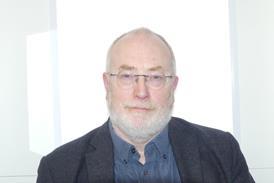
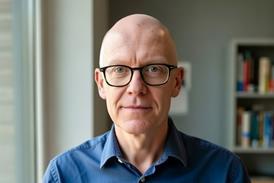
    I also find it unfortunate in this article here that, unless I've missed it, there seems to be no byline info on who the author is. Best guess I can make thanks to Google is that's he's a clinical psychologist attached to psychiatric inpatient wards? I am not sure therefore why the picture at the top shows a guy with a stethoscope, seems misleading.

    Anyway, so some mental health professionals views much service-user involvement as less than useful. I'm the opposite of shocked. I look forward to some articles here from service-users on the fact that NHS psychiatric and psychological and allied-worker involvement is often considered "less than useful" but people find it very difficult to say so. Especially as they know they don't have any choice over provider anyway thanks to the continuing NHS discrimination against every mental health patient.

    Unsuitable or offensive?

  • The importance of optimism is increasingly/finally being recognised as an essential component in recovery from distress associated with mental health difficulties. Unfortunately the NHS is critically underresourced when it comes to hope and optimism. There currently exists a system within which 'service users' and staff experience substantial distress courtesy of this well meaning but corrupt system.
    There is a lot of dedicated 'service user' input that takes place that is and should be appreciated and acted on in order to improve NHS services.
    There is also a substantial amount of 'service user' input that is tokenistic and disrespectful of the expertese that the lived experience of mental health recovery provides.
    It's time to create professional roles for people with lived experience of mental health recovery. As important as 'service user' contributions are or should be at committee/policy decision making levels, my hope is that we can entice people with lived experience to consider roles on the front line of service provision....Peer Recovery experts, Ot's, Social Workers, Nursing staff, Psychologists, Psychologist, Family/'carer' Recovery experts etc. etc.
    It's going to be hard trying to move people's thinking to get to this stage. There is already good controlled trial evidence that peer support V mental health professional teams demonstrate that peer supporters do as good if not a better job for 'service users'.
    Possibly the biggest challenge might be to convince all those with lived experience of mental health difficulties who have been horribly treated and traumatised by the NHS to consider coming back and trying to change the organisation from within.
    I read an article discussing critical realism which suggested that the 'service user' movement should and can only truely exert change from outside the NHS.
    We owe it to our 'service users' to try and get to a stage where they get access to real life recovery examples and expertese. We also owe it to our NHS staff to recruit true recovery experts to the multidisciplinary effort to alleviate the distress and promote recovery in mental health.


    Unsuitable or offensive?

Have your say

You must sign in to make a comment.

Related Jobs

Sign in to see the latest jobs relevant to you!

Sign up to get the latest health policy news direct to your inbox