





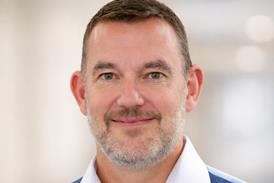








Richard Smith hears Tim Kelsey’s vision for an open NHS in which patients are an asset, not a liability
The two driving principles of the NHS Commissioning Board are transparency and participation. If they are applied radically then they can transform the NHS, said Tim Kelsey, the board’s national director of patients and information for the board at a meeting of the relaunched Cambridge Health Network this week.
Kelsey envisions an NHS where patients are empowered through data to become consumers who shape the NHS and are more responsible for their own health. In words that he didn’t use but I heard for the first time yesterday, patients are seen as assets not liabilities.
Perhaps the clearest indication that this is not the familiar empty rhetoric is that Kelsey was appointed to the job. A former investigative journalist and war correspondent, he founded the company Dr Foster when his GP was unable to give him and his wife any information on where his first child might be born. Dr Foster used routine NHS data to inform healthcare in a way that hadn’t been done before, shaming public health and the NHS itself.
Later Kelsey, who is irrepressible and always smiling, became the government’s transparency tsar - committed to releasing government data both to improve public services and create new businesses.
The NHS bank
Kelsey’s new position combines many more traditional roles like chief technology officer, chief information officer and head of marketing and communications. It includes public involvement, press relations, and the cursed Connecting for Health.
Another reason that the commissioning board might succeed in transforming the NHS is that for the first time in its life, said Kelsey, it’s “unconflicted” - in that, it doesn’t have responsibility for the delivery of services. It’s the “NHS bank” and if it found services in England unsatisfactory could move them to Boston or Abu Dhabi (“not that it’s going to do that,” he added hurriedly).
Now, believes Kelsey, is the time to transform the NHS because otherwise it is going to run out of money. We may be close, he suggested, to rationing of drugs and closure of hospitals. If patients become active consumers then cost might be contained - as was argued by the banker Derek Wanless in his analysis of how to keep the NHS affordable in his report for the Treasury in 2002.
Data deficit
The first and most essential step in achieving the new vision is to create decent data on what is happening in the NHS. Current data, said Kelsey, is poor. We know almost nothing about outcomes in primary care, which is a serious problem in that the commissioning board is required by law to commission outcomes. Some in the audience might have wondered whether the GP quality and outcomes framework didn’t supply good data on primary care, but Kelsey is talking about data on individual patients (anonymised, of course) in as close to real time as can be managed.
He gave the example that 2,500 patients with dementia may be killed by GPs prescribing antipsychotics: we know how many antispychotics individual GPs prescribe, and we might know in some practices which patients have dementia - but we do not know which of these patients are prescribed antipsychotics.
Data on secondary care is no better, said Kelsey, in that they contain no useful clinical data. We do not know, for instance, which drugs work in reality - as opposed to in clinical trials. He spoke with a smile of visiting a hospital that had 300 pharmacy databases that do not speak to each other.
The aim is to have better data with primary and secondary care linked together by April 2013, and, he said, it is not really the board’s problem if GPs and hospitals cannot tell it what is going on. They will want to be commissioned and must supply by law data on outcomes.
I wondered if Kelsey wasn’t being overambitious here, and perhaps he was deliberately overstating his case to generate momentum. He seems to think that a combination of keeping data in the cloud and making it open access will allow the NHS to do by next year what it has never done before. But I thought back to the meeting on stratified medicine that I attended two weeks ago where there was much talk of the inadequacy of data and the complete absence of the clinical informaticists to find ways to stitch databases together and create useful data sources.
Rich complaining culture
The second step in Kelsey’s vision is transparency, to “get the data out there,” so that individuals and organisations, including companies, can use the data to improve safety, quality, and responsiveness—and build businesses. He urged the audience to look at the website of Code for America, whose mission is to “help governments work better for everyone with the people and the power of the web. Through our Fellowship Accelerator and Brigade, we’re building a network of cities, citizens, community groups and startups, all equally committed to reimagining government for the 21st century.”
Kelsey sees a Code for Health and wants not hundreds but hundreds of thousands to use the data. He’d like to teach people to code, pointing out that you can build an app after three days of training.
Participation is the third step, and Kelsey described how in New York City some 90,000 people a day report on problems in the city - scaffolding that’s not safe, bins that are not emptied. The city is increasingly run in response to real time data, and Kelsey wants the same for the NHS. “The rich complaining culture” of the British could be very useful.
The next step is patient control. The constant analogy is with online banking. Increasingly nobody goes to a bank and nobody writes a cheque. Banks - and eventually hospitals - can be turned into restaurants or hotels. The hope is that such developments in the NHS can have an important effect on productivity. Kelsey wants to see an app store with 100 apps from next April. “But what’s the business model for companies to produce these apps?” asked somebody in the audience: “Who will pay?” That good question needs more thought, answered Kelsey.
Going paperless
A paperless NHS - perhaps by April 2015 - is the last part of Kelsey’s vision. Why is it that secondary care is still using tatty paper records and consultants are writing to GPs rather than emailing patients?
Kelsey’s vision is still evolving, which is one reason why he wanted to share it with the Cambridge Health Network. He is well aware that not everybody shares his vision and started by telling the story of talking to 300 NHS people working on cancer and a doctor telling him: “Mr Kelsey, you are a visionary, and I frankly find your vision complete nonsense.” Another doctor said: “Patients just want to see a doctor.” Yet another doctor was quoted as saying “I will never use a computer.” to which Kelsey responded “He shouldn’t be a doctor.”
The audience of the Cambridge Health Network, which includes a goodly number of entrepreneurs from both the public and private sectors, was generally enthusiastic about Kelsey’s vision, but one young doctor, while sharing the enthusiasm, was worried about changing the culture. He said how he worked with six other surgical registrars and had asked for a computer—one between seven. “Why do you need a computer?” was the response from the hospital manager.
He also told the story of a friend high up in information technology who had sickness in the family but didn’t use IT at all when seeking care. When asked why not he said “it’s not what you do in healthcare”. In other words, there will need to be cultural changes among doctors, managers, and patients.
There needs to be, concluded Kelsey, an unarguable benefits case for collecting and releasing NHS data—a case that is made to clinicians and the public. There will also need to be lots of products and services produced from the data. The vision is more likely to be achieved by “pull” from patient and consumers than “push” from policymakers at the top of the NHS, and to that end Kelsey would like to see the NHS become a social movement.
Legacy planning
A wholly unscientific but still interesting poll of people attending the meeting asked what Kelsey’s legacy should be: 46 per cent said joined-up patient data across all providers, 28 per cent said more people using online healthcare than online banking, 18 per cent said universal patient access to their own records, 5 per cent a paperless NHS, 3 per cent 1,000 apps built by NHS employees, and 0 per cent three million followers on Twitter for David Nicholson, chief executive of the NHS Commissioning Board.
Richard Smith is a member of the Cambridge Health Network, which is free. He has known Tim Kelsey for around 15 years, He is also chair of Patients Know Best, a start-up that uses IT to enhance patient-clinician relationships and might well flourish in the NHS that Kelsey envisions.





5 Readers' comments