



















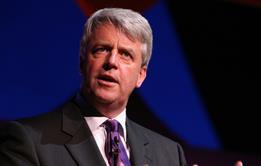
The policies which shadow health secretary Andrew Lansley outlined to this week’s Conservative conference are not the answer to the exam question he will be set - save £20bn.
His speech was, of course, aimed at voters, so oversimplification can be excused. Manager bashing strikes a populist chord.
It defies logic to argue that hundreds of GP clusters, without the resources, information, expertise or training capacity of a PCT, will deliver better, cheaper results
And Mr Lansley is right to say management has to share the pain of cuts. There are opportunities in every organisation for management and administration systems to be rationalised for the benefit of clinicians and patients, while an end to targets and a simplified inspection regime may yield further savings.
But management cuts are not even close to being the solution, and may exacerbate the problem.
Mr Lansley said the NHS needed to save even more than the £20bn identified by chief executive David Nicholson. So if the incoming Conservative government achieves its ambitious target of stripping out a third of the “bureaucracy” in four years - the management equivalent of chewing one’s own leg off - he will have saved only £1.5bn. Even with George Osborne’s £1bn pay freeze savings thrown in, Mr Lansley will still be more than £17.5bn short.
As the McKinsey report leaked by HSJ last month demonstrates, that level of savings can only be achieved by getting doctors, nurses and others to see more patients.
Clearing some of the paperwork thicket would help, but most of this infamous bureaucracy is doing useful things for patients such as booking appointments, managing theatres and running the sterile stores department, so it is a moot point whether clinicians will feel quite as liberated as Mr Lansley would have us believe when a third of them disappear.
Driving clinical efficiency requires management capacity. A chief executive described to me how he had overhauled his renal unit, but it had taken months of working with the consultants to bring them round to a new system. If you take away the management leverage you can hobble your ability to drive other savings.
So will the policy of giving commissioning powers to GPs deliver the savings? It will provide a few. But there is no more reason to assume doctors will always make good commissioners any more than actors will be good directors.
If world class commissioning has proved anything, it is that buying health services is hard. Out of 152 primary care trusts only a few dozen can claim to be performing strongly. It defies logic to argue that hundreds of GP clusters, without the resources, information, expertise or training capacity of a PCT, will deliver better, cheaper results.
Perhaps the emphasis on public health will do the trick? So-called upstream interventions have appeal - persuading someone to go easy on the pizzas is considerably cheaper than tying a knot in their stomach. But although it is sound economics to ensure the population is fit and productive, it is difficult to demonstrate that over a lifetime there will be a large net saving to the state.
There are few quick cuts there for the taking and, again, management capacity is needed. Salford PCT has changed the habits of smokers to ensure several hundred children now live in smoke free homes, but that cannot be achieved without the staff. Bar room experts would be enraged to discover PCTs employ folk such as social marketing managers, but they are the sorts of skills the NHS needs to improve public health.
There is one area of savings Conservative policy doesn’t have the stomach for - service reconfigurations. This is where the debate has to lead. Done thoughtfully, with sound clinical evidence, public engagement and the right support services - so patients don’t fall through the cracks - they can secure savings and improve quality. The Tories have been vociferous in opposing changes such as closing accident and emergency units. Once they are in power the spectre of the £20bn will force politicians, clinicians and managers to face unpalatable truths.
NHS admin must be slashed by £1.5bn
NHS organisations are preparing to have to shave a third off their running costs if the Conservatives take power next year.
- 1
 Currently
reading
Currently
reading
Andrew Lansley and NHS managers must face hard truths about cuts
- 3








2 Readers' comments