














By continuing to use the site you agree to our Privacy & Cookies policy

Andy Burnham’s flawed NHS regime will stifle commissioning ambitions

The row over NHS competition policy played out over the pages of this week’s HSJ goes to the heart of Labour’s leadership of the NHS.

On one hand, Paul Corrigan is an architect of Tony Blair’s health reforms who sees competition from both inside and outside the state-owned sector as an essential driver of NHS service quality and efficiency.

Excellence is no longer the aim; good is good enough

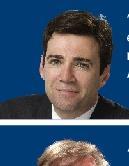
On the other hand, health secretary Andy Burnham argues that the best way to achieve the scale of reform needed is to work to improve existing services. Competition from the independent sector will be a last resort to deal with the poorest services.

Mr Burnham’s reasoning is flawed. He talks about taking the health service from good to great, but also argues that “where existing NHS services are delivering a good standard of care for patients, there is no need to look to the market”.

This means that, where a good service exists, commissioners are barred from commissioning an even better one from another provider. Excellence is no longer the aim; good is good enough.

And under the new regime, patients will often be kept waiting for “good”. Where a service is inadequate it is now deemed more important to keep the staff happy than to deliver a better service as soon as possible, so primary care trusts will have to provide at least two formal chances to improve before considering tendering.

This could take months - how many patients will have their care compromised in the meantime?

This ‘if you don’t succeed at first, try, try again’ approach is spelt out in Mr Burnham’s extraordinary letter to TUC general secretary Brendan Barber explaining the new rules.

It says: “Only if there was insufficient improvement within a reasonable timescale, and the scale of underperformance was significant, would the PCT consider engaging with other potential providers.”

So much for the minister’s pledge that “quality must always come first”.

The role of the third sector should not be forgotten in all this. They have a great deal to offer the NHS in their deep understanding of the needs and desires of patients. They are exactly the organisations that can spark innovations which transform services, the management of long-term conditions being an obvious example. But they are not part of the NHS, so Mr Burnham’s new policy will push them away.

The rule change demolishes the central pillar of world class commissioning - namely that everything PCTs do must be geared to improving the patient’s experience of NHS services and outcomes of care.

No amount of sophistry and spin can hide the fact that this guiding principle of the entire commissioning programme has been ditched.

If the Department of Health was to spell out the true implications of this change it would tell PCTs: “As long as services are deemed good enough, commissioners must stick with existing providers even if there is a service down the road offering to do a better job for less money.”

As public finances tighten, managers are faced with trying to do much more with much less. There could not be a worse moment to choke off competition as a means to improve efficiency.

The secretary of state is reversing a central tenet of Labour’s renewal of the NHS. He risks taking us back to a service focused on the needs of staff, not patients - the NHS we have been trying to leave behind. Managers and clinicians are far more ambitious than merely achieving “good”. They want to provide the best possible services, working with existing teams, other NHS organisations and the private and third sectors - whatever mix of provision comes closest to delivering excellence.

The health secretary should leave local commissioners free to do what they believe is best for patients.

Readers' comments (6)

  • Nice one Andy Burnham!!!

    Your ridiculously transparent move to ingratiate yourself with the Unions should ensure that your Union-card holding comrades will cooperate and prevent any competition in your elevation to preferred provider of Deputy Leadership of the Opposition!!!!

    Long live personal ambition and RIP a modern and efficient NHS!

    Unsuitable or offensive?

  • Paul Corrigan is the architect of massive waste in the NHS - i.e. commissioning. Effective health care is founded on consistent, effective, social relationships. World class commissioning can never specify services in a way where the cheaper service is of a better quality, as they never take account of the cost in the underlying social structure that makes services work excellently (let alone have enought understanding of services). I have been in the NHS for over 30 years and every reorganisation takes 3-4 years to recover from. All commissioning will do al la Corrigan is increase reorganisations and complexity and produce massive waste.

    My prescription is simple for NHS: stop reorganisations, devolve meaningful control of resources to clinicians of all professions, get rid of 70 % of managers who do no clinical work, introduce continuous improvement science (not unscientific PR management e.g. modernisation!!) and focus on reducing complexity. Simplifying processes, getting rid of systemic barriers (e.g. funding arrangements and care pathways to home) that add weeks to hospital stays would save the NHS £ billions.

    Anyone who doubts me should read Joseph Tainter's book The collapse of civilisations. The NHS is now on the path of collpasing under the weight of its complexity (with negative returns for added complexity/resources).

    The evidence base is clear, more than 50 % of businesses that reorganise perform less well in the subsequent 2 years (see Harvard Business Review papers). I'm sure the Governments failure rate is much higher.

    We now have the ridiculous sight of World Class commissioners who do not understand how services work trying to micro manage them. A complete farce.

    Corrigan and Blair should be consigned to past - a plague on them.

    Unsuitable or offensive?

  • Good on the Secretary of State

    Billions have been wasted marketising and maintaining the profit motive in the NHS.

    PFI - £5 billion a year above treasury rates. (PFI hospital private capital rates are above most credit cdards!!)

    Commisioning Manager costs have been going up 30% per annum for past 3 years - what useful changes in services have occured?


    Management Consultant Rates for Commisioning are running into millions (at £1000 per day)!!

    Drugs Bill gooing up 10% every year. Now running at billions per annum. Are Drug companies profits going down?

    The NHS is too valuable and is developing too well to break up and fritter into the Market. Look at the US - land of the private providor and no health care for 50 million!

    Its time for all to roll up their sleeves and get into delivering services. The NHS has too many Commisioners, Market Makers and all the paraphelia. The shortage in the NHS is those at the front line delivering services.

    Unsuitable or offensive?

  • Mr Church I'm intrigued - given that we currently have commisioner-provider separation, and you are adamant that there should be no organisational change, are you in fact in favour of keeping the system that you describe as a 'massive waste''? Or is it just that your thinking, like most of those who have their say against reform on this website, is muddled and childlike?

    Unsuitable or offensive?

  • Dear Anonymous,
    I'm all for debate, but ideally:
    1) Have the courage to put your name to your views
    2) If you wish to engage in debate (rather than simply making insulting comments about those who "oppose reform"), it's helpful to state your views a bit more clearly.

    I will admit that my views are against reform for the sake of reform, but it would be odd to presume that the NHS (like any organisation) could not be improved in some respects.

    What do you believe should be "reformed"? You are correct that England does have a rather bodged commissioner/provider split, which I'm not sure anyone would regard as ideal.

    My own view is that increasing the split and opening out to more private providers has the risk of costing significantly more in management fees without a concomitant increase in the quality of services - risking ending up with an American style system (where of course many of these healthcare organisations originate).

    I don't deny that there will be more money to be made with opening the system out, and I can understand why these organisations wish to see a change. Perhaps you can reassure me why my concerns are invalid?

    Unsuitable or offensive?

  • Mr Church - I do not disagree with everying you say but I believe the old guard of a clinician led NHS, has been tried and proven most decidedly to fail. The vision of a service where all "meaningful control of resources is devolved to clinicians of all professions" is one that would be doomed to fail as the % of clinicians who have financial and management expertise is low. A balanced service can only be achieved by an equally balanced workforce - clinicians and managers should work together and in the best run organisations, this is exactly what happens - where the focus is on efficiency and quality. The NHS is trying to adapt and survive in a business environment therefore if all the key players were only those who did the clinical work we would be in a sorry state. Team work is what is required.

    Unsuitable or offensive?

Have your say

You must sign in to make a comment.

Related Jobs

Sign in to see the latest jobs relevant to you!

Sign up to get the latest health policy news direct to your inbox