





















Andrew Lansley was very much a man apart within his own government – isolated by both his knowledge and lack of political radar. His successor Jeremy Hunt approaches his job very differently.
He constantly reminds audiences and interviewers that he, the transient politician, will probably only be health secretary for a couple of years before he moves on to his next brief.
‘The health secretary gives a robust defence of his “right to ask questions”’
Where Mr Lansley was on a mission of his own making, Mr Hunt sees the health reforms as part of the broader coalition reform policy. He has already signalled the desire to examine introducing “Ofsted-style ratings into health”, has chosen a policy adviser with an education background and now appears to be toying with the “superhead” model too. He likens the NHS reforms to the “freedoms” given to schools and police authorities.
He began his first in-depth interview on the government’s health policy by comparing his role and level of accountability not only to that of education secretary Michael Gove, but also to home secretary Theresa May. The health secretary expects to be judged in the same way they will be and as a result wants to understand where the risks lie.
The talk among the new system’s leaders is all about how Mr Hunt has upped the number of meetings looking at key areas of performance. The health secretary gives a robust defence of his “right to ask questions” and declares his intention to respect the “operational independence” of the service and to listen to, although not automatically follow, the “independent advice” he is given, just as Mr Gove and Ms May might.
But he also stresses, as they would, that on many controversial and important issues: “It will be my decision.”
Sending a message
Those in education and law enforcement know that the behaviour of the secretary of state is profoundly influential on priorities. It is not necessary to set targets to send messages down the lines of communication – there are other more subtle ways of holding people to account and getting them to focus on certain issues.
So what messages is Mr Hunt sending into the system? Most of those same system leaders have been pleased by the speed and clarity with which he has focused on the priorities of care quality, technology, improving mortality rates for “the big killer diseases” and long-term conditions, especially dementia.
But it is also clear the health secretary wants to keep close tabs on the NHS’s performance on touchstone issues such as waiting times, healthcare acquired infections and mixed sex accommodation in hospitals.
‘Hunt is also sending a message to the system’s leaders that they will be hearing more from him than perhaps they had expected’
Mr Hunt obviously feels frustrated – as many of his predecessors have – that he cannot be more easily alerted to excellence, which can then be rapidly spread throughout the service.
Those working with the health secretary say they have noticed how keen he is for his department to be active in driving up standards, rather than acting simply as the priority-setting and standards monitor.
This model is much closer to that in education and policing than the one conceived by Mr Lansley. To do this, Mr Hunt needs capacity missing from the slimmed-down DH – hence the possibility of identifying the NHS equivalent of school superheads to turn around those organisations failing to meet minimum national standards.
Mr Hunt is setting himself a stiff task by declaring he intends to be “a secretary of state who is completely on top of all the pressures in the system and knows what’s happening”. Since it is politically impractical to be in that position and not act when you learn something of concern, he is also sending a message to the system’s leaders that they will be hearing more from him than perhaps they had expected.
Hunt: I'm open to NHS or private sector solutions
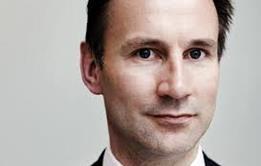
Health secretary Jeremy Hunt has told HSJ it is “not my job to hold a candle” for either NHS or private sector providers when deciding what is best for patients.
- 1
- 2
- 3
- 4
 Currently
reading
Currently
reading
Why policing and school reform are inspiring Jeremy Hunt








4 Readers' comments