
Preparing for a DH visit
Every now and then, there will be a news report of a city in a developing nation having a quick lick of paint applied to all exteriors, potholes filled and beggars removed in readiness for a president's or foreign dignitary's visit.
The Western journalists will report on the cosmetic outcome. With the visit over, everything quickly returns to normal - the paint peels, the potholes return and the beggars become visible again.
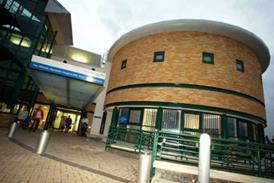
With an announced Department of Health visit, there is a flurry of activity. Skirting boards are painted, corridors cleared and the non-compliant kept out of sight in basements and attics, allegedly. The visit over, and the skirting boards remain gleaming but will soon be part of the building rubble, the empty corridors will be collapsed and the non-compliant will become permanent fixtures within supporting columns of concrete, allegedly - we are moving to a gleaming new PFI in a few months.
The parallels are, of course, not exact, but I will never again be critical of a developing nation's plans to greet visiting dignitaries. An announced visit has an effect. Let's hope the PFI maintenance programme is affordable, otherwise the 'beggars' will become visible, and noisy.
Have your say
You must sign in to make a comment.


Readers' comments (3)
Anonymous | 6-Jan-2009 1:01 pm
Who makes the decision to 'polish the brass' when a DH minister or 'other' visits a hospital? It is the staff delivering the services and the standard of care that is delivered that the Minister is interested in - not the state of the skirting boards - particularly if the said boards are to be demolished to make way for a new build!
Ministers dont need to leave Whitehall to determine the state of the estate - they can read that in a report from the comfort of the department. They get out and about because they are genuinely interested in the type and standard of services/ care we deliver to patients and to discuss with those delivering the care if and how it can be improved.
Unsuitable or offensive? Report this comment
Ian Whitehouse | 6-Jan-2009 2:56 pm
Agree entirely with the "Queen's Visit" concept - it went on in the 90's when I was in the NHS and I hear of it regularly from those still working in the NHS. However, the ever so slightly cynical comment about PFI indicates a common misunderstanding about PFI.
The PFI Unitary Charge (UC) includes a proportion paid to the PFI Consortium for maintenance - painting, replacements, repairs and upgrades etc. The PFI consortium has a contractual responsibility to maintain the fabric of the facility to a pre agreed standard (usually "Condition B" - a commonly used term understood by both the private sector and NHS Estates). Should the money paid to the consortium be insufficient that is the consortium's problem - they must still meet their contractual responsibilities.
It is this element that can make a PFI deal appear expensive - historically the NHS has always underspent on maintenance and upkeep of its estate. In a PFI deal the true cost of this maintenance and upkeep is contractual and cannot be used to defray the cost of a new MRI, pay award or clinical initiative. It does mean that at the end of a 30 year PFI deal the NHS will inherit a fully service and useable building, unlike so many 30 year old NHS buildings - which are generally in very poor condition.
Unsuitable or offensive? Report this comment
Anonymous | 8-Jan-2009 1:48 pm
You would be surpised how effective these policies are. While working in a research lab in England my old boss always insisted that whenever a VIP visisted the lab was tidied up and everyone one in and working at the lab bench at the appointed hour. My second boss in Australia had the same policy, and on return from a trip to visit my previous lab in England commented on what a tidy and productive lab it had been. You wonder what kind of a world they live in.
Unsuitable or offensive? Report this comment