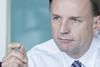

The NHS England chief executive has said he wants to make “much faster progress” to clinical commissioning groups receiving their target funding allocations.

Simon Stevens told MPs yesterday that he wanted NHS England to move all CCGs to within 5 per cent of their target “fair share” funding within two to three years.

Doing so would represent a marked increase on the pace at which groups have moved towards target this year and in 2015-16.

His comments come ahead of the publication this week of the “NHS five year forward view”, which Mr Stevens has led and which is expected to comment on the service’s funding outlook and plans.

In 2014-15 nearly two-fifths of CCGs are more than 5 percentage points above or below their target allocation.

Mr Stevens, speaking at the Commons public accounts committee yesterday, said: “The allocations have been set for 2014-15 and 2015-16, so I don’t think anybody in the NHS wants all those cards thrown in the air again so close to the start of the next financial year.

“Clearly from 2016-17 we definitely want to make much faster progress against targets.”

He added:  “In two years from now we would like to be in a position where the CCGs that are more than five per cent off their target are within that range, recognising volatilities.”

A report published by the National Audit Office last month said: “Were the current pace of change and tight financial position to continue, it would take approximately six years before no clinical commissioning group was below its target allocation by more than five per cent.”

It is therefore unclear how Mr Stevens could achieve the stated aim without greater increases in NHS funding than are currently expected, or without giving some CCGs real terms cuts in funding, so others can get greater increases.

However, an NHS England source told HSJ it would be achieved “within the [expected NHS England] budget”.

An NHS England source said: “What Simon Stevens was referring to was not a bid for extra cash, it was an ambition that by the end of 2016-17 all CCGs currently more than 5 per cent below their ‘fair share’ budget should, by then, be within 5 per cent or closer to their ‘fair share’. We don’t see this as an insurmountable challenge.

“[We] are not looking at real terms cuts [for any CCGs], [we are] saying we can find the money required within the budget.”

The issue has hugely frustrated CCGs which are substantially below their target, many of which are struggling financially.

Mr Stevens also told the PAC he wanted to move to a “place-based” allocation of funds, indicating a future approach would bring together allocation of some public health funds – which are split between local authorities, NHS England and Public Health England – and some primary and specialised services funding.

“In a year from now…we want to move to a position where we have place-based formulae for as much of the NHS and possibly the public health spend as we can,” he said.

Mr Stevens also told the committee he wanted the NHS to become more “socially activist” on the non-NHS determinants of people’s health. He said this would be a theme of the forward view, to be published on Thursday.

He said, for example, more should be spent on obesity prevention compared to bariatric surgery.

Speaking to HSJ Mr Stevens said: “[We want to do this] because a lot of what the NHS is going to be dealing with over the next three to five years is a huge wave of avoidable illnesses.

“In particular we’re seeing a wave of type 2 diabetes and now is the time to get that up the agenda.”

He said: “A large chunk of the five-year forward view will cover [non-NHS determinants of health]. The NHS now needs a new relationship with school, businesses and [wider society].”