




















Lung cancer remains one of the UK’s most significant health challenges, yet not all patients face the same odds of early diagnosis.
For people living with severe mental illness (SMI), the gap is stark, and it is costing lives.1,2
Sponsored by and written for
A Bristol Myers Squibb (BMS) commissioned, HSJ Information published State of the Nation report in 2025 presented a troubling inequality in cancer care: patients with mental health conditions were consistently being diagnosed with lung cancer at a later stage than those without, and more concerningly, were significantly more likely to be presenting as emergencies to receive late-stage diagnoses.1
To understand the causes of this issue and identify potential solutions, a roundtable of healthcare professionals specialising in lung cancer and mental health was convened in January 2026, initiated and funded by BMS.
The barriers to early presentation for patients with SMI can be both individual and systemic. For patients, fear and mistrust of services, stigma, and the cognitive and psychological burden of engaging with healthcare can be profound. At a system level, digital exclusion, fragmentation between physical and mental health records, and diagnostic overshadowing are routine problems. Where physical symptoms are misattributed to a patient’s mental illness, appropriate investigation can be delayed or missed entirely. The masking effect of antipsychotic medications adds further complexity: classic red flags such as weight loss may be absent, meaning clinicians must recalibrate their thresholds entirely.
The roundtable’s recommendations are practical and urgent. Traditional invitation methods are not working for this SMI population; embedding trusted messengers, such as a care coordinator, peer support worker, or known community figure, in outreach pathways could offer a solution to gain trust for patients with mental health issues. Clinical systems need to formally distinguish between those who did not attend and those who could not attend, and ensure that patients are not simply discharged, as missed appointments for this population are often signals that support is needed. One-stop-shop diagnostic models, where imaging is completed in a single visit, offer the opportunity to reduce the cognitive and logistical burden for those with reduced bandwidth.
The report and roundtable also call for reform to National Institute for Health and Care Excellence NG12 guidance. Direct referral onto the suspected lung cancer pathway for patients with a smoking history, combined with an SMI diagnosis, and any persistent lung cancer symptom lasting three weeks, could be key to minimising the number of steps and barriers that risk disengagement, which is particularly pertinent for the SMI cohort to prevent late entry into the system via emergency services.
Structural reform is equally essential. Cancer screening programmes must embed clinicians with mental health expertise and people with lived experience into their operational teams from the outset. Dedicated referral flags for patients with SMI would ensure secondary care is equipped to provide the right adjustments from the moment of referral, whether that be support for attendance or the involvement of trusted people for extra follow-ups. And a national push for interoperability between physical and mental health records is long overdue.
People with SMI already face one of the greatest health equity gaps in England. We must do what we can to ensure that later diagnoses of lung cancer are not part of that picture. The will to change exists; now it must translate into action.
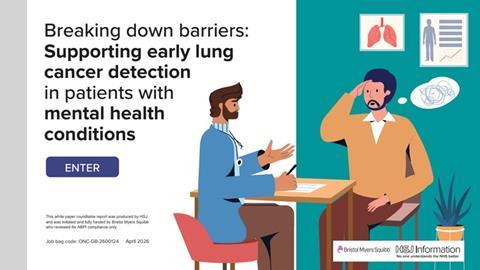
A white paper summary report was produced from the roundtable discussion, which can be accessed here: (clicking this image will take you to an external website hosted by Bristol Myers Squibb).
Job code: ONC-GB-2600140
Date of preparation: May 2026
References
1. Lung Cancer Diagnosis in England in 2024. Can we do better? HSJ Advisory. Available at: https://www.bms.com/assets/bms/gb/en_gb/images/STON_report-lung-cancer-inequalities.pdf (accessed April 2026).
2. Royal College of Psychiatrists. Over 26,000 adults with severe mental illness die prematurely from preventable illness each year. Available at: https://www.rcpsych.ac.uk/news-and-features/latest-news/detail/2023/05/17/over-26-000-adults-with-severe-mental-illness-die-prematurely-from-preventable-illness-each-year (accessed April 2026).