

















HSJ hosts the Patient Safety Watch newsletter, written by Patient Safety Watch chief executive James Titcombe
Good afternoon, and welcome to this fortnight’s edition of the Patient Safety Watch newsletter.
‘Normal birth’ rears its head again
We start this newsletter again with maternity safety. Last week, The Sunday Times published another powerful maternity exposé (subscription required), this time examining care failures at Leeds Teaching Hospitals, now subject to a full independent inquiry following an announcement from Wes Streeting last month.
The newspaper reports that, between 2012 and 2023, the trust had the lowest caesarean section rate in England in all but one year, while its stillbirth and neonatal death rates rose to become among the highest nationally. Leeds’ 2015 maternity strategy required all parts of the service to actively promote “normal birth”.
More than 150 families have now come forward at Leeds. They include Fiona and Daniel Winser-Ramm, whose daughter Aliona died in 2020 after a prolonged labour with ignored warning signs and falsified records. An inquest found Aliona should have been delivered by caesarean hours earlier, while Mrs Winser-Ramm said: “The steer to continue with a vaginal birth at every opportunity was evident throughout my labour.”
The data paints a stark picture: Leeds consistently kept caesarean rates as low as 19 per cent – well below the 24 per cent national average – while having some of the highest rates of spontaneous vaginal births. But at what cost? As we saw at Morecambe Bay, and Shrewsbury and Telford, pursuing normal birth at any cost contributed to catastrophic failures. Worrying signs suggest Leeds may be yet another tragic example of the same pattern.
My view? The Sunday Times has again highlighted a fundamental issue at the heart of the cultural problems that persist in maternity services. As I wrote recently, we must abandon the idea that maternity care’s purpose is to promote one type of birth over another. Instead, we need a maternity system that is responsive, adaptable and safe in every situation – and free from ideology.
We still have a long way to go. Even as I write this newsletter, the online course description for a postgraduate degree in “Higher Midwifery Practice” at Anglia Ruskin University reads: “With concerns about rising rates of intervention, you will be encouraged to explore how to promote normality during childbirth and how to care for vulnerable women with complex needs, with the aim of reducing intervention.”
Such reporting also led to this open letter, now signed by nearly 4,000 people – including midwives who work at trusts under both past and present scrutiny – which asserts that “normal birth at any cost” is a problem “coined” by journalists. A timely reminder that the Morecambe Bay Investigation Report (2015), sadly, remains just as relevant now as it did 10 years ago.
Both the independent investigation at Leeds and Baroness Amos’ rapid national investigation must leave no stone unturned in examining this problem and setting out how we can change the culture once and for all.
In other news, this edition…
Electronic patient records under scrutiny
A thematic review published by the Health Services Safety Investigations Body (HSSIB) – first reported on by HSJ – warned that electronic patient record (EPR) systems continue to contribute to missed, delayed or incorrect care, despite national efforts to improve digital safety. While EPRs are vital to modernising the NHS, investigations show that poor system design, implementation gaps and weak oversight can introduce new risks.
HSSIB highlighted three main challenges: organisations selecting systems without fully understanding their needs; implementations lacking strong clinical engagement, effective training and adequate infrastructure; and limited ongoing optimisation, with few ways for staff to raise concerns and insufficient resources to maintain and update systems safely.
The report called for clearer national guidance, better procurement support and stronger governance of clinical risk.
The message is clear: digitisation only improves safety when systems are chosen carefully, configured well and continually reviewed.
Trust fined £200,000 after teenage patient’s death
As widely reported, including by HSJ, University Hospitals Sussex Foundation Trust has been fined £200,000 after a 16-year-old patient absconded from a ward and later killed herself. Ellame Ford-Dunn was under one-to-one care on a Worthing Hospital ward after having been admitted for self-harming.
District Judge Tessa Szagun noted that ward staff had been making daily attempts to find Ms Ford-Dunn a more appropriate placement. After sentencing, the trust apologised, saying it had a responsibility to keep her safe and was “sincerely sorry” it had failed to do so.
CQC raises alarm over Medway ED
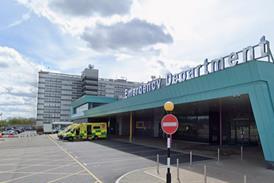
The Care Quality Commission has re-rated Medway Maritime Hospital’s emergency department as “requires improvement”. As reported by the BBC, inspectors cited ongoing concerns about patient safety, dignity and care management during periods of high pressure.
While the department has addressed previous warning notice requirements, inspectors still found breaches of regulations relating to safe care. Staff reported persistent flow and capacity challenges; patients described excessive noise, limited access and unsuitable care spaces.
Blackpool Victoria report highlights cultural failings
A leaked Royal College of Physicians report has found a culture of “bullying, harassment and racial discrimination” at Blackpool Victoria Hospital, with serious consequences for patient safety. As reported by the Guardian, staff described high workloads, poor supervision and a “keeping your head down” environment.
‘Systemic’ leadership and governance failures blamed for trust’s breast cancer problems
An independent review – which has been widely reported, including by HSJ – has found long-standing failures in the breast surgery service at County Durham and Darlington FT between 2012 and 2025, including delayed diagnoses and unnecessary surgeries.
The report found “systemic failures in clinical oversight, governance assurance, and leadership accountability”, which have led to “avoidable patient harm, erosion of public trust, and compromised professional standards”.
Mothers facing 62-hour waits for induction at Scottish hospital
A Healthcare Improvement Scotland (HIS) inspection of maternity services at Forth Valley Royal Hospital found significant safety concerns, including mothers waiting up to 62 hours for labour induction and serious incident investigations delayed by up to 18 months.
The BBC reported that while staff were praised for compassion, teamwork, and supportive leadership, inspectors also identified delayed triage for urgent cases due to staffing and space issues, poor communication between maternity triage and the emergency department, long induction delays caused by staff shortages, and inconsistent reporting of patient safety incidents.
Help improve caesarean wound care management
Postsurgical infection following caesarean section is common, with wound dressing quality and general aftercare being integral to optimal healing and patient outcomes. Bristol University and PROMPT Maternity Foundation want to understand your professional experiences of caesarean birth wound care and treatment, as well as your views on what matters most. Your perspectives on current practice and the challenges you encounter will be vital for informing potential new solutions.
Take part in this important survey by 4 January 2026.
Tribute: Professor Tim Draycott (1964–2025)
Like so many others, I was deeply saddened to hear of the sudden passing of Tim Draycott, immediate past vice president of the Royal College of Obstetricians and Gynaecologists, as well as a consultant at Southmead Hospital and the University of Bristol.
Tim’s pioneering work included the creation of the PROMPT training. PROMPT transformed how maternity teams respond to emergencies and is now used in many maternity units, both in the UK and worldwide. Few individuals have had such a direct, measurable impact on the safety of mothers and babies.
I was lucky enough to have met Tim. He was as kind and generous as he was brilliant – someone who treated everyone with warmth and respect, no matter their role. His work has undoubtedly saved many lives, and his legacy will live on in the safer care he helped create.
Thank you for everything, Tim. You will be hugely missed.
That brings this edition of the newsletter to an end. We’ll be taking a short break over the Christmas period, but please look out for our next newsletter from Jeremy early in the new year.
Thanks for reading, and wishing everyone a peaceful and safe festive period.
James
Topics
- BLACKPOOL TEACHING HOSPITALS NHS FOUNDATION TRUST
- Bullying
- Cancer
- Care Quality Commission (CQC)
- COUNTY DURHAM AND DARLINGTON NHS FOUNDATION TRUST
- Emergency care
- Health Services Safety Investigations Body (HSSIB)
- Leadership
- LEEDS TEACHING HOSPITALS NHS TRUST
- Maternity
- Mental health
- Patient safety
- Regulation/inspection
- University Hospitals Sussex NHS Foundation Trust
- Wes Streeting






1 Readers' comment