






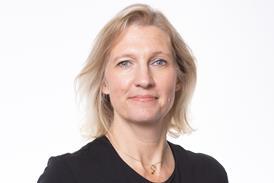












HSJ hosts the Patient Safety Watch newsletter, written by Patient Safety Watch chair Jeremy Hunt
Good afternoon, and welcome to this fortnight’s edition of the Patient Safety Watch newsletter, this time from me, Jeremy.
Continuity of care – an idea whose time has come?
I have long worried about the depersonalisation of NHS care, which can turn patients into numbers. The abolition of GP lists has turned contacting your GP surgery into a call-centre experience. Mums do not meet their midwife until they arrive at a maternity unit in labour. Patients with multiple issues are pushed from ward to ward with no one taking responsibility.
In a recent article for politics.co.uk, I urged the government to use the next GP contract to restore GP lists, the single biggest reform in this area. I highlight the remarkable Norwegian study in the British Journal of General Practice involving 4 million people. It found that patients who kept the same GP for more than 15 years were 30 per cent less likely to use out-of-hours services, 28 per cent less likely to be admitted as an emergency, and 25 per cent less likely to die than those who had a GP for just a year – with the benefits growing the longer the relationship lasted.
I tried to do this as health secretary, introducing a named, accountable GP for everyone over 75. Sadly, it became a tick-box exercise. Let’s do better this time.
Did AI miss what families told the Amos review?
Reports in HSJ last month, and more recently in The Sunday Times and Daily Mail, have raised serious questions about how the National Maternity and Neonatal Investigation (NMNI), chaired by Baroness Amos, handled families’ evidence.
The Sunday Times report says more than 10,500 submissions were analysed by the Amos review using AI, yet concerns raised by harmed families about “normal birth ideology” – including a submission from families in Oxford where it was repeatedly mentioned – were absent from the final report. Indeed, it said the opposite, namely that normal birth ideology was currently not widespread in the services it visited. This caused the highly respected Bill Kirkup to resign from the Amos review.
He set out why in his letter to the Commons health and social care committee, saying: “The NMNI was not set up in a way that would have allowed a robust finding on the prevalence of a ‘normal birth ideology’ and despite this, “the investigation heard repeated evidence of a ‘normal birth ideology’… including from “…families, interviews with local and national leaders, and site visits.”
Why did Baroness Amos allow this to happen? She should read Royal College of Obstetricians and Gynaecologists RCOG president Alison Wright’s recent commentary and correct a clearly inaccurate assertion from her report.
Which won’t be helped by worries on funding cuts…
New analysis by The Times has revealed that additional maternity funding announced by the government amounts to just 17 per cent of the £93m in ring-fenced maternity safety funding withdrawn last year. The funding had supported initiatives to recruit midwives, improve training, and strengthen continuity of care. Although £16m has since been announced for improvements including maternity triage and preventing blood clots, there has been no equivalent replacement of dedicated funding for frontline staffing or training.
The Royal College of Midwives has warned that “without safe staffing, care simply cannot be safe”, while Dr Wright, president of the RCOG, has called for “ring-fenced, sustained investment in our maternity and neonatal services”.
…but it’s not all bad news on maternity safety
The latest data from MBRRACE-UK suggests that since 2013, when James first asked me to commission the Morecambe Bay Inquiry, the overall number of perinatal deaths in England has fallen from 6.09/1,000 births to 4.76/1,000 births in 2024 – a fall of 22 per cent, more than 700 fewer baby deaths annually. And when you look at intrapartum stillbirths (babies who die during labour), the change has been even more dramatic.
There were 288 intrapartum stillbirths in 2015 compared to 128 in 2024 – a 49 per cent fall in the rate (from 0.37 to 0.19 per 1,000 births). Severe brain injury cases have also fallen from 248 in 2020-21 to 128 in 2024-25. Other areas have shown less progress and maternal mortality rates have gone up – but this surely shows that progress is possible.
Corridor care – alarm bells ringing
As reported by the Royal College of Nursing, NHS England recorded 99,290 instances of corridor care in September – the highest since publication began in May. An Royal College of Emergency Medicine (RCEM) survey of 163 accident and emergency clinical leads found 91 per cent very or extremely concerned about this winter.
As reported by BBC News, the health secretary has asked the NHS to speed up ending corridor care for children, with new A&E standards, age-based data and £140m for urgent care. But as the Corridor Care Coalition warns, the goal must be to end unsafe care, not move patients on to chairs and into waiting rooms. Something for the Patient Safety All-Party Parliamentary Group (APPG) to watch closely.
In other patient safety news…
Baby’s death at Leeds contributed to by neglect
As reported by BBC News, an inquest jury concluded that five-month-old Esta High, who died of meningitis at Leeds General Infirmary in 2023, “died of natural causes contributed to by neglect”, after doctors continued to focus on a covid diagnosis. The trust says it is “truly sorry”. Parents know their children – their concerns must be heard.
Missed scan finding – a risk known since 2007
As reported by BBC News, a coroner has issued a prevention of future deaths report to Nottingham University Hospitals after a lung nodule on Gloria Monte’s 2024 scan was never investigated. She was diagnosed with lung cancer a year later and died, aged 79; the risk had been raised in national alerts “consistently since 2007”. Nearly two decades of warnings should have been enough.
Surgeon harm review delayed to 2027
As reported by HSJ, Cambridge University Hospitals has apologised for a further delay, now to 2027, to an independent review of potential harm to hundreds of patients, many of them children, treated by one surgeon. Families deserve answers.
Sickle cell patient’s pain “ridiculed”
As reported by BBC News, an inquest heard that Veronique Mwembo, 32, overheard Norwich staff calling her a “frequent flyer” and sometimes waited up to six hours for pain relief, against National Institute for Health and Care Excellence (NICE) guidance of 30 minutes. Listening to patients is a safety issue.
Insulin safety in the community
Health Services Safety Investigations Body’s (HSSIB) final report on insulin self-administration by vulnerable patients finds inequitable access to diabetes technology, pens not always designed for people with disabilities, low staff confidence, and potential discrimination. Exactly the system-wide learning HSSIB exists to provide.
Healthwatch saved
As reported by HSJ, following the governments welcome decision not to abolished HSSIB, plans have also been dropped to abolish Healthwatch. Baroness Merron told peers abolition was “not appropriate”; a national quality framework will follow, and every integrated care board will have a non-executive champion for patient voice.
Plymouth warns deeper cuts would hit patient safety
As reported by HSJ, University Hospitals Plymouth faces £58m of risk to its break-even plan; even its “stretch” scenario leaves a £43m deficit. Going further would mean cutting bank, agency and overtime by more than 50 per cent, removing fixed-term clinical posts and stopping mandatory and regulatory training. NHSE has withheld its Q3 deficit support. Boards are right to be honest when targets and safety collide – and safety training must never be the first thing cut.
And finally, some positive news to share…
South Tyneside and Sunderland’s yellow bed rail alert bands cost less than £1 a set. But they increased the proportion of correctly lowered bed rails on a trial ward from zero to 94 per cent. They are now being rolled out to all 45 inpatient wards. All for less than a coffee per bed…
Implementing Martha’s Rule in maternity services
A new date is now available to book for Baby Lifeline’s new course - implementing Martha’s Rule in maternity services.
The course examines the practical foundations needed to make Martha’s Rule work in maternity settings, drawing on learning from early-adopter organisations and using realistic maternity scenarios to explore how the rule can operate in practice.
The online course is now available to book for 14 January. Find out more and book here.
That’s all for this edition. Thanks for reading, and look out for the next edition from James in a fortnight.
Jeremy










No comments yet