











An HSJ roundtable, in association with the British Red Cross, discussed the opportunities and challenges facing both commissioners and providers
The 10-Year Health Plan opens the way for the NHS to commission more services from the voluntary and charity sector.
But with money tight for the foreseeable future, the NHS is keen to get the most bang for its buck. Commissioning has historically not been evidence-based and often does not specify the outcomes it really wants.
In association with
Changing this and making outcomes-based commissioning a reality will take years and will be challenging for both the NHS and those who want to partner with it.
This HSJ roundtable, in association with the British Red Cross, looked at some of the issues around this and how they can be overcome.
Panellists
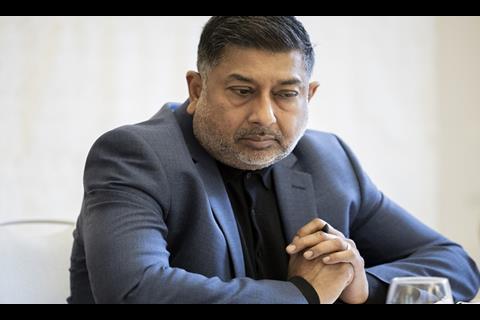
- Duleep Allirajah, chief executive, The Richmond Foundation
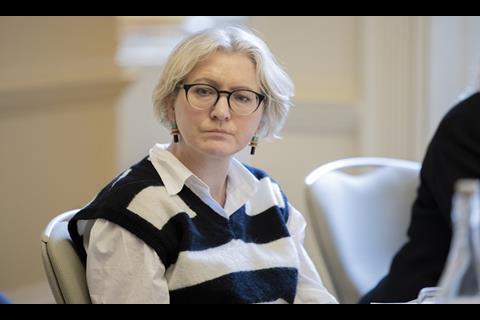
- Sharon Brennan, director of policy and external affairs, National Voices
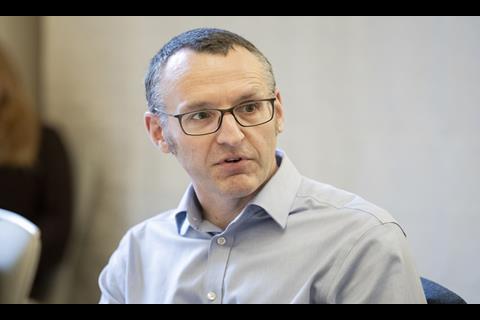
- Thomas Dodd, director of strategic engagement and growth, Tunstall
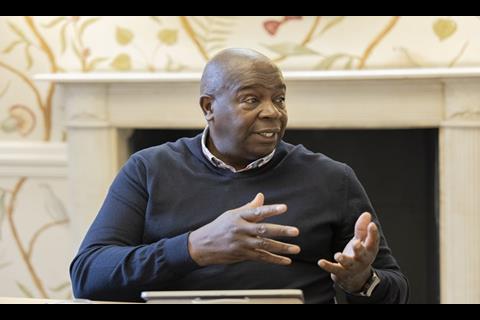
- Cedi Frederick, chair, Kent and Medway Integrated Care Board
- Rebecca Gray, director, mental health network, NHS Confederation
- Lisa Hollins, executive director UK, British Red Cross
- Susannah Howard, integrated care partnership director, Suffolk and North East Essex Integrated Care System
- Michelle Lee-Izu, chief operating officer of children’s services, Barnardo’s
- Alison Moore, HSJ (roundtable chair)
Charities under pressure to deliver NHS change
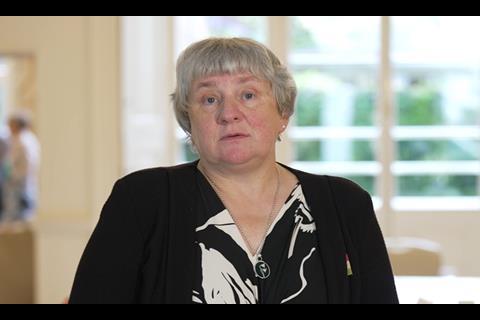
The 10YHP offers a brighter future for charities that want to work with NHS organisations, but the short term looks incredibly challenging for both the community and voluntary sector and their NHS partners.
This is likely to make it harder for innovative approaches to be adopted and the focus to switch to commissioning for outcomes, with the necessary evidence base for the impact of services and interventions. But many at HSJ’s roundtable felt these changes were worth striving for.
Current challenges include the obvious shortage of money for commissioning organisations and the focus on the short-term imperatives, such as more elective care and delivering massive cost improvement programmes.
But charities are also coping with the variations in approach between integrated care boards, which can sometimes lack an understanding of the voluntary sector. “There’s a saying that if you have seen one ICB, you have seen one ICB,” said Duleep Allirajah, The Richmond Foundation’s chief executive.
Some areas of provision, such as for children and young people, can also be a secondary consideration, suggested Michelle Lee-Izu, Barnardo’s chief operating officer of children’s services. A focus on coproduction and involving service users was vital, she said.
Currently, conversations with commissioners often feel quite transactional rather than focusing on the benefits they could bring, added Sharon Brennan, National Voices director of policy and external affairs.
Panellists pointed out that both the NHS and local authorities were in flux and facing massive changes. Over the next year or so, this would lead to a completely different lineup of actors around the table, adding to the complexity for charities trying to forge partnerships.
“We are at a very difficult point – we are in transition,” said Kent and Medway ICB chair Cedi Frederick. “We are trying to make sense of what is a very uncertain time, but equally, we are in a place where local authorities are really under financial pressure.” He stressed he could only speak for his ICB, but added commissioning needed to be reimagined, and charities also needed to reimagine what their role was.
There was also a level of uncertainty around ICBs’ role in the new NHS structure and what might be provided at the neighbourhood level, and what needed to be done at scale. Rebecca Gray, director of the mental health network at the NHS Confederation, questioned how much direct commissioning ICBs would do, or whether more would be devolved to neighbourhoods under the new structure.
Commissioning needs to be reimagined — and charities also need to reimagine what their role is
But there is some hope that, despite these challenges, ICBs will rethink commissioning and work more in partnership with charities.
Susannah Howard, Suffolk and North East Essex Integrated Care System integrated care partnership director, said the move to strategic commissioning meant ICBs ought to think more about commissioning for value.
Partnerships need to be developed, and that meant tackling some fundamental issues – dealing with conflicts, such as power imbalances and calling out ineffective approaches, she said.
Communities could also shape what was commissioned by helping the NHS understand what their needs were. “You need communities to shine a light on what really matters to them,” said Ms Brennan.
ICBs will also need to change and embrace innovation – a challenge when staff were often used to working in different ways. “We are working with commissioning staff who have to unlearn certain ways of doing things,” said Mr Frederick. Using a sporting metaphor, he said that ICBs needed to become “fit to play the game” with fewer staff.
But charities are in a different position to the NHS in that they don’t need an immediate return on investment and can draw on some different sources of funding from outside the health system, said Mr Allirajah. “That creates the bandwidth to innovate.”
Work needs to be put in at the start to ensure innovations work, said Ms Howard. This included building relationships, bringing partners in to work together, and eventually, they may reach the point of reimagining health and care. “Where we have been successful is the discipline of putting that work in first. You need to… work strategically with the voluntary and community sector to put in those right foundations,” she added. “To reimagine health and care, the voluntary and community sector has to be central to that.”
And Lisa Hollins, executive director UK, British Red Cross, called for a central repository of good-practice examples showcasing partnerships and innovative commissioning and evidence-based approaches. “We can support each other to get to what our communities need,” she said.

Charities range from those with a turnover of hundreds of millions of pounds to very local ones, serving small communities, or those offering support to small numbers of people with rare conditions spread across the country.
But while they can all play their part in providing health and care, they are in very different positions.
Large national charities that deliver through local teams are sometimes not part of the discussion at that local level, said Mr Allirajah, whose organisation represents many of the UK’s largest health-related charities. “We can bring resources and innovation at scale,” he added. “It’s helping local system leaders understand that, which is really important.”
However, hyperlocal charities face particular challenges, including meeting requirements for information or evidence of return on investment. They can also struggle with cash flow and the impact of commissioning for the short term. Financially, some charities were just hanging on “hoping the taps will turn on in 2026,” Ms Brennan said, and sometimes they lacked the capacity to work out how to get involved with the NHS.
Some very small charities may do amazing work, Mr Frederick said, but feel they are too busy delivering to measure outcomes. Commissioners need to treat them differently, which can be an issue as the capacity within commissioners is reduced.
There can also be competition between charities, which one panellist described as “cutthroat” and “survival of the fittest”.
But Mr Allirajah advocated bringing charities together because they could reach different areas. In some cases, this has happened – Ms Lee-Izu talked of a pandemic-era scheme where differently sized charities had worked together to develop an outcomes framework. “Those local voluntaries could get into communities quicker and actually develop those relationships,” she said. “What the large organisations were able to provide was the framework.”
The small voluntary groups would not have been able to apply for this funding through a procurement process without help, she said. Barnardo’s had then helped collate data from them to form a national database.
And Ms Hollins said the British Red Cross could help small charities comply with the NHS’s terms and conditions, which were sometimes onerous. Good practice examples could help, she added.

When charities are commissioned for a certain number of hours or to provide a particular service, then it is usually easy to see if this has been delivered.
This approach to commissioning is still prevalent: Thomas Dodd, director of strategic engagement and growth at Tunstall, spoke of how his company was often commissioned for a number of devices rather than looking at what the outcomes were.
But if the NHS wants to move towards more imaginative commissioning, what evidence is needed to support this and to show the value of services?
Ms Hollins said good measures of outcome were already used in some cases. She mentioned the Red Cross’s work in Scotland to prevent admissions. “I feel that unless we have really good outcomes and evidence… that really personalised care for people won’t happen,” she said.
The Department of Health and Social Care recommends three domains in an outcomes framework, she added – meeting individuals’ needs, reducing demand for health and social care services, and delivering a social return on investment. “There are some evidence-based frameworks which we can use to give people confidence to make different decisions… what we would love to see is commissioners having these frameworks at their fingertips,” she added.
But how can outcomes be measured? Schemes can rely on patient-reported outcomes, such as how they feel after receiving a service or intervention compared with before. Patient activation and wellbeing are other often used measures.
Some in the charity sector feel individual stories can be a powerful tool in demonstrating outcomes. The NHS may be used to dealing in figures and quantities, but sometimes storytelling and case studies can be useful, said Mr Allirajah.
Ms Brennan pointed out that some small charities might not know how to “play the game” and produce evidence. She mentioned one which had provided support to young people during the pandemic, but was not recommissioned as it had not realised it had to produce evidence of effect. She asked what the offer would be from ICBs – was there infrastructure support, either from the ICB or bigger charities?
And commissioners could do more to specify what they want providers to demonstrate. Mr Dodd said they could “corral and coordinate” to ensure charities had an opportunity to thrive, including setting what expectations for measurement could be.
But measuring what one organisation’s impact has been on a long patient journey and patient outcomes can be difficult, which makes partnerships important, said Ms Howard.
Sometimes one organisation’s interventions cannot change other aspects of people’s lives. Ms Lee-Izu said Barnardo’s had worked on a scheme for children who had been sexually exploited to look at what outcome measures made a difference. Measures which the organisation had more control over – such as influencing self-esteem and registering with health services – did well, but access to education, employment and accommodation, where it could only advocate and relied on a strategic partner to take action, had lower scores.
Measurement regimes need to allow time for partnerships to develop, added Mr Allirajah. “You need a smart mix of measures,” he said.
Working to deliver people’s individual goals can help stop people slipping into crisis, said Ms Hollins, but it may take time to make changes. “We have a journey to go on and we have to take people with us on this journey and test out some of these things,” she added.
Photos by Wilde Fry and videos by Daniel Kutcher