








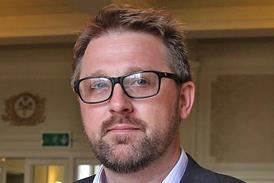









This week: Luciana Berger, Labour MP for Liverpool Wavertree
Why she matters: A fearless campaigner on a wide range of issues – most notably mental health. She has a rocky relationship with the Labour leadership – particularly on the issue of anti-Semitism – but she is widely admired elsewhere in the parliamentary party.
***
Luciana Berger is exasperated.
Not – at this moment at least – by the internet trolls who regularly send her anti-Semitic death threats (and four of whom are now serving jail sentences) or the local activists who want to deselect her because of perceived disloyalty to Jeremy Corbyn.
No, the subject of her current frustrations is the Chancellor Philip Hammond.
HSJ spoke to the Liverpool Wavertree MP in the week of the budget.
During his speech Mr Hammond announced new cash for mental health – and linked funding for crisis services to reducing stigma.
“The idea that anyone put that in the chancellor’s speech,” seethes Ms Berger in indignation. “That the introduction of crisis services is a way to tackle stigma is nonsense. It shows how far we’ve got to go that you can get away with that at the dispatch box.”
Ms Berger detects further “nonsense” in the government (and NHS England) claim that more money is being spent on mental health services
This casual approach to mental health is typical, she claims, arguing that government policy on the area amounts to a lot of “big announcements”, but that “in terms of action I have only seen an escalation in the mental ill health of our country”.
Ms Berger detects further “nonsense” in the government (and NHS England) claim that more money is being spent on mental health services.
She suspects “a lot of creative accounting” and diverting of mental health funding.
“I asked [government minister] Jackie Doyle-Price, ‘why won’t you ringfence this money’ and she said, ‘in my experience ringfences become ceilings’. Well, I’ll take the ceiling. If the money is not protected it just goes into the ether.”
Morally and socially wrong
The MP scoffs at the idea that “parity of esteem is met because clinical commissioning groups meet the investment standard. You couldn’t set the bar any lower. Essentially that means CCGs can demonstrate they are increasing the proportion of their spend on mental health, but that’s after eight years of cuts. You only have to increase your spend by 0.1 per cent and that’s meaningless when you’ve got the pressures of inflation.”
In Liverpool the young persons’ mental health service was previously cited as an exemplar for offering three-week referral to treatment times, remembers Ms Berger. Now – after a big cut in 2017-18 – there are 600 young people waiting 26 weeks for an assessment.
Even the NHS’s mental health flagship programme, IAPT, “is nothing like it was originally intended”, she says.
“It was never intended for everybody to be reliant on CBT, limited to six sessions or in a group or online or on the phone. It’s been massively diluted. They set a low bar [as to] what recovery means – and [even then the recovery] figures are pretty terrible.”
Ms Berger claims there have been nationwide cuts to community-based early intervention and prevention teams and that has led, among other outcomes, to more people with mental health conditions attending emergency departments.
This, in her view, is an example of a healthcare system “geared toward crisis”, something she claims is “morally and socially wrong, as well as financially illiterate”.
She believes government should “turn the whole system on its head” and “make prevention a whole government mission”
Part of this illiteracy is that the government “throws money” at the NHS to try and mitigate healthcare problems in the short term.
She contrasts the relatively generous treatment of some parts of the NHS with the huge cuts made to “those things in our communities that make a difference to keeping people well through their entire lives: children’s centres, schools, youth services, recreational and community centres, befriending services…”
She describes the consequences of the 64 per cent reduction in Liverpool City Council’s budget as “horrific”.
Noting that “for the first time we’ve seen an increase in child mortality” and “life expectancy gaps” are opening “even within areas of deprivation”, she believes government should “turn the whole system on its head” and “make prevention a whole government mission”.
This she recognises will be hard as the public are “very wedded to the bricks and mortar” of NHS institutions.
HSJ interviewed Ms Berger before the government revealed its prevention strategy and health secretary Matt Hancock expressed similar views to hers.
Refighting battles
Ms Berger praises Labour’s shadow health secretary Jonathan Ashworth for making “prevention and child health his priority”.
But asked whether he can convince other influential Labour figures of the importance of this focus – as opposed to, say, refighting the political battles of the 1980s and 1990s – she says: “With the current individuals who are in the current positions that will be a battle for Jonathan to have with Treasury colleagues, the leadership etc.
She believes Theresa May is sincere in her desire to tackle the “burning injustice” of poor mental health provision
“Whether Jonathan alone is able to…” she adds, trailing off into doubtful silence.
Ms Berger acknowledges and welcomes that mental health is in the public consciousness more than ever, and that this is reflected in parliamentary debates.
She also believes Theresa May is sincere in her desire to tackle the “burning injustice” of poor mental health provision. However thanks to Brexit, says Ms Berger, the PM’s “eye is off the ball”.
But while a heightened discourse “is really important for our country”, she says, “talking about it is not going to solve our mental health crisis”. Indeed, “it produces responsibility – [MPs and celebrities] talking about mental health will encourage people to come forward [for treatment] and we need to make sure there are adequate services [to meet the demand].”
Because of her ancestry and her dislike of the current Labour leadership and of Brexit, Ms Berger is subjected to hailstorm of hate via social media from both left and right.
Asked if this has affected her mental health, she says she is “very fortunate” to have both a “voice” and a “strong support structure” allied to a resilient character. She adds she is very aware that some attack in the future might be the “straw that breaks the camel’s back”.
Noting that “more permission and space [is being] given to people airing extreme and violent views”, she says it “feels like we’re going backwards in terms of tolerance” and that this will have “mental health consequences”.
Illustrating her point, she cites one of the court cases arising from the social media attacks on her.
“We heard witness statements from others affected [by attacks made by the accused]. They had far reaching impacts on [for example] their ability to go to work and maintain relationships. What happens online can have devastating consequences in real life.”
Next week: Health select committee chair Dr Sarah Wollaston
Coming up: Johnny “shit show” Mercer
If there is any political figure you would like me to interview, please email alastair.mclellan@wilmingtonhealthcare.com or if you are reading this on the website leave them in the comments box.
Past bedpans
Source Date






1 Readers' comment