


















An HSJ roundtable, in association with Johnson & Johnson, considered how the NHS can offer a consistent bariatric service
This event was fully funded and initiated by Johnson & Johnson who worked with HSJ to decide on the topic it covered. HSJ entirely organised the event and retained editorial control over it and this associated report. Johnson & Johnson was able to review this report in advance of publication for factual accuracy and compliance checks. None of the panellists were compensated by Johnson & Johnson or HSJ for their participation in the roundtable.
Obesity will be one of the biggest challenges for the NHS in the coming decades. Its complications – such as diabetes, cardiovascular disease and cancer – will be enormously costly for the NHS and society more generally.
In association with
A new generation of weight reduction medicines holds hope for some but will be expensive for the NHS and are currently only available to a small proportion of eligible patients.
Bariatric surgery is another option for some patients with a high body mass index. However, access continues to be limited, despite its proven effectiveness, with variations across the country in how easy it is for patients to be treated. This HSJ roundtable, in association with Johnson & Johnson, looked at these issues and asked what is needed to provide more consistent services.
Panellists
- Omer Al-Taan, bariatric surgeon, Luton and Dunstable Hospital
- James Byrne, president, British Obesity and Metabolic Surgery Society and consultant surgeon
- Carly Anna Hughes, GP with a special interest in obesity
- Julia McGinley, divisional business manager, Maidstone and Tunbridge Wells Trust
- Alex Miras, professor of endocrinology at Ulster University and senior clinical lecturer at Imperial College
- Catherine Thompson, associate director – planned care, West Yorkshire Integrated Care Board
- Anna Winyard, solutions architect, Johnson & Johnson
- Alison Moore, roundtable chair, HSJ
GB_JMT_DIGI_389143
Barriers to access
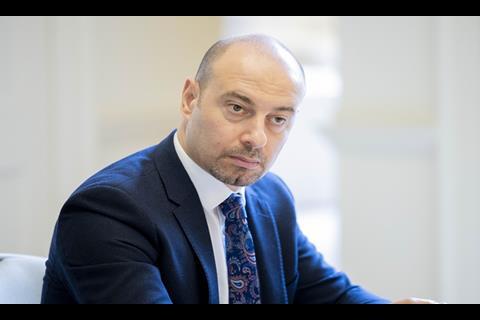

Although around 3 million people in the UK living with severe obesity meet the criteria to access specialist weight management services, only about 4,500 receive NHS-funded bariatric surgery each year, according to James Byrne, British Obesity and Metabolic Surgery Society president and a consultant surgeon at University Hospital Southampton. This is around half the number who received NHS-funded surgery pre-pandemic.
He added between a further 5,000 and 7,000 will pay for private surgery. Meanwhile, nearly as many people access surgery abroad, predominately in Turkey, which treats more than 8,000 UK patients per year. This is despite the Foreign and Commonwealth Office’s advice to exercise caution if considering travelling to Turkey for medical treatments due to the wide variation in the standard of medical facilities and treatments.
Less than a decade ago, bariatric surgery was easier to access on the NHS. Alex Miras, professor of endocrinology at Ulster University and senior clinical lecturer at Imperial College, described the situation as “the worst it has ever been… in the last eight years the numbers have gone down by half.”
Some patients with a BMI of 45 are made to go to group interventions three or four times and made to repeat the same thing several times… it is very demoralising
This drop in numbers started when bariatric services commissioning moved out of NHS England and into cash-strapped clinical commissioning groups and then integrated care boards, said Omer Al-Taan, a consultant surgeon at Luton and Dunstable Hospital. But behind the low numbers lies massive variation in access and a host of hurdles for patients wanting surgery.
These barriers can start with accessing GPs, with issues including whether patients know to see their GP, how easy it is to get an appointment, how the GP responds and what their knowledge is about obesity services, said Carly Anna Hughes, a GP with a special interest in weight management who has also run specialist services.
Some patients can be made to go through a long process to get anywhere near a bariatric surgeon, depending on what is available in their area. This has included referral into what is called a tier three weight management service – if one is available in their area. This can lead to patients spending six months or a year in these services before being passed onto tier four services, where they can potentially access bariatric surgery: “Some patients with a BMI of 45 are made to go to group interventions three or four times and made to repeat the same thing several times… it is very demoralising,” Dr Hughes said.
She said even when they progressed to tier four, they could face a long wait to see a surgeon and might regain the weight they had lost during their time in tier three, adding: “They might have to wait a year to see a surgeon. There is a whole tier of barriers, but they are not insurmountable. We need the political will to do it, we need the funds to do it and we need to get GPs on board.”

Last year the National Institute for Health and Care Excellence revised its guidance on obesity and removed the mention of tiers – which some panellists felt could enable patients in need of bariatric surgery to progress towards it quickly and could drive service redesign.
West Yorkshire has already started looking at its services and has a different approach to many areas, said Catherine Thompson, an associate director at West Yorkshire ICB with responsibility for commissioning bariatric services. “It’s a whole life course, you never stop needing help,” she said. “It is a long-term condition, and you always need to be able to go back into the service when you want.”
However, there was some scepticism about whether the guidance changes would lead to more patients getting surgery. Professor Miras – who was on the committee which drew up the new guidance – said the effect would be “zero”. Although patients would reach the surgical waiting list sooner, capacity would not increase, he argued – though Dr Hughes pointed to the importance of NICE guidance as a basis for persuading commissioners.
But even once accepted for surgery, patients can face delays. Bariatric surgery can be postponed because of other, more urgent, cases which need theatre and bed space. In many units, this can be urgent cancer treatment.
And, as so often in the NHS, siloed funding was not helping drive improvements which could deliver better services and cost savings in the long term. Johnson & Johnson solutions architect Anna Winyard said some healthcare systems were actively not following NICE guidance around fast-tracking some patients with obesity. Until funding was joined up, patients with conditions like obesity would not be prioritised because of where the benefits and costs fell, she said.

Increasing the number of bariatric surgeries will be a complex long-term process, but there are some steps the panel felt could increase capacity.
One would be providing surgery in units which are protected from the other demands of the NHS such as urgent cancer surgery and winter pressures.
“It is much better to have a bariatric surgery service on a cold site than a hot site,” said Professor Miras, while Mr Al-Taan added that, whereas services on a “hot” site might have paused for a few weeks in the winter in the past, the impact was now for longer. “If you have an accident and emergency department in your hospital, or a big medical department in your hospital, it is going to be a struggle,” he said. “Our trust tries to bend backwards to accommodate but the pressure is so much sometimes that it is a struggle.”
Because bariatric surgery was not seen as urgent, it tended to be more affected by these overall capacity issues with some services being told not to carry out operations between January and April, he said. “Every acute trust in the country has zero capacity,” he said. “Anything that they think they can postpone safely, they will.”
Ms Thompson said “hubs” could help build more specialist surgical teams and enable greater efficiency without any additional money. “It’s about the hearts and minds bit, surgeons have to be willing to operate somewhere else,” she said. “The trusts with the theoretical capacity have to be willing to let those surgeons in. We can’t make any of those changes without trust between people.”
Professor Byrne said there is plenty of capacity among surgeons to do more procedures. The roughly 180 consultant surgeons involved in BOMSS do an average of 30 NHS procedures a year, but he added there is no reason why every bariatric surgeon in the country could not do 100 operations each per year. “We have the surgical manpower to easily deliver around 20,000 procedures a year,” he said.
Every acute trust in the country has zero capacity. Anything that they think they can postpone safely, they will.
He argued while many people would qualify for bariatric surgery, the numbers who would seek it out would still be manageable and might change with new obesity drugs becoming available. France – which has more accessible bariatric surgery – does about 45,000 procedures a year, he added.
Despite the many challenges, some areas have managed to set up new services. In Kent and Medway, Maidstone and Tunbridge Wells Trust has set up a service to take patients from across the ICB area and repatriate work from London. In 18 months, it has seen 130 patients, offering relatively short waiting times.
The trust’s divisional business manager Julia McGinley said that commitment from the board and ICB alongside the involvement of passionate surgeons who were willing to make the case for the service had been important. “There is capacity for many more patients,” she said: around 1,200 patients were in a tier three service.
Ms Thompson said the NHS could also improve theatre efficiency, do an additional case per list and move to day surgery to increase capacity. However, Mr Al-Tann said Luton saw some patients as day cases but still faced challenges getting them into a bed once they left the theatre recovery area so they could mobilise and be weaned off oxygen.
There are examples from elsewhere which could hold lessons for the NHS. Professor Byrne said that the Netherlands had developed a service which had high-volume centres with surgeons in theatre all day but with six patients on each all-day list. The focus was on process and teamwork. “The standard of care is that most people should be a 23 hours stay… this is being done 100 miles away. This is not rocket science,” he said. “It’s about clinical leadership but also about surgeons working with operational managers.”

But ultimately change may be down to the willingness to invest to deliver longer-term benefits, said Mr Al-Taan. “Everyone knows that this operation pays for itself within a relatively short time,” he said. The payback time was three or four years – or within this Parliament, he said.
And Dr Hughes added: “You need to have a pathway which is efficient and helpful and gets people to the right place quickly enough. That will save you money in the long term. It will mean that you are not spending money time and time again. Some people will reverse their co-morbidities and won’t develop new co-morbidities.”
Another factor which could influence ICBs was the other costs which may be avoided by improving bariatric surgery access, such as the cost of follow-up care for patients who had operations abroad, said Mr Al-Taan. Patients living with obesity also still needed other procedures and these could be more expensive to treat because of their obesity.
Better funding for bariatric surgery may involve reprioritisation of NHS budgets. Professor Byrne said the data around outcomes – including patients’ quality of life – could drive an economic case for investment. Professor Miras suggested taking 1 per cent of the spend on each of the complications of obesity and putting this into services for people with obesity. “Everyone wins for the same money,” he said.
Does the NHS need help to achieve this?
Improving access to obesity treatments will be a complex process with multiple changes in pathways and working practices needed. But sometimes a different set of eyes on the issues can help.
Ms Winyard – who is a former NHS manager – said she had initially been very anti-collaboration with external people but had come to see the benefits working with partners could bring.
Staff in the NHS had limited bandwidth and were battling built-in inefficiencies, she said, adding: “In winter, about 90 per cent of my job was moving people around.
“J&J came in and we did a big project together and it was very different having that injection of energy. People were integrated in a way they had not been before. Those people drove the project forward… they brought skills.”
She had later seen a trust fill 21 out of 23 vacancies in its physiotherapy team with J&J’s help. “We were trying to do a productivity improvement and it became very apparent that they had a large gap in their physiotherapy team and we thought, ‘How can we help?’ It’s different, the NHS has an HR team which does everything and we have a talent acquisition team – you can hear the difference.”
“We partnered with the trust, we built them an online ‘this is your career’ if you choose to go into the field, meet the department, a university campaign.
“Sometimes we just need to step back and think what skills we can bring from somewhere else and bring that energy and focus to help people. It’s about getting that productivity back in the NHS.”
Professor Miras suggested the industry could help in several ways, including redeveloping pathways and offering online support.
Patients going abroad
One consequence of limited access to NHS-funded bariatric surgery is that patients are seeking it abroad – most often in Turkey where an operation can cost £2,500, a fraction of what it would privately in the UK.
This particularly affected patients from more deprived areas and could be a form of health inequality, suggested Mr Al-Taan, with those without easy access to NHS-funded surgery becoming targets for health tourism.
But once they return to the UK after the operations, they often look to the NHS for follow-up and to deal with any complications – sometimes going straight from the airport to hospital. Mr Al-Taan warned this was a ticking timebomb for the NHS. “We see hundreds and hundreds of people who are going abroad… it is a sign of failure of the NHS,” he said. “We do not have the means to deal with it long term.”
Dr Hughes said these patients were ending up with GPs who might not have experience of providing bariatric follow-up care. “Sometimes they might have a discharge letter, but it can be very scanty,” she added. Some patients also assumed they would get NHS follow-up and became angry with GPs, she added.
Photos of panel by Wilde Fry and videos by Daniel Kutcher