











HSJ brought together a panel of trust chief executives drawn from its annual list of the NHS’s Top 50 CEOs. Their discussion ranged across clarity of purpose for ICSs, the need for a coherent operating model and robust accountability
Sponsored by
Despite ICSs formally launching on 1 July, the chiefs said there was still no clarity about how the service would be supported and held to account as the Health and Care Bill reforms are rolled out and the stuttering covid recovery continues.
The CEOs were speaking at a roundtable to mark the publication of HSJ’s annual ranking of the NHS’s “top 50 trust chief executives”.
The panel
- Glen Burley, chief executive, Wye Valley Trust, George Eliot Hospital Trust and South Warwickshire Foundation Trust
- Caroline Clarke, chief executive, Royal Free London Foundation Trust
- Neil Dardis, chief executive, Frimley Health Foundation Trust
- Julian Emms, chief executive, Berkshire Healthcare Foundation Trust
- Beccy Fenton, partner and UK head of health and human services, KPMG
- Joe Harrison, chief executive, Milton Keynes University Hospital Foundation Trust
- Angela Hillery, chief executive, Northamptonshire Healthcare Foundation Trust and Leicestershire Partnership Trust
- Matthew Kershaw, chief executive, Croydon Health Services Trust
- Sir James Mackey, chief executive, Northumbria Healthcare Trust
- Sarah-Jane Marsh, chief executive, Birmingham Women’s and Children’s Foundation Trust
- Steve McManus, chief executive, Royal Berkshire Foundation Trust
- Paul Roberts, chief executive, Gloucestershire Health and Care Foundation Trust
- Matthew Trainer, chief executive, Barking, Havering and Redbridge University Hospitals Trust
- Eugine Yafele, chief executive, University Hospitals Bristol and Weston Foundation Trust
- Alastair McLellan, HSJ editor, roundtable chair
‘We are presiding over a failing NHS,’ say leading trust CEOs
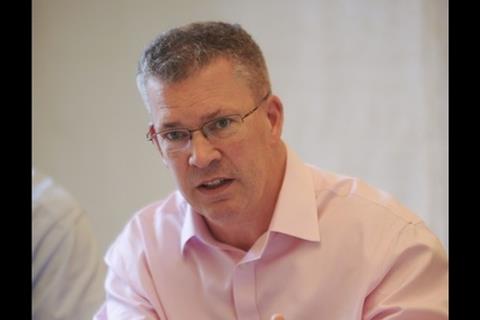
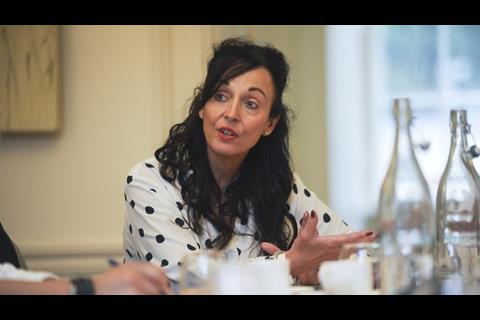
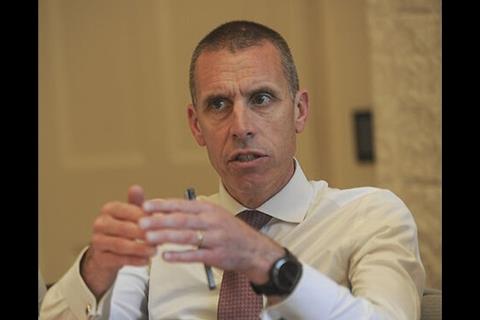
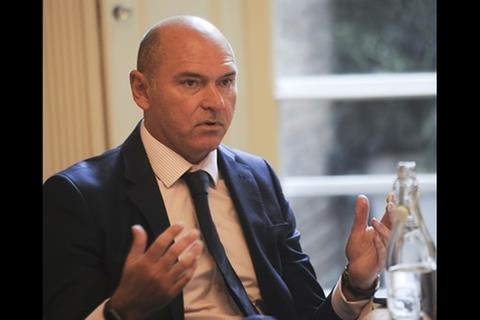
A lack of accountability is causing the quality of NHS services to crumble, according to some of the most respected trust chief executives.
They said the problem arose from four factors: the lack of an operating model for how NHS England should oversee the service, confusion over what integrated care systems should be responsible for, the lack of clarity on which standards providers should be seeking to meet, and trust leaders not holding each other to account.
The views were expressed at a roundtable to mark the publication of HSJ’s annual ranking of the NHS’s “top 50 trust chief executives”.
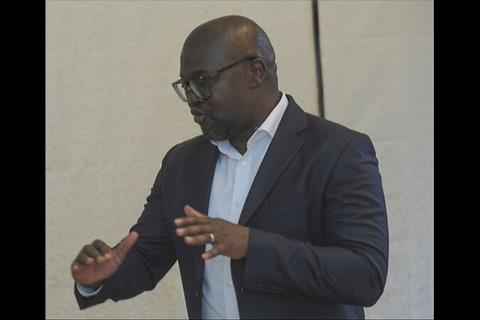
The strongest worded contribution came from Milton Keynes University Hospital Foundation Trust chief executive Joe Harrison.
He told the roundtable: “I’m really concerned about where we are at as an NHS. I think we’re in danger of all sitting around the campfire singing ‘kumbaya’ as the Titanic sinks.
“We are presiding over a failing NHS. There’s no question about it. And if we carry on like this, people have every right to say, what on earth are we spending £150bn on?”
He added that Amanda Pritchard had now been in post a year and needed to address the lack of an “operating model” and “clarity between the region and the national team.” He also said “we, as a community of chief execs have to come together” with NHSE to determine a way of working that would deliver the necessary improvements.
“I think we [trusts and NHSE] are just being really nice to each other and that’s great on the one hand, but on the other we are sinking,” he said.
Mr Harrison, who is married to the prime minister’s chief of staff Sam Jones, said there needed to be “more challenge” in the system. The pace of reform in the NHS was “unbelievably slow”.
Northumbria Healthcare FT chief executive and NHSE’s elective recovery director Sir Jim Mackey said confusion over which emergency care targets the NHS was operating to was a significant contributor to the accountability gap.
NHSE medical director Sir Steve Powis undertook a review of clinical performance standards, which – among other recommendations – said the four-hour accident and emergency target should be replaced by a suite of other access standards.
However, despite ministers expressing support, the government has yet to confirm the switch.
“We’ve lost the consumer offer in the blurring out of the ED standards,” said Sir Jim. “It’s our biggest worry. They never actually bought and signed off Steve’s proposals because there wasn’t a retail offer.”
He added: “This ‘failure’ to have clear standards that the NHS was held accountable to would ‘over time’ undermine public and political faith in the service.
“There need to be some guide rails again,” said Sir Jim. “Is it four hours? Is it four hours just for the sickest patients? We just need to work it out. Because at the minute it [the goal] is just to be slightly better than the person next door. It’s not good enough.”
Asked what the NHS should do in the face of government inaction, Sir Jim said: “Why don’t a group of us get together and agree this is the standard? Because [it would be] better than [the] crap we’re doing at minute.”
Glen Burley, chief executive of South Warwickshire Foundation Trust, Wye Valley Trust, and George Eliot Hospital Trust, said there was no “expectation” that providers would meet the standards “we used to pay our mortgages on and go into board meetings and talk about”.
Mr Burley agreed with the assertion he was not being held to account and added – referring to the ICS reforms – “this [means] everyone’s accountable bit often means no one’s accountable. And I think we need to get clearly back into who’s accountable for what.”
He concluded: “We’ve got to get back to a standard of delivery,” suggesting this would be achieved by “focus” on systems providing support for individual organisations that were beginning to “slip”.
Barking, Havering and Redbridge University Hospitals Trust chief executive Matthew Trainer said: “The service we provide in our part of London is not good enough on most fronts.
“I watch my inbox fill up with emails from people who have been in ED 14 to 16 hours. That’s the public’s perception of the NHS, isn’t it? Everyone’s got a story now about how long they’ve waited. We’ve got to change that narrative.”
Mr Trainer added there was a danger of the NHS accepting lower standards because staff felt hard done by and exhausted.
“One of the things I talk a lot about with my team is that it’s entirely possible that we’re underfunded and that we’re wasting money as well. I think that’s an important thing for us to look at.
“I’ve got a lot of friends who don’t work in the health service who had a really tough pandemic and who think we’ve had a pretty rosy time, [that] we’re relatively well protected. Those people who were losing jobs, who’ve seen businesses go to the wall, their view [of the NHS has] rapidly moved.
“There is no doubt that the NHS played an amazing role in the pandemic, but patience for protecting the NHS from the broader, economic context we’re in ended some time ago.”
On staff exhaustion, Mr Trainer recognised the stress the NHS workforce had been under, but said: “We possibly talk too much about how tired everyone is after the pandemic. If you say to people ‘you look tired’ it makes you tired. There’s a risk that we’ve entered up into quite a cyclical conversation that how tired everyone is.”
Royal Berkshire FT chief executive Steve McManus said: “We, as a group of [provider] leaders, have got to be both very clear about individual [and] collective accountability to drive up standards and performance.”

NHS England and local leaders must urgently develop a coherent “operating model” for the era of integrated care systems or see the reforms fail, said the leading trust chief executives.
Despite ICSs formally launching on 1 July, the chiefs said there was still no clarity about how the service would be supported and held to account as the Health and Care Bill reforms are rolled out and the stuttering covid recovery continues.
However, the trust CEOs also praised NHSE chief executive Amanda Pritchard for her willingness to tackle the service’s problems together with local leaders.
The CEOs were speaking at a roundtable to mark the publication of HSJ’s annual ranking of the NHS’s “top 50 trust chief executives”.
Caroline Clarke, the chief executive of north London’s Royal Free group of trusts, said: “What’s unclear to me is, what the operating model is for [the] whole NHS? What is NHSE going to do… what’s expected of the regions and the ICSs… is the performance management line [for providers] going to go all the way through the ICS?”
Ms Clarke said she recognised “some kind of regional infrastructure” was needed and that the existing set-up made sense in widely recognised areas such as London and other “urban” conurbations. But she added: “Are [regions] just going to be aggregating features of the NHS, or are they actually going to have a kind of intent to them?”
Ms Clarke said she was “hung up” on getting an effective operating model because, without it, there was an increased chance NHSE staff would “get in the way and stop us making decisions”.
Frimley Health Foundation Trust chief executive Neil Dardis said parts of the system were struggling to “understand their purpose.” He thought both NHSE’s national team and local providers were “really clear” on their purpose, but there was a “sticky middle” consisting of regions and ICSs that were not.
“I think we may have been caught in this trap between kind of local determination and permissiveness versus real clarity of purpose,” he concluded.
Royal Berkshire FT chief executive Steve McManus also picked up on the “permissiveness” of the reforms and how they could “bake in” regional variation. He said NHSE’s national and regional teams needed a clear operating model which would address the issue of “how do we have consistency of performance, quality and access around the country”.
Birmingham Women’s and Children’s FT chief executive Sarah-Jane Marsh admitted she did not “understand” how NHSE proposed to manage the service.
Ms Marsh, who also chairs NHSE’s Maternity Transformation and the Children and Young People Transformation programmes, said the lack of clarity around the service’s new operating model in part stemmed from NHSE’s own internal problems.
“I’m not sure that there’s enough focus on actually running NHS England as an organisation of a significant number of people,” she said.
Gloucestershire Health and Care FT chief executive Paul Roberts told HSJ: “We’re in a very complex transition at the moment… [and] NHSE is going through a very big reorganisation itself. There are lots of moving parts, and the complexity of that challenge for Amanda and her team is huge. She hasn’t got long to sort it, actually, because we need that [the operating model] to be clearer.”
Northamptonshire Healthcare FT and Leicestershire Partnership Trust chief executive Angela Hillery said: “We haven’t got the clarity about who plays what roles, and that is confusing.”
She added the NHS could not “ignore” the “complexity” of new reforms or “assume” they would be managed “through an ICS”, and said NHSE needed to “spend more time thinking about how they consider complexity and how you then… construct the supporting architecture”.
Beccy Fenton, partner and UK head of health and human services at KPMG – which sponsored the Top 50 – said the trust chief executives she spoke to said there was a “complete lack of clarity around the operating structure from top to frontline that needed sorting out”.
She continued: “Who is responsible for what, and how is that going to work to deliver a different agenda? And the agenda is different now, it is [improving] population health.”
The NHS’s leading provider chief executives have cautioned newly established integrated care systems against over-reaching themselves.
The CEOs were speaking at a round table to mark the publication of HSJ’s annual ranking of the NHS’s “top 50 trust chief executives”.
The chief executives were especially adamant that integrated care boards or systems should not seek to interfere with the working culture of their trusts.
Northumbria Healthcare FT chief executive and NHSE’s elective recovery director Sir Jim Mackey said that ICSs should not tell chief executives “how to run hospitals. Don’t tell us what band people should be getting paid at”.
Sarah-Jane Marsh, chief executive of Birmingham Women’s and Children’s FT, said there were tasks that were “distinctly” the responsibility of providers or “strategic commissioners”, and “then the bit of overlap, which is I think where we should be working together”.
She continued: “There is some tension between what the responsibility of a provider is and what sits in the overlap.” Ms Marsh stressed that issues such as how people are managed and rewarded were “profoundly cultural and perhaps not something which can be centralised in an ICS”.
Caroline Clarke said she felt “really strongly” that as the chief executive of a group of hospitals – the Royal Free London FT – it is “my job” to manage the local “labour market and rates” for temporary staff. However, she added, “some people think that actually that’s an ICS role”.
University Hospitals of Bristol and Weston FT chief executive Eugine Yafele said: “There’s a real tension between the opportunities that create [longer-term] solutions to today’s problems and the challenges of quality, and how you manage risk. And I don’t see my board, I don’t see myself delegating that [latter] responsibility to anyone else.
He said his trust was playing an “active part in the system” as it helped address “some of the issues that we’re grappling with”. But he added this sometimes created tension with “dealing with the ambulance queues, the safe handovers and everything else that we’ve got to do.”
Croydon Health Services Trust chief executive Matthew Kershaw called for “benign ICSs” which would add value by supporting local organisations to deliver, rather than “malign” ones which over-reached themselves. “I don’t think it [the ICS] should be doing my job every day.”
The CEOs also expressed concern that ICSs have spent too much time on governance.
“When I look at the focus on governance around the ICS, that’s been taking up 80, 90 per cent of the time”, said Joe Harrison, chief executive of Milton Keynes University Hospital FT.
Glen Burley – who runs three trusts across two ICSs – said: “I’m trying to isolate some of my team from that [the development of ICS governance], fearing they would become “distracted”.
The birth of ICSs is, however, meaning trusts are having to operate differently.
“I am having different conversations with my board and my direct reports because I no longer feel that just managing my financial situation will deliver us what we need at the end of this year. I need to have half an eye on what’s happening in my other provider colleagues, because if I don’t, we’re not getting any capital,” said Mr Kershaw.
And Julian Emms, chief executive of Berkshire Healthcare FT, which is part of two ICSs, said: “In two ICSs you can spend a lot of time in systems reading papers on all the rest of it and I’ve changed my approach to it. And I think my best asset in the ICS is energy – and energy on something that will make a difference. So I’m doing something around the temporary workforce staffing across both ICSs because I think it will actually deliver something.”
Beccy Fenton, partner and UK head of health and human services at KPMG – which sponsored the roundtable – added there was a lack of clarity around what roles ICSs were meant to fulfil. Were they regulators, commissioners or some form of strategic health authority?
“There’s a huge variation in people’s thinking,” she said. “They all seem to be very consumed in the governance, which a lot of people have been saying is just going to create an additional layer of decision making.”
Angela Hillery, who runs two trusts in the Midlands, suggested the best ICSs would look at themselves as an ecosystem rather than an organisation: “They will facilitate and empower providers to do what they need to do, and they’ll understand where they add value,” she said. Provider collaboratives were also important, she added, and were often leading work on transformation.
Steve McManus, chief executive of the Royal Berkshire FT, said: “How we frame the organisational strategy is completely intertwined with being part of a wider system. How I work with other providers around particularly elective recovery is a big shift, There’s definitely an acceleration of things like mutual aid and collaboration.”

NHS England chief executive Amanda Pritchard has been praised for transforming the organisation’s relationship with local leaders by the NHS’s most highly regarded chief executives.
At a roundtable to mark the publication of HSJ’s annual ranking of the “Top 50 NHS trust chief executives”, the invited CEOs all voiced strong support for the collegiate approach being taken by Ms Pritchard.
Northamptonshire Healthcare Foundation Trust and Leicestershire Partnership Trust chief executive Angela Hillery agreed the relationship with NHSE felt more “collaborative”.
Caroline Clarke, the chief executive of north London’s Royal Free group of trusts, said it was “great” Ms Pritchard and her team were “amplifying” the importance of good relationships between national and local leaders.
Despite saying Ms Pritchard did not have much time to clarify the service’s operating model, Gloucestershire Health and Care FT chief executive Paul Roberts said he favoured giving “her some space personally” because of the complexity of the challenge.
He added he was “glad she’s involving people with experience of our sort of roles in that process because I trust those people to speak some sense”.
This point was backed up by Glen Burley, chief executive of South Warwickshire Foundation Trust, Wye Valley Trust, and George Eliot Hospital Trust.
He said Ms Pritchard “gets” what trust chief executives are responsible for, adding she both “respects” and “seeks to use” provider chiefs’ expertise.
University Hospitals Bristol and Weston FT chief executive Eugine Yafele said: “What gives me some confidence is we now have people in the NHSE leadership who’ve been there and have done that [run NHS providers].”
Barking, Havering and Redbridge University Hospitals Trust chief executive Matthew Trainer claimed his organisation’s relationship with NHSE was more constructive than in the past, despite the many challenges in its performance.
“We are in the recovery support programme and it does feel different from previous regulatory regimes,” he said, adding NHSE’s efforts to support the trust’s struggling accident and emergency departments were “actually about safety [and] not about performance”.
Frimley Health FT chief executive Neil Dardis said he had noticed “a different approach from NHS England national and regional teams”, with more two-way communication.
Royal Berkshire FT chief executive Steve McManus agreed the relationship with NHSE felt different “in tone, intent [and] accessibility”.
The roundtable took place before the most recent NHSE board meeting, in which Ms Pritchard announced she was planning to reduce the organisation’s headcount by 30 to 40 per cent.
All the chief executives at the roundtable wanted NHSE to be much smaller, with Ms Clarke calling on the NHSE CEO to do a “big, brave thing” in relation to what her organisation should be responsible for, and therefore, how many staff it should have.
On the day of the board meeting, Ms Pritchard told staff: “NHS England must now change the way we work and how we support leaders in local systems and providers to deliver our shared core purpose of high-quality services for all. We must create the space to allow systems to lead locally, working alongside our seven regions.
”This means we need to reduce the size of NHS England and be rigorous about what we do, only undertaking activity at national and regional level, where it is necessary to do so.”
She added: “The new NHS England will still have a vital role, but it will be more focused on enabling and supporting change through an organisation that can speak with a single national voice, remove duplicative activities, and model this effective joint working.”

A command and control leadership style still has its place in an NHS focused on working as a system, the service’s leading provider chief executives have declared.
They were speaking at a roundtable to mark the publication of the HSJ’s annual ranking of the NHS’s “top 50 trust chief executives”. The list, which is sponsored by KPMG, was topped by University Hospitals Bristol and Weston boss Eugine Yafele.
The judges had made a point of selecting those CEOs whose leadership appeared to mark a break from the more directive approach favoured by trust leaders in the past.
However, Mr Yafele told the roundtable: “I don’t want to demonize control and command. It has a place.
“The challenge of leadership is knowing which lever and which approach to use,” he added “There are times where you say, come on, guys, hunker down, this has to happen, and it has to happen now.”
Steve McManus, the chief executive of Royal Berkshire Foundation Trust, took “direct offence” to the use of the word “gentler” in the judges’ description of the new breed of trust chief executive.
He said he feared it sparked off a chain of association which ran “gentler to soft, soft to weak, weak to lacking accountability”.
Despite having been “on the wrong end” of “toxic and inappropriate” leadership” which had led him to question whether he had a future in the service, Mr McManus said there was still a “time to be directive”.
He pointed out that in the world of integrated care systems and provider collaboratives that might mean being “directive to our peer colleagues within a system. We’re all in this together now in many ways and we have to hold each other to account.”
Matthew Trainer, the chief executive of Barking Havering and Redbridge Trust, told the roundtable: “I don’t think command and control is inherently bad.” He said problems arose when leaders did not “delegate suitable authority” having made a decision.
“If you take a decision and say crack on with this, [but then] don’t allow them to make decisions without running them past you”, problems emerge, he said.
Frimley chief executive Neil Dardis said “command and control” and “compassionate leadership” could “come very much hand in hand”.
Birmingham Women’s and Children’s Hospital chief executive Sarah-Jane Marsh said it was “a complete myth”, that supportive leaders could not also be challenging ones.
“The people who are more supportive, [who] focus on the culture, are the people who are more likely to have proper difficult conversations and challenge [others]” she said. “Shouty” leaders, she added, tended to go “sliding on the surface” of an issue.
“Some of these people [the new breed of trust CEO] will be the most challenging people in the NHS, but they wouldn’t be necessarily going around and hitting tables or throwing things or various other things that one may have encountered.”