


















The fortnightly newsletter that unpacks system leaders’ priorities for digital technology and the impact they are having on delivering health services. This week written by senior correspondent Nicholas Carding. Contact HSJ in confidence here.
Last month’s Budget saw £3.4bn pledged for NHS technology from the next financial year, which begs the important question: how will this be spent?
The options are many.
Keep digitising old NHS infrastructure, expand remote care, improve data use, test more AI tools, speed up new standards and interoperability, strengthen cyber defences, focus on digital triage, add functionality to the NHS App, or innovate through research and development?
The answer will be – to some extent – all of the above, but some types of technology will get more attention and resource than others.
So which area is the most important?
NHS chiefs are yet to decide, with NHS England chief executive Amanda Pritchard this week meeting local CEOs to discuss where the digital priorities should be.
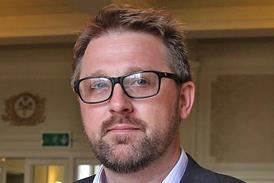
Another influential – and familiar — voice in the discussion belongs to Tim Ferris, NHSE’s former head of transformation.
As HSJ today reveals, Dr Ferris is advising the regulator on where the investment should be directed and what can be achieved.
NHS faces ‘crisis’
Some clues to his views can be found in a new article by Dr Ferris in the Future Healthcare Journal last month.
Entitled Unit Cost and Hope: Increased NHS Resilience Through Tech-Enabled Transformation, the piece states the delivery of health services in the UK is “facing a crisis”.
This crisis is driven primarily by the fact that the workforce is too small, burnt out and constantly under pressure to deliver greater productivity amid rising demand.
He speaks directly to the P word – productivity – which has been reverberating around the corridors of NHSE and government, as well as well as the executive corridors of many a local trust and care board, over the past year or so.
Dr Ferris – a well-regarded medical tech leader in his native US – says: “Healthcare needs a new chassis – one that is capable of delivering many more services with a similar number of people.”
The explosion of technology is even contributing to the problem, Dr Ferris notes, with biotech producing more cures that will require more resources.
The only solution, therefore, is “technology-enabled transformation”.
This transformation will require many changes to the way technology is currently used in the NHS, with several themes unsurprisingly bearing quite the familiarity with Dr Ferris’ focus during his time in NHSE.
He cites several technologies which have the potential to “impact every clinical role and patient in healthcare”. One such tech is “patient decision support”, mainly in the shape of apps that provide increasingly personalised information to their user.
Dr Ferris says that, while apps currently enable patients to view medical records, renew medications and schedule appointments, the goal should be to develop tools that can “answer medical questions using a patient’s own confidential health information”.
He writes: “Technology exists that would enable the user to choose to have their information reviewed, becoming native to the device for an instant, performing an analysis, and then serving up the results of the analysis without retaining any of the original data.”
This could include information obtained through patients’ remote monitoring tools.
Another solution is “multi-modal clinical decision support”, which is based on different types of data such as patient symptoms, imaging, blood tests and medications, producing diagnosis and treatment recommendations. Currently, the scope of CDS in the NHS is nowhere near this.
Dr Ferris also finds space for one of his oft-cited areas of technology – namely “ambient documentation”.
These tools, which are fast-developing, could “combine voice-to-text tech with large language modules to produce clinical grade documentation – a physician’s note, a referral letter and a patient summary – all within seconds of the completion of an encounter between a patient and clinician”, he writes.
He said the potential for the technology to “dramatically improve” clinicians’ time was “difficult to over-state”.
No new national solutions
However, Dr Ferris acknowledges none of the above can possibly come to full fruition without a strong digital infrastructure.
Currently, this is “highly variable and disorganised”, meaning there would be clear benefits to creating a more “organised and simplified technology infrastructure”.
Interestingly, given his previous position, Dr Ferris notes that “despite several well-functioning national technology platforms, England may be too large for (and culturally suspicious of) more national solutions”.
Instead, he suggests “teams of national, regional and local NHS technologists that work closely to organise tech within each ICS”.
What he doesn’t say is how this structure would be different from the current landscape, which does have technology represented at local, regional and national level.
Dr Ferris also omits another crucial factor which NHSE and the government must bear in mind when prioritising how to spend the £3.4bn: stability.
Ultimately, it does not matter what the money is spent on if a portion of it is chopped off to fill a financial hole elsewhere in the NHS budget, or if the organisation in charge – in this case NHSE – goes through round after round of further restructuring.
Leadership of tech in the NHS has for too long been just as dispersed, disrupted, and disorganised as the state of technology across the health service itself.
If that continues, no amount of funding will bring about the tech-enabled transformation envisaged by Dr Ferris and the government.






1 Readers' comment