


















In association with

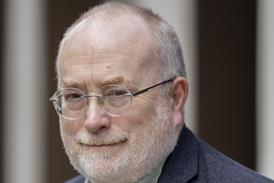
In this video, HSJ’s senior insights correspondent Jack Serle speaks with the Less Survivable Cancers Task Force chair Anna Jewell and London School of Hygiene and Tropical Medicine professor of epidemiology and vital statistics Michel Coleman. Together, they discuss how survival gains have stalled in recent years, particularly for less survivable cancers, and what can be done to change this.
Jack Serle
Hello. I’m Jack Serle, senior insights correspondent at HSJ. Welcome to the next episode in the Cancer Project Zero video series in partnership with AstraZeneca. One in two people in the UK will develop cancer during their lifetime, making it one of our greatest health challenges. Cancer: Project Zero explores the bold ambition to one day eliminate cancer as a cause of death. By asking the right questions and shining a light on innovation, we can understand what it will take to get there.
In this episode, we’re focusing on rarer cancers where survival outcomes have not improved at the same pace as other cancers. Today, we’ll be exploring how early and equitable diagnosis could make more cancers survivable. From improving awareness of symptoms to using multi-cancer early detection technologies and bringing diagnostics into the community, we’ll discuss how we can close survival gaps and deliver earlier, fairer detection for everyone.
I am delighted to be joined by Anna Jewell, chair of the Less Survivable Cancers Taskforce and Professor Michel Coleman, professor of epidemiology and vital statistics at the London School of Hygiene and Tropical Medicine.
So, Michel, can you first remind us, what are the cancers we’re talking about here, these rarer or harder to treat ones, and what makes them rarer or harder to treat?
Michel Coleman
The cancers that are most hard to treat, and for which survival tends to be the lowest of all the various cancers in adults, are those of the brain, the pancreas, the oesophagus, or the gullet, and they’re particularly hard to treat because they’re difficult to diagnose early. The symptoms are vague, and people who don’t know that they have a cancer but just have vague symptoms, it might be pain in the belly or loss of weight or just general discomfort. And it may be that by the time they reach their primary care physician and seek help, the idea of a cancer doesn’t come up in the GP’s mind. I’ve been a GP in my time, and GPs see thousands of patients, the vast majority of whom do not have a cancer. And when the symptoms of an oncoming cancer are vague, it may be very hard for the physician to say, “Hey, wait a minute. This one needs urgent referral for a formal diagnosis.”
And so, the result of that is that for cancers such as pancreas or oesophagus or stomach, it may be that the cancer has already spread outside the organ of origin to some adjacent organ, or is either spread elsewhere around the body, in other words metastasis, before a formal diagnosis is made. And if the cancer has spread elsewhere in the body, then curative treatment is likely to be impossible. But if the cancer can be detected at an earlier stage, where it’s when it is still confined to the organ of origin, such as the stomach or the pancreas, then curative surgery can be attempted to remove all of the tumour, and perhaps with ancillary treatments such as radiotherapy or possibly drugs that can help mop up cells of the cancer that are still there. And that’s a situation that unfortunately doesn’t occur often enough with the cancers that we’ve been talking about so far.
Jack Serle
Just thinking on the sort of technology potential that exists, so there’s obviously lots of work that goes into thinking of new ways of diagnosing and identifying cancers across the board. Multi-cancer, early detection technologies, liquid biopsies, genomic profiling, what’s the potential that they have here for bringing the detection of cancers to an earlier stage?
Anna Jewell
I mean, we think they’ve got huge potential. Hugely excited by the arrival and that lots of pieces of research happening at the moment into these sort of bio-marker tests. So, we’ve seen, we’re funding one at Pancreatic Cancer UK, where I’m based, that’s looking at a breath test. We know there’s a blood test being looked at for brain cancers. But those are sort of individual cancer tests that could help in primary care for clinicians to triage who needs to go on for further testing, who might be at increased risk of a cancer. But the idea that we could have a multi-cancer detection test that would actually, we’d be able to detect a number of cancers all at once is hugely exciting, because I think that could be a real game changer in terms of improving the speed of diagnosis. You know, then it means that if someone goes through to primary care, if the GP thinks they’ve got vague, persistent symptoms that they’re not sure about, rather than thinking they’ve got to necessarily, as a first step refer on to quite an expensive scan or to see a specialist, there actually there would then be a test that could help them identify those that need to go on for that further testing. So, it would be a huge game changer, I think, in terms of making sure we get people diagnosed faster.
Michel Coleman
Let me broaden the response to your question by saying that we already have technologies that we know work, which are not being sufficiently widely used. The most obvious is screening. Population-based screening for, I won’t call them patients, people who are incubating, if you will, a cancer that is early, that is there, but hasn’t yet caused symptoms that have led the person to see a physician or a health professional. Screening for breast cancer, cervical cancer and colorectal cancer, large bowel cancer, these tests or these systems have been around for many years, and they have proven their efficacy, but they’re not sufficiently widely used. The take up for breast cancer in the women who are invited for breast cancer screening is now pretty high – over the order of 80 per cent or more. But for cervical cancer and colorectal cancer it’s not so good, and until the proportion of people who are invited systematically nationwide in a particular age range to come and be tested for quiet cancer that they have but haven’t yet had symptoms from, until the proportion of people accepting a screening invitation and go and get tested, then earlier diagnosis is a goal that hasn’t yet been sufficiently achieved.
Jack Serle
Taking a more of a stratified approach then – a national screening campaign. And I guess we’re talking about several different routes into diagnostics here, through either screening programmes or surveillance or through primary care services. I imagine it’s going to be a combination, but how do we build sort of the most equitable kind of diagnostics pathway here? Do we need to be weighing heavily on primary care? Do we need to be weighing heavily on screening? Is there a way of creating something that can ensure that kind of equitable access across different socioeconomic groups, etc?
Anna Jewell
I mean, I think we definitely have the overall building blocks for doing this. Actually, we’re quite excited to see some of the new innovations and new health improvement programmes that have come through. And also, things like the non-specific symptom pathway is fantastic, I think, for helping detect or pick up people with vague symptoms. We’re seeing that do really well for pancreatic cancer and other liver cancers, other hepatobiliary cancers. We’re also seeing things like moving diagnostic clinics into primary care closer to people’s home and increasing GP access to tests and screening so that they don’t necessarily have to refer into specialist centres. That’s helping. I think, also making sure we’ve got things like case control finding and best practice timed pathways as well to try and ensure that people are moved through from first identifying the symptoms into diagnosis as quickly as possible. All of those things actually give us real building blocks to actually already, you know, try and get people diagnosed quicker. I think we need to make sure that there’s equitable access to that. And at the moment, what we’re seeing is that there isn’t necessarily the long-term funding available to roll out these health improvement programmes continuously. So sometimes they might be funded by cancer alliances to get the pump primed, but then actually at the end of that time, they need to be picked up by local commissioning. And that doesn’t always happen routinely. I think that’s where we start to see inequity and that sort of postcode lottery develop. But I think we also need to be making sure that where we’ve got new health improvement pilots that we’re piloting, that we’re testing, that we’re making sure that we’re rolling those out in places with higher socioeconomic deprivation, places with higher inequalities, so that we can make sure, again, that those communities are targeted, as we’ve seen, as I said, really successfully done with lung cancer health checks, and where we’ve seen that lead to an earlier stage of diagnosis in more deprived areas.
Jack Serle
You mentioned earlier about the vagueness of the symptoms when people present in primary care. Is there something that can be done to equip GPs and their clinical colleagues with either the knowledge, or, as we’ve touched on, the technology to give them the confidence and the capability or capacity to do more on this earlier detection piece?
Michel Coleman
Yes, I think there is. There are tools, computer-based tools that GPs can have access to now that assist them to assess symptoms. I’m thinking particularly of colorectal cancer here, large bowel cancer, where the symptoms that can be vague, but if they come up repeatedly, then a GP can use the IT tools or computerised tools that are available to check whether the combination of symptoms and the frequency or severity of those symptoms being reported by the person in front of them require or generate a red flag that should lead to a rapid referral. This so-called two-week wait has now been formally abandoned by the previous government, but nevertheless, rapid referral for attention with such a tool is then useful. But I think it’s also important when GPs have, as almost all GPs now do, computerised systems that flag either previous admissions to hospital or previous symptoms, that might, in due course, flag a cancer that is developing, especially when it relates to a family history. If they have taken a family history and they know whether first-degree relatives have had a particular cancer, typically say breast cancer or colorectal cancer, whether when those come together with symptoms that are potentially suggestive, then that should lead to referral for investigation. And one of the problems about early diagnosis here is system wide. Anna, you spoke about access to focused screening in areas of deprivation where it’s more difficult to get people to come for help. But the government also has a role in enabling earlier access to care by ensuring that the target times for referral, between referral and treatment, which have typically been 60 days, or if you will, a couple of months, between the GP referring someone for a diagnosis and if it turns out to be a malignancy, treatment having begun within that two month interval, those targets have not been met. They were also abandoned because the proportion of people who should have had treatment begin within that two-month window from referral for what turned out to be a cancer, those proportions have been much lower than the target set, and they need to change.
Anna Jewell
I would definitely agree with Michel that we see another big issue, particularly for the harder to treat or less survivable cancers, is not only that pathway, the speed of the pathway into diagnosis, but then the speed of the pathway into treatment as well can just be far too long. And for people that have a prognosis where, if you’re looking at pancreatic cancer, half of people will die within three months. You need to swoop it up. You need to give more people the chance to be able to have some kind of active treatment to help them survive longer with these cancers. So, we definitely want to see optimal care pathways introduced, I think optimal care timed pathways introduced to get people not only diagnosed but treated quicker. And therefore, you know, hopefully that will see more people able to have treatments, the symptoms managed better, and hopefully more people surviving cancer.
Jack Serle
We’re talking about a relatively discrete group of cancers in this conversation, but your research, published recently, found a rather unsettling trend across the board, looking at cancers as a whole. I wonder if you’d mind just quickly outlining your findings.
Michel Coleman
Okay, thank you. We looked at cancer survival across almost 50 years, from 1971 to 2018, using data from the National Cancer Registries in England and Wales that capture a basic data set on everyone who is diagnosed with a cancer. And these registries have been complete and remarkably accurate over all of that period. They’ve been going, in fact, earlier than 1971. And we were able to study the outcomes in more than 10 million patients diagnosed with cancer in England and Wales over that period. And we produced an index that combines the different patterns of survival. You were talking about very poor survival and very good survival cancers. We could combine them together produce a one number index that is designed to help government assess progress in cancer control using the health system as a whole, the NHS as a whole, if you will. What did we find? We found that there has been a substantial increase in this index of survival up to 10 years after diagnosis, in the 40 years from 1971 to 2011. So that now, the probability of surviving at least 10 years after diagnosis, which was something like 25 per cent in the 1970s is now almost exactly 50 per cent. Unfortunately, however, this index has not increased as steadily and as importantly, over the last 10 or 11 years. So, there’s been a clear slowdown in progress in cancer survival, taking all cancers together, both the common and the rare and the high survival and the poor survival, using this single number that is directly comparable across 50 years. And what government needs to see is that this slowdown in cancer survival for all cancers combined reflects a crisis or major system-wide challenge for the NHS. It’s not one thing in particular; it’s not the treatment for a particular cancer, whether that be surgery, radiotherapy or some form of chemotherapy or immunotherapy. It’s the system as a whole that is not allowing development of survival for all cancers combined as quickly as it has been, despite the fact that in the last 10 years or so there have been major advances in both surgery, radiotherapy and chemotherapy and immunotherapy, which have improved one or the other, or in combination, the survival for a number of cancers both common and rare. And so, despite the availability of these technologies, we haven’t seen the continued growth in overall survival for all cancer patients, even after we compensate in our estimates for the fact that cancer patients can and do die of other things than their cancer. We’re looking at all cancer patients, not just those who happen, unfortunately, to die of the cancer with which they’ve been diagnosed. What is the solution here? Well, partly, it’s money. And let’s be obvious about this, the health service is not adequately funded. It has been on more or less a standstill of funding for 15 or 20 years, and that needs to change. The government needs to fund the health service more generously, and it needs to make available more physicians, surgeons, oncologists to treat the malignancies that are becoming more common. Colorectal cancer, bowel cancer that I’ve mentioned, has become rapidly more common in individuals under the age of 30 in this country. It’s not unique to this country. It’s been seen in the US, in New Zealand, in other countries. We don’t know why it’s happening just yet, but what we do know is that if that increase in colorectal cancer in young people carries through generationally, that in the next 30 years or so, the proportion of cancers that are in the large bowel will be massively higher than it currently is. The government needs to enable the health service to be prepared to deal with that. We need to train more doctors, more nurses, more radiotherapists. We don’t have enough radiotherapy machines in this country to meet the International Atomic Energy Agency standards of one per 500,000 – one linear accelerator, one radiotherapy machine. We don’t have enough. We have fewer than in many comparator countries in Western and Northern Europe. And that is partly the reason why it’s difficult to treat all patients as quickly as would be advisable.
Jack Serle
I meabn, anybody working in a policy environment will have to, sadly, acknowledge, you know, in a resource-constrained environment, you have to make trade-offs. And I wonder, when we’re looking at designing systems into the future and ensuring that those pathways from diagnostic into treatment flow more quickly, that we don’t start to build in inequities. And some of these harder-to-treat or rarer cancers continue to be left behind, let’s say. Or we run the risk of being left behind. How do we guard against that?
Anna Jewell
I mean, definitely, when we’ve seen the implementation previously of health policy, or cancer policy, and sort of new interventions, the piloting of new schemes, it’s tended to be piloted in the most common cancers, not the rarer or less common cancers. And I think so, it’s a change in emphasis, I think it’s a bit of a change in strategy, not to disservice those other cancers, but we need to think actually, you know, when we want to pilot new ideas, new innovations, can we make sure that we’re thinking about those harder to treat groups? And actually, we would argue sometimes that if you can get it right for those harder to treat groups first and make an innovation work for them, it’ll be easier to roll it out in those other cancer types. So, I think we definitely need to see that sort of strategic leadership that says, actually, we will focus on these harder-to-treat cancers. We won’t ignore them. I think we also need to see more research coming through for these cancer types as well. We need new treatments coming through for these cancer types. Unfortunately, that is about funding as well. You know, it’s difficult and in a sort of funding strapped environment that we’re in, but we definitely need to see, you know, we get such a small proportion of the cancer research budget, and that needs to change, and that’s why we’re excited about developments like the Rare Cancers Bill that will come through and hopefully give some more, I think, that strategic leadership, really, that emphasis, and also that thinking about long-term funding, sustainable funding. How do we make sure that really good ideas that are working in these cancer types are funded steadily and are implemented, and we look at the outcomes, and we look at the benefits of these new innovations coming through.
Jack Serle
So, you mentioned data, and from both of your perspectives, what more can be done, do you think, to ensure that we continue to have plentiful data, but also the right kind of data to support the kind of work that we’re talking about here?
Michel Coleman
The National Cancer Registry for England has moved between four hosts in the last 10 years. It has caused disruption about the quality, completeness and timeliness of data. Now, all of those factors are still quite good, but they’re not optimal. And one way that would enable us to enable epidemiologists and, indeed, trialists, to answer some of the hot questions about cancer is to ensure that all of the relevant data items about cancer outcome are captured for every patient. That’s not the case at the moment. We need to be able to link the National Cancer Registries that capture a basic minimum data set about every cancer patient, as I mentioned earlier, and have those data items complemented from some of the clinical audit databases where a great deal of data, a great deal of detail, is entered by the clinicians about the treatment of patients, let’s say, with lung cancer, bowel cancer, or tumours of the brain, and to bring that together with data from the 57 radiotherapy units around the country, and to feed that systematically into the National Cancer Registry. And I have to say that, having dealt with the cancer registry, indeed managed it at a national level for decades. I’m a little disappointed about the speed and efficiency with which data of that kind can be prepared and delivered. Once again, this is not the fault of individual people in the National Cancer Registry or the National Disease Registration Service. It’s disruption that arises from government failing to see the need for long-term stability, not just political stability, but financial and organisational stability of a cancer registry, to make sure that it captures all of the significant data over a prolonged period.
Anna Jewell
I would definitely agree with Michel. I think data has been critical in terms of us helping to understand, really what’s happening on the ground in the care and treatment of people with less survival cancers. You know, for many years, actually, we didn’t have much data available on some of our cancer types. Often the data was aggregated together, so you couldn’t actually see what was happening for one cancer type. We didn’t have clinical audits, and it was really hard to, you know, we could see that there were problems with outcomes for treatment, for our less survivable cancers, but couldn’t always get to understand what was causing those problems. And when you have the data, it’s power, as we all say. But you know, when you can see that data from things like clinical audits, you can really understand, actually, where are there barriers in the system? Where can we implement solutions, you know, what innovations are leading to better outcomes, and how can we roll those out? So, I think, particularly with more and more AI techniques and technology coming through, I think that ability for us to learn from that data has been speeded up. So, I think it’s critical actually, that we have that improved access. And also, I think, to help us understand inequalities, which we’ve talked a little bit about today, I think the ability to potentially link up the outcomes data with socioeconomic and demographic factors would be really powerful as well to have a sense about which communities are we not meeting, and how can we improve their outcomes as well.
Michel Coleman
The pandemic should have taught us a lesson. During the covid-19 pandemic, not just in this country, but something like 200 countries around the world, it was possible to see daily reports of the numbers of cases and the numbers of deaths from covid in central databases in Sweden and in the US. And so, you could follow the course of the pandemic incredibly quickly and efficiently. Most of the communicable or infectious diseases in this country have to be notified to the relevant authority by law. The same is not true for cancer. This is very strange. Infectious diseases cause something like 1 per cent of all deaths in this country. Cancer causes something between 27 and 29 per cent of all deaths. And yet the law that would require capture of those data from every possible source for the foreseeable future is not available. Opportunities were missed in this country in 2000, and they were missed after the covid-19 pandemic, to pass a suitable law making cancer registration a legal requirement.
Anna Jewell
And I think you mentioned there, Michel, the speed of being able to access that data. I think at the moment, there are long time delays. And it takes us a long time to be able to see actually the impact on survival – one-year survival, five-year survival – or the impact on stage of diagnosis. And if we had quicker access to that information, it would be incredibly powerful and helpful as well.
Jack Serle
Thank you to Anna Jewell and Professor Michel Coleman for sharing their insights today. In this episode, we’ve explored why progress in rarer cancer survival has slowed, and how renewed focus on early diagnosis, equity and innovation can change that story. From community diagnostic hubs to cutting-edge tools like liquid biopsies and genomic profiling, we’ve heard how new approaches can help identify the hardest to detect cancers earlier and more fairly.
Thank you for joining us for this latest episode of Cancer: Project Zero. We hope today’s discussion has inspired you to consider how we can make every cancer survivable and bring us closer to a future where zero people die from cancer.
The views expressed are those of the individuals and not those of AstraZeneca or any other organisation
To find out more about AstraZeneca’s Cancer: Project Zero campaign, click here.
GB-71643 November 2025
Topics
WATCH: Is precision medicine the future of modern cancer care?

Welcome to the first video in our series, created in collaboration with AstraZeneca for Cancer: Project Zero.
- 1
 Currently
reading
Currently
reading
WATCH: Closing the gap – Ensuring survivability for all cancers
- 3
- 4
- 5