



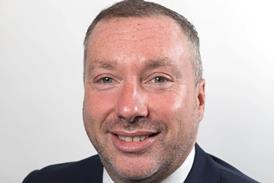














HSJ hosts the Patient Safety Watch newsletter, written by Patient Safety Watch chair Jeremy Hunt
Good afternoon, and welcome to this fortnight’s edition of the Patient Safety Watch newsletter. With the interim Amos report out, there’s a big focus on maternity this week.
Baroness Amos’ interim report: diagnosis must turn into delivery
Baroness Amos has published the National Maternity and Neonatal Investigation’s interim report, which landed with a sense of deja vu for most of us. Recurring themes around accountability, culture, teamwork, and a failure to learn from mistakes are wearily familiar.
In fairness, this report was not meant to be her recommendations, which come in May. How can we make sure they, too, don’t gather dust? My article for The Telegraph this week sets out what I believe it needs to say. In summary, not the hackneyed calls for more funding and more staffing – both have gone up substantially. Instead, we need structural changes that make sure increased resources actually lead to better care.
My All-Party Parliamentary Group (the APPG for Patient Safety) will give evidence directly to the Amos report. Our main argument will be for:
- Clear lines of accountability and continuity of care for every pregnancy so every woman knows who is responsible for her care, before, during and after birth;
- Breaking down professional silos so that doctors and midwives work together as a team, consigning to history the dangerous tensions between “normal” versus “medicalised” births, with a safe birth the overriding priority;
- Rethinking target-driven management structures that turn patients into numbers;
- Reforming litigation and replacing an adversarial culture with candour, rapid investigations and shared learning; and
- A national system to ensure accepted safety recommendations are implemented, with individuals (clinical leads or medical directors) accountable for doing so within a fixed timescale (the APPG for Patient Safety set out how this might work here).
But progress can be made…
Very positive news from Maternity and Newborn Safety Investigations – the body I set up to do individual, independent reports into the most serious maternity safety cases – which says there has been a big reduction in cerebral palsy cases referred to them over the past five years. That coincides almost exactly with when NHS England abandoned caesarean section targets.
It is important to remember that progress is being made. Approximately two fewer babies have died per day since the Morecambe Bay inquiry was commissioned. But if we matched Japanese safety levels – Japan was ranked top globally for maternity safety in the Patient Safety Watch/Imperial Global State of Patient Safety report in January – a further 1,100 babies’ lives would be saved annually. So there is much to do.
Culture change is hard…
As reported by HSJ, an external review has concluded that NHS England’s perinatal culture and leadership programme (PCLP) produced limited evidence of behavioural change.
Royal College of Midwives’ director of midwifery Fiona Gibb said: “The PCLP was a serious and well-intentioned attempt to respond to the leadership failings identified in Ockenden and other reviews… [But] without protected time, board-level accountability and stable workforce capacity, leadership programmes will struggle to ripple beyond the most senior teams.”
…especially in Nottingham…
Maternity services at Nottingham University Hospitals Trust, currently subject to a major inquiry chaired by Donna Ockenden, have once again been rated “requires improvement” by the Care Quality Commission. As reported by the BBC, inspectors said services “did not always keep women and their babies safe”, citing staffing gaps, governance concerns and safety issues, including failures in baby identification checks.
After three years of scrutiny, families will be disappointed and frustrated that more progress hasn’t been made.
In other patient safety news this edition…
Patient Safety APPG comes out against HSSIB merger into the CQC
The APPG for Patient Safety, which I chair, has written to Wes Streeting to urge the government not to go ahead with plans to fold the Health Services Safety Investigations Body (HSSIB) into the CQC.
The APPG came to this issue with an open mind – Penny Dash is right to say the patient safety landscape is too complex – but concluded that the planned merger would compromise HSSIB’s independence and “safe space” model. Instead, the APPG thinks HSSIB could contribute to the landscape’s simplification by taking responsibility for cataloguing and auditing safety recommendations made across the NHS, giving families confidence that mistakes were being learned from and ultimately reducing the need for endless public inquiries. The British Medical Journal has covered the letter here.
Pacemaker fault affects more than 100,000 UK patients
More than 100,000 UK patients need their pacemakers updated or replaced after a fault was identified in certain Boston Scientific Accolade devices manufactured before September 2018. As reported by HSJ, around 13 per cent of the pacemakers may suffer premature battery depletion, causing them to switch unexpectedly into a limited “safety mode”.
The Medicines and Healthcare products Regulatory Agency confirmed 13,969 affected devices were supplied to 153 UK hospitals, with a further 97,557 devices requiring a software update. Hospitals are now contacting patients to arrange reviews.
Most patients will only need a software update, but more than 250 pacemaker replacement procedures have already been carried out after some devices entered safety mode or were replaced early as a precaution.
Mould and water ingress force closure of cancer ward rooms at Glasgow hospital
Is this still happening in the world’s sixth-largest economy?
Mould and dirty water ingress were discovered in parts of Queen Elizabeth University Hospital’s cancer ward used for bone marrow transplant patients, forcing several rooms to close and patients to be moved. The hospital, which opened in 2015, has long faced controversy over water contamination and ventilation issues potentially linked to patient deaths.
As reported by Sky News, experts say the presence of mould is particularly dangerous for bone marrow transplant patients, whose immune systems are severely weakened.
The health board – Greater Glasgow and Clyde – says the affected rooms have been sealed and additional infection control measures introduced.
Sharing some good stuff…
A new “blueprint” for patient safety investigators has been launched to improve how patient safety incidents are investigated. It sets out the key skills investigators need, including systems thinking, human factors expertise and compassionate engagement with patients and families.
The framework aims to shift investigations away from blame-focused approaches and towards deeper analysis of system factors that contribute to harm. Read more in this HSSIB announcement.
SafetyNet webinar: the Global State of Patient Safety
And finally, a date for diaries: SafetyNet is hosting a webinar on the Global State of Patient Safety Report – Patient Safety Watch’s latest research report – including discussion of findings and a demonstration of the global data dashboard.
It’s on Wednesday 25 March, 10-11am (online), and you can find out more and register here.
That’s about all for this edition. Before signing off, a final note: James and I were lucky enough to attend a major patient safety summit in California last week, hosted by the Patient Safety Movement Foundation. It was an inspiring event and reminded us both that although the issues are different in other countries, the concerns about avoidable harm and death are very much shared. The common theme? The need to align incentives so that everyone involved in a patient’s care is focused on improving the quality and safety of care (which also happens to reduce the cost as well).
Thanks for reading, and please look out for the next edition of the newsletter from James in two weeks.
Jeremy
Patient Safety Congress
The HSJ Patient Safety Congress returns on 28-29 September with the theme “Beyond Honest Conversations: Delivering Safer Care”.
For 19 years, the congress has brought together healthcare leaders, clinicians, safety specialists and patient voices to tackle the biggest challenges in patient safety. Join 800+ peers this September to explore how the NHS can deliver safer care amid system reform, workforce pressures and the government’s 10-Year Health Plan.
Across two days, 12 content streams and 150 expert speakers, you will discover practical strategies to reduce avoidable harm, improve quality of care and embed modern safety approaches across the system.
Download the agenda-at-a-glance to discover the streams and topics that have been confirmed so far.
Preview rate tickets are now available, saving up to £130 per ticket. Book now.
For group bookings (three or more tickets) or further information, please contact James Elliott on +44 (0)20 7490 0049 or email James.Elliott@hsj.co.uk.
Topics
- Cancer
- Care Quality Commission (CQC)
- Health Services Safety Investigations Body (HSSIB)
- Leadership
- Maternity
- Medicines and Healthcare Products Regulatory Agency
- NHS England (Commissioning Board)
- NOTTINGHAM UNIVERSITY HOSPITALS NHS TRUST
- Patient safety
- Regulation/inspection
- Scotland
- Staff wellbeing
- Wes Streeting




No comments yet