






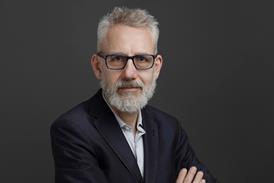

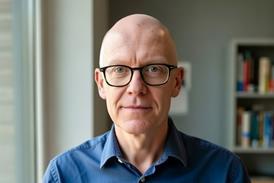







A focus group gathered together to identify the most important qualities consistent across successful leaders in medicine. Oliver Warren and Emma Stanton discuss the findings.
Get involved
Send in your leadership best practice case studies to be published in Resource Centre by emailing hsjresourcecentre@emap.com with the subject line “leadership” - or use the comments box to post your top tips and suggestions.
Are you in HSJ’s LinkedIn group and leading or involved in a discussion on leadership which you would like highlighted in Resource Centre? Email hsjresourcecentre@emap.com with the subject line “LinkedIn”.
What topics would you like to see covered here? Email hsjresourcecentre@emap.com with the subject line “Leadership key topic”.
Medical leadership is a banner around which politicians, managers and clinicians all seem happy to gather. To explore how emerging medical leaders are best nurtured and developed, we conducted a focus group exercise using the current Prepare to Lead participants, an NHS London leadership development mentoring programme for doctors, and some invited guests.
Their reflections, thoughts and subsequent discussions along with our experiences working with emerging medical leaders over the past four years, form the basis of these, our seven habits of emerging medical leaders.
Habit 1: Bravery and Resilience
To step away from the perceived “normal” pathway of career progression requires an element of bravery and resilience. Many of those now engaged on schemes such as Prepare to Lead, or the NHS medical director’s National Fellows scheme have often taken decisions or made career pronouncements that may not always be seen kindly by programme directors, or consultants for whom they work.
One (male) surgeon seeking to work flexibly to both provide childcare and pursue other interests talks of “warnings” from senior colleagues that they perceive this as lack of commitment.
Many of the emerging leaders with whom we have worked in recent years have carved out novel roles or pursued different activities to their peer group. This is intimidating and those ready to criticise or dissuade are often driven by their own insecurities, regrets and uncertainties, not by your best interests.
Resilience and resoluteness are essential qualities, and the environment for those interested in developing careers involving medical leadership has never been more favourable. Senior advocates of increased medical involvement in organisational leadership, such as former health secretary Lord Darzi, UCL Partners chair Sir Cyril Chantler and NHS London chief executive Dame Ruth Carnall, have ensured those clinicians have more support, cover and networks to rely on than ever before. The need for clinician involvement in making tough decisions will only grow due to current economic and social challenges.
Habit 2: Mentoring
The ability to identify, recruit and subsequently develop relationships with mentors has been recognised as being essential to success in virtually all professions. The Prepare to Lead scheme formalises the mentoring relationship and places each participant with a senior leader in healthcare to mentor them over the course of a year.
For some, this is their first experience of formalised mentoring, but all members of our focus group acknowledged how crucial it is to have at least one mentor. Many had gone on to recruit more, one person describing “a panel of mentors” that they had actively sought out and developed over the past five years.
Such an approach prevented over-reliance on any one person and allowed different people’s advice to be sought on different decisions. It also brought richness to the experience and the chance to take different opportunities.
Habit 3: Having a vision
If there is one habit the focus group really has in common it is vision. These are wide ranging and varied; one participant has wanted to be involved in global health since the age of 12, a desire that led him to co-found a charity providing postgraduate medical training to students and doctors via an online network to Somaliland, Sierra Leone, Ghana, the Palestinian territories and Zimbabwe.
One member of the group who had spent some time in the US explained how one of her American mentors advised building on her vision to create a “personal brand”; an issue, or the search for an answer to a question or problem with which one’s name then becomes synonymous. This brand can be built through experience, work and data collection.
Habit 4: Optimism
We were highly cautious about including optimism as a habit. We were wary of inciting potential criticism of “Pollyanna thinking” and naivety of younger professionals about the system in which they work. However, this was not the case among our focus group. There was no blindness to t he austere reality of either our current precarious economic position or an unwavering belief that “everything was going to be OK”.
What we have seen is an ability in some to see problems as possible opportunities and when faced with brick walls, to find a way around them. Many of the most impressive emerging leaders with whom we have worked appear enlivened by the challenge of “doing more for less”.
One may argue that in time this will change, and they will come to see the error of their ways, resorting to cynicism and scepticism. But we would argue that senior leadership has a responsibility to ensure that this is not the result, or that at the very worst, enthusiasm and positivity is captured while it can be of most use.
Habit 5: Developing networks
Leadership is often cited as a lonely experience, and medical leadership is no different. Medicine is full of highly ambitious, competitive individuals and the traditional paradigm has been to compete with all those around you to reach the top.
Several of our colleagues are convinced that they would not have had the confidence to do their current roles and activities without support and encouragement – but not from their seniors, from each other.
Building on the theme of 2011’s King’s Fund report No More Heroes, several of the people we heard from described the synergy and fun of medical leadership roles and talked with warmth about being able to work in partnership with like-minded individuals. This is interesting as some of the criticism of those who self-identify as medical leaders is that it is about ego.
Perhaps more than previous generations, our peers will define success differently, seeking out influence more than power and recognising that this will occur through more than just reputation, patronage or job title, but also through the more imaginative uses of social media such as Twitter and Facebook.
We think it is also likely that they will use their networks to achieve their aims, and that these networks will much more easily cross professional and institutional boundaries. A specific example was given of two participants in the discussion who had worked together to ensure increased paediatric input in primary care and had done so with no formal involvement or permission from their organisations.
Habit 6: Clinical credibility
We have had concerns for a while that there is an increasing shift to “do” leadership by moving away from clinical work. This is clearly nonsense, with leadership being a set of skills, behaviours and values, not a job description.
While you can, and perhaps should, take time away from clinical work to learn more about policy, strategy, management and business administration, these roles bring with them no more leadership challenge than clinical work does. We are wary of any suggestion that the way to improve healthcare in the UK is by moving driven and engaged doctors into full time non-clinical work.
It is reassuring that the vast majority of the current Prepare to Lead cohort wish to lead predominantly by being excellent doctors.
Several participants felt extra scrutiny of their clinical performance by their peers, as they were perceived to be “different” due to their interests in leadership. For one, this meant always covering those extra shifts that no one else would work, for others it meant being very obviously committed by being educationalists or academics in their specialty.
Regardless of how it is done, we encourage the message that commitment to lead is paired with commitment to care.
Habit 7: Recognition of Opportunity
Many people work hard, but as the writer Malcolm Gladwell has described, the real skill is when to recognise and then grasp an opportunity before others. Many of those at the focus group talked about being “lucky” but actually proved the expression “luck is what happens when preparation meets opportunity”.
Our emerging medical leaders demonstrate open-mindedness and willingness to even see setbacks as being likely to bring about a new set of opportunities or exciting possibilities and to squeeze as much as possible from them.
A number of Prepare to Lead mentees have over the course of the past four years gone on to work for their mentors, taking career-changing decisions to ensure they get the most from the opportunities they have been given.
These include a GP who went to his local PCT for the day to understand exactly what it was they were doing, and ended up taking a role there in quality improvement. Another GP reduced his clinical commitment by one day a week to work at the strategic health authority, leading on the implementation of national strategy. And a paediatrician went part-time to work for her mentor in an operational role.
You need to develop the ability to see the opportunities available and have the bravery to seize them. Often to achieve big things those risks have to be taken and we commend those who have. The ability to make strategic decisions over what opportunities to take and what opportunities to politely decline we assert is one of the more difficult skills to develop and act on and something that some people never master.
A challenge for senior leaders
If innovative thought leadership is essential to continue to deliver a high quality NHS, are you providing the right support and mentoring to nurture the talent we already have? Are you challenging bad behaviours in your organisations that inhibit or dissuade those who are less resilient from engaging? And given that incentives, rewards and desired job descriptions of future medical leaders are unlikely to mirror those currently in senior positions, how will you provide the opportunities within your organisation to attract the best emerging medical leaders?






3 Readers' comments